How to Achieve 2-Minute Toxic Element Analysis with Integrated HPLC-ICP-MS

When regulatory limits for toxic elements in food keep getting stricter, labs face an uncomfortable reality: the methods they’ve relied on for years might not be fast enough or sensitive enough anymore. Analysis times stretching beyond 10 minutes per sample create bottlenecks. Coupling different instruments feels risky. And when your lab is responsible for detecting inorganic arsenic in baby food or cadmium in rice, there’s no room for error.

Here’s what most food testing labs don’t realise: the perceived complexity of coupling HPLC to ICP-MS is largely a myth. With the right hardware and software integration, what seems like a daunting technical challenge becomes a routine workflow that delivers results in under two minutes per sample.

The daily pressure of food safety testing

Walk into any food testing laboratory and you’ll hear the same concerns. Analysts are under pressure to process more samples with the same resources. Method development feels like reinventing the wheel for every new matrix. And when regulatory bodies lower action levels for toxic elements, labs scramble to validate new methods while maintaining daily sample throughput.

The real frustration? Many analysts believe that analysing inorganic arsenic, cadmium, lead and mercury requires complicated instrument coupling that only specialists can handle. They’ve heard that HPLC-ICP-MS is temperamental. They worry about stability over long sequences. They’re concerned that different vendors’ systems won’t communicate properly.These concerns create dangerous hesitation. Labs stick with older, slower methods because they’re familiar, even when those methods can’t meet new regulatory requirements. Sample backlogs grow. Turnaround times stretch.

The bottleneck isn’t the science. It’s the assumption that the solution has to be complicated.
Why toxic element speciation matters

Not all arsenic is created equal. Total arsenic measurements tell you how much is present, but they don’t tell you the critical part: is it toxic? Inorganic arsenic (the sum of arsenite As(III) and arsenate As(V)) is significantly more toxic than organic arsenic compounds like arsenobetaine found naturally in seafood. This is why regulations specify limits for inorganic arsenic rather than total arsenic. A rice cereal might contain arsenic, but if it’s all organic forms, the health risk is minimal. If it’s inorganic arsenic, even at low concentrations, it poses a developmental risk
to infants.

The same principle applies to other toxic elements. Cadmium accumulates in rice grown in contaminated soil. Lead and mercury, even at trace levels, affect neurological development in children. The US House of Representatives report in February 2021 found that many baby foods sold in supermarkets contained unacceptably high concentrations of these elements.

This is where speciation analysis becomes critical. HPLC separates different chemical forms of arsenic before ICP-MS detects them. By oxidising As(III) to As(V) during sample preparation, the analysis simplifies to measuring one peak representing total inorganic arsenic. The chromatographic separation happens in under two minutes, the ICP-MS provides sensitivity down to parts per billion and labs can confidently determine whether a food product meets regulatory limits.Food testing labs aren’t just generating data. They’re protecting the most vulnerable consumers: babies, infants and young children whose developing bodies are most susceptible to toxic element exposure.
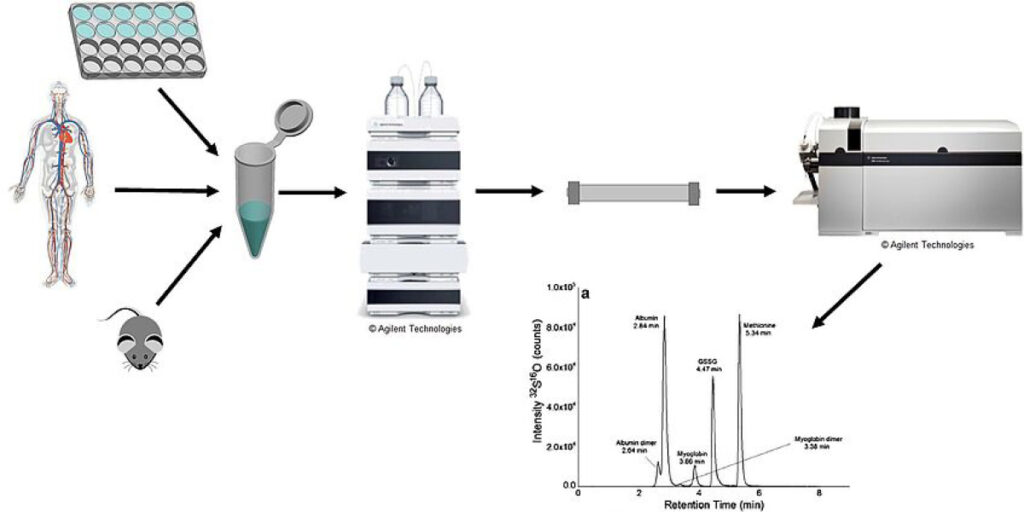
 

Image credit: Institut für Analytische Chemie Universität Wien

The integration that changes everything

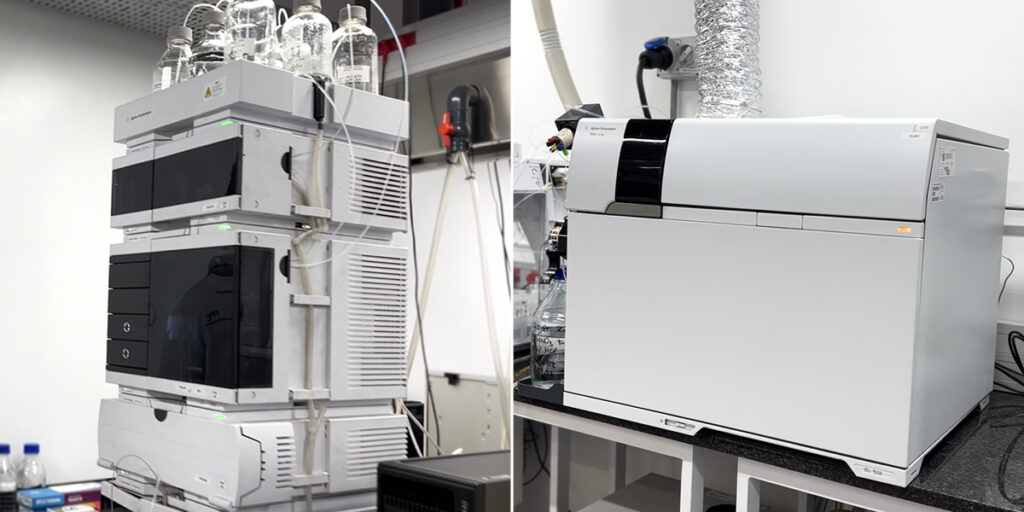
The breakthrough isn’t in the HPLC or the ICP-MS individually. Both instruments are well known in the industry for performance and robustness. The efficiency gain comes from how they work together. Agilent developed an optimised interface that physically couples the Agilent 1260 Inifinity III HPLC to both the 8900 ICP-QQQ and 7850 ICP-MS systems. But the real innovation is software integration. The entire coupled system is set up and operated from the ICP-MS MassHunter software. One interface. One method. Automated analysis.

Single software control means analysts don’t toggle between platforms or manually synchronise instrument parameters. Method development happens in one place.

Stable hardware coupling removes the guesswork from connecting instruments. The optimised interface ensures consistent sample transfer without leaks, dead volume or carryover issues.

Reduced setup time transforms HPLC-ICP-MS from a specialist technique into a routine capability. Labs new to speciation analysis can implement the method without extensive troubleshooting.

Fast 2-minute runs change the economics of compliance testing. When analysing inorganic arsenic requires 10+ minutes per sample using conventional columns, labs face real capacity constraints. At 2 minutes per sample, the same instrument processes five times the volume.

The 7850 ICP-MS adds practical features that matter for real-world food matrices. Ultra High Matrix Introduction (UHMI) handles samples with high dissolved solids without constant maintenance. The IntelliQuant function provides instant visibility into total matrix composition. And helium collision mode addresses spectral interferences without complex method optimisation.
Food safety compliance made routine

The US Baby Food Safety Act 2021 proposes maximum levels of 10-15 ppb inorganic arsenic depending on whether products are cereal-based. The FDA’s Closer to Zero plan phases in action levels for lead, arsenic, cadmium and mercury through 2024 and beyond. EU regulations specify limits for inorganic arsenic in rice between 0.1-0.3 mg/kg.

These aren’t aspirational targets. They’re enforceable limits that require labs to deliver accurate, defensible results.

The Agilent 1260 HPLC coupled to the Agilent 8900 ICP-QQQ provides the sensitivity and speed food testing labs need. The 8900 offers detection limits of 1.99 µg/kg for solid samples and 0.08 µg/L for liquid samples, well below regulatory action levels. The method complies with FDA Elemental Analysis Manual sections 4.7 and 4.11, as well as European standards EN16802:2016 and prEN17374:2019.

Real-world validation across baby foods, rice cereals, beverages and animal feed demonstrates recoveries between 82-111% with precision from 0.3-9.4% RSD.

📚 LEARN MORE: Application Note: Analysis of Inorganic Arsenic, Cadmium, Lead and Mercury in Baby Foods by ICP-MS (5994-3713EN)
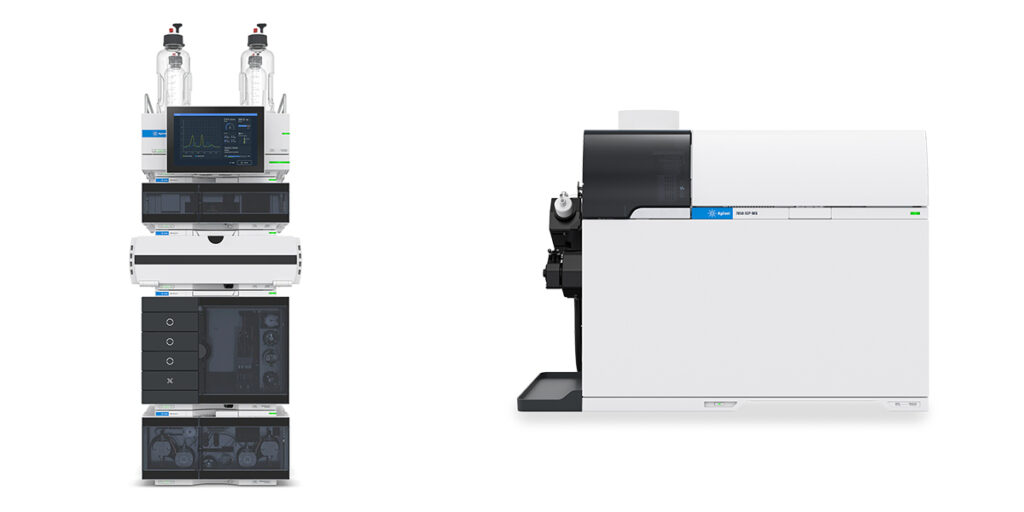
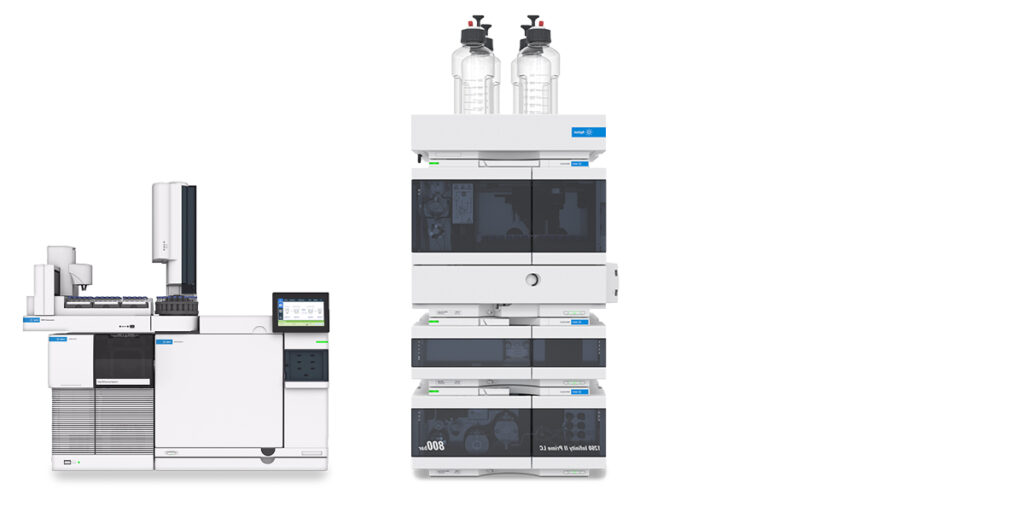
Agilent 1260 Infinity III LC System

Agilent 7850 ICP-MS

High-throughput screening for production environments

Food manufacturers testing ingredients before use or finished products before release face a different challenge. They need screening capability that keeps pace with production schedules. Samples can’t wait days for results. Backlogs mean inventory sitting in quarantine.

The Agilent 1260 HPLC coupled to the Agilent 7850 ICP-MS delivers the throughput production labs require. The 7850 combines proven hardware with software features that simplify workflow for analysts who may be new to ICP-MS or new to Agilent systems. The 7850’s 10 orders of magnitude linear dynamic range means major and trace analytes are measured in a single run. No over-range failures. No sample reruns. The system processes samples with per cent-level total dissolved solids thanks to UHMI technology as standard.

For inorganic arsenic screening in rice cereals, the fast HPLC-ICP-MS method reduces analysis time from over 10 minutes to under 2 minutes. The short anion exchange column, optimised mobile phase and small injection volumes maintain baseline separation of inorganic arsenic from organic species without compromising resolution.

Empowering labs, not overwhelming them

There’s a pervasive mindset in many labs that complexity is just part of the job. That coupling instruments will always be difficult. That fast methods sacrifice accuracy. That meeting new regulatory limits requires hiring specialists or sending samples to reference labs.

Chemetrix rejects this narrative. Labs shouldn’t have to choose between speed and accuracy. They shouldn’t accept that advanced techniques are only accessible to experts. And they absolutely shouldn’t operate under the assumption that their current capabilities define their future possibilities.

This is where partnership matters. Chemetrix doesn’t just supply instruments. We advocate for a scientific culture grounded in integrity, accuracy and respect for the people doing the work. When we say the Agilent HPLC-ICP-MS coupling is easier than labs think, we’re not minimising the science. We’re affirming that with the right tools and support, routine labs can deliver extraordinary results.

The optimised interface, integrated software control and proven application methods aren’t just technical specifications. They’re a commitment to removing barriers between labs and the capabilities they need.

Conclusion

Toxic element analysis in food doesn’t have to be the bottleneck in your lab. The perceived complexity of HPLC-ICP-MS coupling dissolves when hardware and software are designed to work together from the start.


Ready to transform your toxic element analysis workflow?

Download the application notes for baby food and rice cereal analysis to see validated methods and real-world results. Contact Chemetrix to discuss how fast HPLC-ICP-MS screening can eliminate testing bottlenecks in your facility.

Food safety depends on labs that can deliver accurate results quickly. With the right partnership and the right tools, your lab can be exactly that kind of asset.

Contact Chemetrix today to discuss your toxic element analysis challenges and discover solutions designed for your reality.


✅ TL;DR – Key Takeaways

  • HPLC-ICP-MS coupling is simpler than most labs assume when using integrated Agilent systems
  • 2-minute analysis times for inorganic arsenic deliver 5x throughput vs conventional methods
  • Detection limits well below regulatory action levels ensure compliance confidence
  • Single software control reduces setup complexity and streamlines daily operation

Keeping Holiday Tables Safe: Streamlining Agilent in South Africa

Why is food safety more challenging during South Africa’s festive season?

From lively braais to large family feasts, the holiday season means a surge in food production and consumption. This increase brings challenges in managing contaminants like pesticides on fresh produce or residues in packaged meats. Ensuring food safety is vital to protect public health and uphold brand reputation.


Challenges faced by labs during peak testing periods

High sample volumes and diverse food types place huge demands on testing labs. Manual sample preparation can slow down processes and increase errors, risking delays in identifying contaminants and potentially allowing unsafe food products to reach consumers.


How do Agilent LC/MS and GC/MS systems improve contaminant detection?

Agilent’s advanced Liquid Chromatography/Mass Spectrometry (LC/MS) and Gas Chromatography/Mass Spectrometry (GC/MS) platforms enable rapid, sensitive detection of pesticides, antibiotics, mycotoxins, and other harmful residues in complex food samples, ensuring accuracy even under pressure.


In one study, Agilent demonstrated its gas chromatography (GC) and mass spectrometry (MS) systems achieved “excellent linearity” in testing for over 200 pesticides across a wide dynamic range (0.1 to 5,000 ppb).


Agilent LC/MS & GC/MS instruments.

The role of automation in sample preparation

Raykol’s automated sample preparation systems help labs handle larger sample volumes consistently and quickly, reducing human error and freeing analysts to focus on data interpretation. This is critical when the pressure is on to deliver reliable results fast.


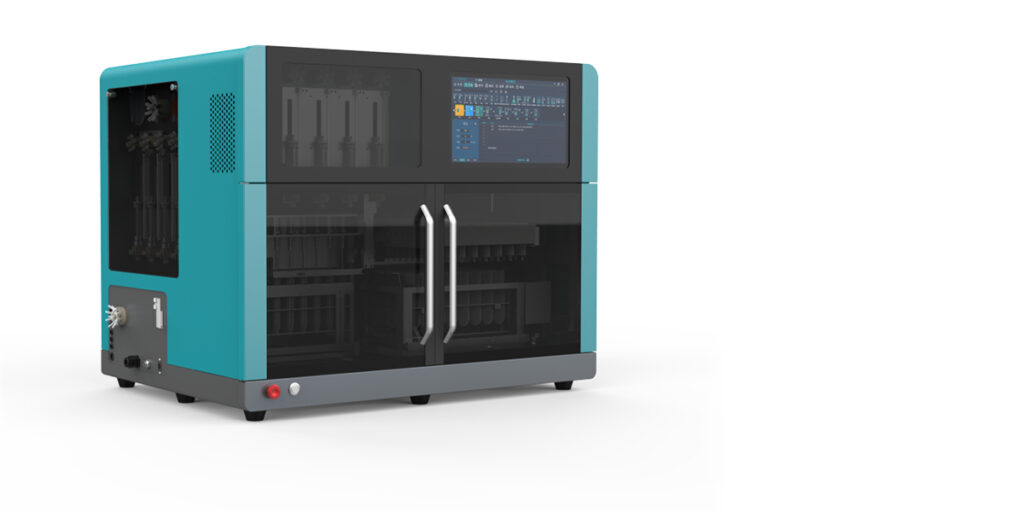
Raykol Automated Solid Phase Extraction system visual.

Why is real-time monitoring important for food safety during holidays?

Continuous quality control lets producers and retailers react promptly to contamination risks, protecting consumers and maintaining compliance with South African and international food safety regulations, especially critical during holiday spikes in demand.


How can producers and retailers stay compliant and build consumer trust?

Investing in cutting-edge testing technology and automation not only helps companies meet evolving regulatory requirements but also demonstrates a commitment to consumer safety, key for maintaining trust during high-visibility holiday seasons.


Upgrade your food safety testing workflows now

To keep holiday tables safe and operations smooth, labs and food suppliers should leverage Agilent’s LC/MS and GC/MS instruments alongside Raykol’s automated sample prep solutions.


TL;DR – Key Takeaways

  • Holiday season increases food safety testing demands in South Africa.
  • Manual prep and high sample loads create bottlenecks and risk errors.
  • Agilent LC/MS and GC/MS systems enable sensitive, fast contaminant detection.
  • Raykol automation speeds up sample prep, improving lab throughput and accuracy.
  • Real-time monitoring and robust workflows safeguard consumers and ensure compliance.


What’s Really in Your Food? How Local Retailers Are Prioritising Safety

Would you still eat your favourite snack if you didn’t know what was in it?

Food safety isn’t just a matter of regulations – it’s a matter of trust. South African consumers expect transparency from the brands they support, and leading retailers like Woolworths know this. As shoppers become increasingly mindful of health and sustainability, the demand for rigorous food testing has never been higher.

Behind the scenes, laboratories like Microchem – supported by Chemetrix – are working tirelessly to ensure that what’s on your plate meets the highest standards of safety and quality.

The challenge facing South Africa’s retailers

In an age of global food supply chains and growing health concerns, food testing is no longer a “nice-to-have” – it’s essential.

Local retailers face mounting pressure to uphold not only national safety standards but also consumer expectations around integrity, traceability and clean labels.

For quality-driven retailers like Woolworths, the challenge lies in ensuring that food is tested accurately and efficiently, with results that can be trusted. From imported fruit and vegetables to locally produced meat and dairy, every product must be analysed for contaminants, residues and adulterants before reaching the shelves.

🖥️ Watch the Recent Advances in the Routine Analysis of Dioxins in Food and Environmental Samples webinar and explore how to implement triple quadrupole GC/MS for the routine analysis of dioxins in environmental and food samples according to EPA and SANTE guidelines.

When ‘safe’ isn’t simple: The complex nature of food testing

Food safety testing involves identifying and quantifying chemical residues such as pesticides, mycotoxins, additives, allergens, and heavy metals. In particular, volatile organic compounds (VOCs) and environmental pollutants such as dioxins or plasticisers are increasingly under scrutiny.

The complexity of modern food products and their varied matrices – from fatty snacks to fibrous grains – presents analytical challenges that demand robust, high-sensitivity instruments. Traditional methods may struggle with accuracy, throughput, or regulatory compliance, especially when laboratories are expected to produce results quickly and cost-effectively.

🖥️ Watch the Analysis of Pesticides in Complex Food Matrices webinar and discover how to increase your lab’s productivity with simultaneous target quantitation and suspect screening on a single platform.

Identify the unknowns

One of the most significant breakthroughs in food testing is non-targeted screening, which allows labs to detect unknown or unexpected contaminants without having to pre-select specific compounds.

The Agilent 7250 GC/Q-TOF, available through Chemetrix, is purpose-built for this. It pairs high-resolution gas chromatography with time-of-flight mass spectrometry, enabling analysts to confidently identify trace compounds in complex food samples.

With this level of insight, labs like Microchem can test for a broader range of contaminants with exceptional clarity and speed. Whether it’s detecting pesticide residues in leafy greens or verifying additive levels in processed snacks, the 7250 GC/Q-TOF allows for greater coverage – and fewer blind spots.

📚 Download the Ensure a Healthier World from the Ground Up application compendium and discover why precise, reliable, and efficient analytical workflows are so important.

Stay fast, focused and compliant

For routine, high-throughput testing where speed and accuracy are vital, the Agilent 5977C GC/MSD remains the gold standard. This system excels at targeted analysis of known contaminants such as preservatives, residual solvents, and food packaging migration chemicals.

Its robust performance, low detection limits and smart functionality make it ideal for commercial labs needing reliable results under tight deadlines. In Microchem’s case, the 5977C allows for cost-efficient testing at scale – from raw materials to final packaging – without compromising quality or regulatory compliance.

At Chemetrix, we help our clients integrate instruments like the 5977C seamlessly into their workflows, providing technical support, training and ongoing guidance to keep things running smoothly.

📚 Download the Food Safety and Authenticity Testing flyer for tools that significantly improve on the traditional targeted analyses, which can miss new and emerging contaminants.

Retailers, labs and technology working together

Local food retailers benefit tremendously from having labs like Microchem – and partners like Chemetrix – at their side. With the right technology and know-how, they can proactively identify risks, validate supplier claims and guarantee product quality with confidence.

This builds not only safer food systems but stronger relationships with consumers. It’s why Woolworths continues to lead in the food retail sector – their commitment to testing, transparency and traceability has earned them long-standing trust from South African shoppers.

For laboratories, having a trusted technology partner like Chemetrix can be the difference between reactive testing and proactive problem-solving. We don’t just sell instruments – we deliver the confidence that comes from reliable, accurate, and efficient analysis.

Test smarter. Trust more. Partner better.

Food safety matters – and staying ahead of the curve requires the right tools, expert support and a commitment to excellence. Whether you’re a lab looking to expand your capabilities or a food retailer determined to protect your brand, Chemetrix is here to help.

Ready to see what’s really in your food – and prove it to your customers?

Explore our full range of solutions and connect with our team to learn how we can support your food testing goals with trusted Agilent technologies.

Ensuring Food Safety with Mass Spectrometry

In an interconnected world where food production and trade span continents, ensuring the safety and quality of food products has become a critical priority. Rising consumer expectations and increasingly stringent regulatory standards mean stakeholders in the food industry must navigate a complex web of challenges. From detecting contaminants to meeting compliance requirements, the stakes are high. This is where cutting-edge technologies like mass spectrometry are stepping in to revolutionise food safety testing, delivering unmatched precision, efficiency, and reliability.


The growing importance of Food Safety

Food safety is non-negotiable. Defined by the World Health Organization (WHO) as the prevention of hazards – both chronic and acute – that can harm consumer health, it forms the backbone of a trustworthy food supply chain. Hazards may include microbial contamination, pesticide residues, heavy metals, and even naturally occurring toxins, all of which can pose serious risks if left unchecked.

Food quality, while often considered alongside safety, addresses different concerns. It encompasses attributes such as flavour, texture, appearance, and even the origin of a product. While safety ensures a product is fit for consumption, quality determines its value and appeal to consumers.

For food producers, striking a balance between these two aspects is essential to building trust and maintaining competitiveness.


Why Mass Spectrometry?

Mass spectrometry has become a cornerstone of modern food safety testing, thanks to its unparalleled sensitivity, accuracy, and versatility. Unlike traditional methods, which may require separate tests for different contaminants, mass spectrometry can detect and quantify multiple analytes in a single run. This capability significantly enhances efficiency and reduces the time required for analysis – a critical advantage for laboratories handling high sample volumes.


Key Advantages of Mass Spectrometry in Food Safety

Unmatched sensitivity and precision

Mass spectrometry can detect contaminants at trace levels, often in parts per billion (ppb) or even parts per trillion (ppt). This is vital as regulatory agencies worldwide demand more stringent detection limits to protect public health.

Multi-analyte detection

With mass spectrometry, laboratories can analyse multiple contaminants simultaneously, including pesticides, heavy metals, mycotoxins, and allergens. This not only improves throughput but also reduces the cost and complexity of testing.

Simplified sample preparation

Advanced mass spectrometry systems streamline sample preparation, reducing the likelihood of human error while speeding up the testing process.

Adaptability across food matrices

From solid foods like grains and meats to liquids like milk and juices, mass spectrometry can handle diverse food matrices, making it a versatile solution for the food industry.


📚 Download the Food Safety Applications in Mass Spectrometry primer for a practical reference for applying current developments in Agilent MS technologies to food analysis: https://chemetrix.co.za/wp-content/uploads/2024/12/5989-1270EN-AGI_74_combined.pdf


Transforming Food Safety Testing

One of the most significant developments in mass spectrometry is the rise of inductively coupled plasma mass spectrometry (ICP-MS). Historically viewed as complex and challenging to operate, ICP-MS has undergone a transformation. Modern instruments now feature user-friendly interfaces, automated optimisation, and built-in diagnostic tools, making them accessible to labs of all sizes.

ICP-MS is particularly valuable for detecting heavy metals such as lead, cadmium, and mercury, which can have severe health consequences even at low concentrations. The technique’s sensitivity and specificity ensure that contaminants are accurately identified and quantified, enabling producers to meet regulatory requirements with confidence.

Another breakthrough is the integration of liquid chromatography-mass spectrometry (LC-MS) and gas chromatography-mass spectrometry (GC-MS). These methods are widely used for detecting pesticide residues and volatile organic compounds in food products. The combination of chromatography and mass spectrometry allows for the separation and precise identification of compounds within complex mixtures, ensuring reliable results.

Agilent 7000D Triple Quadrupole GC-MSMS
Agilent 6495C LC/MSMS

📚 Download the Improving Food Safety Analysis with LC/Q-TOF compendium of application notes and explore analysis of pesticides, nontargeted screening approaches for contaminants, and food authenticity testing: https://chemetrix.co.za/wp-content/uploads/2024/12/Improving_Food_Safety_Analysis-with-LC_Q-TOF-Feb2020.pdf


Addressing the challenges of a globalised food supply chain

In a globalised food economy, the complexity of supply chains adds another layer of risk. Ingredients sourced from diverse regions can introduce contaminants at various stages, making robust testing protocols indispensable. Additionally, the transportation and storage of food products can create opportunities for microbial growth or chemical alterations.

Regulatory bodies worldwide, such as the European Food Safety Authority (EFSA) and the United States Food and Drug Administration (FDA), have responded by tightening standards and lowering acceptable thresholds for contaminants. As a result, food manufacturers must adopt advanced technologies to stay ahead of compliance requirements.

Mass spectrometry provides the tools needed to address these challenges. Offering rapid, reliable testing, enables stakeholders to identify potential issues early in the supply chain. For example, a shipment of imported spices can be tested for pesticide residues before distribution, preventing contaminated products from reaching consumers.

Moreover, mass spectrometry supports traceability – a key component of modern food safety systems. By linking test results to specific batches or production lots, producers can quickly identify and recall affected products in the event of a safety breach. This level of accountability is essential for maintaining consumer trust and avoiding costly disruptions.

📚 Download the Multi-Residue Pesticide Analysis in Food Matrices poster to see how the screening and quantitation of 250 pesticides was done using the Agilent Ultivo Triple Quad: https://chemetrix.co.za/wp-content/uploads/2024/12/Multi-Residue_Pesticide_Analysis-_Food_Matrices_Ultivo_AOAC_2017_PW044.pdf


Chemetrix: Your partner in Food Safety

Chemetrix is at the forefront of delivering advanced mass spectrometry solutions tailored to the needs of the food industry. With a deep understanding of the unique challenges faced by producers, regulatory agencies, and testing laboratories, Chemetrix provides comprehensive support to ensure optimal performance and compliance.

Why choose Chemetrix?

  • Cutting-Edge Instrumentation: Chemetrix offers state-of-the-art mass spectrometry systems, including ICP-MS, LC-MS, and GC-MS, designed for precision and efficiency.
  • Expert Guidance: From installation to training and ongoing support, Chemetrix’s team of experts ensures that clients can fully leverage their technology investments.
  • Tailored Solutions: Recognising that every client has unique requirements, Chemetrix works closely with stakeholders to develop customised workflows that meet their specific needs.

By partnering with Chemetrix, food producers and testing labs gain access to the tools and expertise needed to navigate the complexities of modern food safety testing with confidence.


The Future of Food Safety

As food systems evolve, so too must the methods used to ensure their safety. Mass spectrometry represents a critical step forward, offering the precision, speed, and adaptability needed to meet the challenges of an increasingly interconnected world.

For the food industry, adopting advanced testing technologies is not just about compliance – it’s about safeguarding public health, protecting brand reputation, and building trust with consumers. With partners like Chemetrix leading the way, the future of food safety is brighter, more secure, and more innovative than ever.

How Real is Your Milk?

The African dairy market is on the rise. Southern Africa plays a crucial role in this growth, with milk consumption gradually increasing in the region. Milk is a staple food in this region and is consumed in various forms, including fresh, powdered, and condensed milk.

The growth of the African dairy market is driven by factors such as changing consumer preferences, increased demand, and local special circumstances. The International Finance Corporation (IFC) projects that the African dairy sector will continue to grow by 30% which is drawing attention from investors.

Milk: The essentials

Milk is a natural source of the fats, minerals, nutrients, micronutrients, and vitamins required for a balanced diet. It is also essential for the growth and development of babies and infants into early childhood. Either breast or infant formula milk is given to babies for at least the first six months of their lives, and between the ages of one and two years, whole milk and dairy products are recommended to ensure that babies receive essential vitamins they may not otherwise obtain from lower fat alternatives.


Preserving nutritional values, safety, and authenticity

Milk and its related products are tested for three main reasons within the food and beverage industry:

  1. Nutrition — ensuring the required nutritional value of milk is present in its products.
  2. Safety — confirming the absence of suspected harmful chemicals in milk.
  3. Authenticity — determining if milk products are adulterated and therefore compromised in any way.

By testing these three factors, consumers are more protected from mislabelled, fraudulent, and potentially contaminated milk products that may have reached the marketplace unregulated.

The importance of testing nutritional values of milk and infant formulas

Testing the nutritional values of milk is important so that consumers can make informed decisions about their purchases. Above all, manufacturers of specified products — such as infant formulas for example — must adhere to uncompromising nutritional values determined by regional, national, or international regulatory bodies.

To support consumers making these decisions about their milk and/or infant formula purchases, it is crucial for manufacturers to label their products accurately. In doing so, food testing labs may carry out experiments using HPLC, LC/MS/MS, and GC systems to accurately measure milk content for sugars, fats, vitamins, and amino acids.

Measuring the levels of vitamins as well as beneficial (and some essential) elements such as sodium, potassium, magnesium, calcium, selenium, phosphorus, manganese, and zinc, provides insightful nutritional information. It’s also important to monitor for potentially toxic elements such as arsenic, cadmium, tin, mercury, and lead in animal-derived milk as contamination could originate from animal feed, fertiliser, soil, or processing equipment.

In one study, the Agilent 5800 VDV ICP-OES system used with an SPS 4 autosampler determined calcium, copper, iron, potassium, magnesium, manganese, sodium, phosphorous, and zinc in milk powder and infant formula samples according to the ISO 15151 method. Results showed that the recoveries for all analytes with certified or reference values were within ±10% of the expected value, thus confirming its nutritional labelling.

Other experimental examples include the rapid analysis of major and trace elements in milk and milk products using an Agilent 7900 ICP-MS with optional Ultra High Matrix Introduction UHMI technology and Integrated Sample Introduction System (ISIS 3).

Agilent 5800 ICP-OES
Agilent 7900 ICP-MS


Examining the safety of milk

Foods of animal origins such as dairy milk go through additional scrutiny to detect levels of veterinary drugs. Without a sophisticated approach for testing dairy milk samples, analytical challenges are likely to arise due to the complexity of the matrix and the number of pharmaceutical analogues needed to monitor. Furthermore, the different legislative requirements of various countries require sample referencing that meets a wide variety of regulatory conditions.

Watch our webinar on Food Testing Using Atomic Spectroscopy>

Another factor to consider when examining the safety of milk is the responsible use of pesticides within established limits in animal feeds from which dairy milk is extracted, and in other plant-based ingredients which may be added to other milk products. To validate this, LC/MS, GC/MS, and Q-TOF workflows offer food testing labs the solutions needed to accurately measure pesticide levels in milk samples.

Furthermore, food safety studies are routinely conducted to detect, quantify, and validate trace-level analysis of undesirable byproducts such as chlorate and perchlorate in store-bought milk and infant formulas. In one particular study, the Agilent 1290 Infinity II LC and Ultivo triple quadrupole LC/MS (LC/TQ) were utilised. Data from this experiment highlights accurate quantitation at one-tenth the level of the maximum residue level (MRL), which is 10 μg/kg in milk and infant formula as defined by the European Commission.

Download our poster on Quantification of Mycotoxins in Milk Samples >

Agilent 1290 Infinity II Online SPE System
Agilent Ultivo LC/MSMS

Exposing fraudulent milk to preserve its authenticity

Globally, milk continues to be one of the most adulterated food and beverage products on the market. For example, in 2008 the analysis of dairy milk powder from Minhe Hui County, China, revealed the contamination of melamine—an organic compound used to manufacture fertilisers and concrete—to be 500 times the maximum limit of melamine found in test samples at that time.

More recently in Southern Asia, the Punjab Food Authority seized almost 80,000 litres of milk to combat the adulteration of dairy products in the local metropolis. The milk was flagged due to the addition of urea and water.

In addition to deceiving consumers and manufacturing producers, food fraudsters can seriously affect the health outcomes of individuals. Fortunately, innovations in analytical instrumentation and testing methods are exposing these unlawful acts to reinstall consumer confidence by validating the authenticity and safety of products such as milk and infant formulas.

For example, the Agilent 8890 GC and the Agilent 5977B GC/MS single quadrupole mass spectrometer have been used to detect and quantify β-sitosterol in ghee (milk fat) samples to check for vegetable oil adulteration. The presence of β-sitosterol is associated with low quality and is a potential indicator of adulterated milk. Results showed that 2.24 ppm β-sitosterol was found in the ghee sample on which the study was performed.

Agilent 8890 GC

Both targeted and non-targeted approaches can be used to identify known compounds in milk and other food authenticity testing. The latter is beneficial if adulterants in milk are new or have not been previously identified by food testing labs. Non-targeted methods using quadrupole time-of-flight mass spectrometers, for example, create a chemical fingerprint of authentic foods, making it more difficult for food fraudsters to cheat the global food supply chain.


Forming partnerships to eliminate milk fraud

As milk sale projections are estimated to increase over the next few years, and with wider varieties of product choices in stores and online, it is important that companies like Chemetrix continue to work in partnership with its food testing customers to eliminate the threat of milk fraud while preserving its nutritional values, safety, and authenticity. Above all, manufacturers of milk products must adhere to multiple food regulations relating to quality and safety which are constantly being updated. Chemetrix is here to support our customers so that consumers of their products have confidence in their purchase choice for the nourishment of themselves and their families.

Parts of this article have been adapted from the original published by Agilent.

Revolutionising Nutrition: The Rise of Alternative Proteins

The food industry is experiencing a significant shift as alternative proteins rise in popularity. These non-animal-based foods, ingredients, and beverages, including plant-based, cell culture-based, and fermentation-based proteins, offer a new frontier in nutrition and sustainability. Designed to mimic the taste, texture, and nutritional profiles of traditional animal proteins, alternative proteins have come a long way from the mock meats of the past. The market for these products is booming, projected to surpass $290 billion by 2030, driven by their nutritional benefits, environmental sustainability, and potential to enhance food security.

Today, the industry for alternative proteins has technology on their side and are continuously turning to data and analysis to find solutions that will make these increasingly popular food items more appealing to a wider consumer base. And while meat or burgers grown in a lab does grab headlines, it’s a far cry from the products found in grocery stores that are more practical and cost-effective. Making better alternative protein products isn’t as easy as throwing lentils into the mix and scientific methods are helping to expand the alternative protein offerings in the mainstream market.


Passing taste tests with lab innovation

As the market for alternative proteins expands, rigorous testing becomes crucial. Ensuring the safety, composition, health benefits, and sustainability of these products is essential for maintaining consumer trust and industry growth. For many consumers, concerns about contaminants like veterinary drugs and hormones in meat products make alternative proteins a preferred choice, perceived as a healthier option. However, with rising demand and sometimes limited supply, food fraud becomes a significant challenge. Fraudsters may substitute expensive plant-based proteins with allergens like wheat or soya, or engage in other deceptive practices such as mislabelling and counterfeiting.

To address these challenges and meet consumer expectations in terms of the sensory experience, food developers are turning to advanced analytical tools. These tools are essential for overcoming the biggest hurdles to mainstream acceptance of alternative proteins: taste and texture.

By using sensitive instruments to analyse and optimise the flavour, aroma, and nutritional profiles of these products, food scientists can ensure they meet the high standards expected by consumers.

The process begins with sample preparation to remove unwanted interferences such as fats, chlorophyll, and pigments, allowing researchers to accurately compare the alternative proteins to their animal-based counterparts. Tools like liquid chromatography and mass spectrometry systems are then used to analyse food on a molecular level. Liquid chromatography provides detailed characterisation of stable components such as amino acids, vitamins, and lipids, while gas chromatography examines volatile compounds to engineer desired smells and tastes.

In addition to instrumental analysis, human taste testers play a crucial role in evaluating the palatability of food. Advanced instrumentation can complement this by objectively identifying the five basic tastes – sweet, salty, sour, bitter, and umami – in alternative proteins. This combined approach ensures a comprehensive assessment of flavour and texture, critical for consumer acceptance.

Ensuring a quality composition of alternative proteins

Agilent’s workflow solutions exemplify the robust testing needed in the alternative protein industry. These solutions validate the authenticity, nutritional information, and safety of alternative protein products. For instance, Agilent’s LC-Q-TOF-MS/MS technology has been used to investigate non-meat proteins and peptide markers in ready-to-cook beef burgers, while GC/MS-based metabolomics approaches differentiate the chemical profiles of plant-based meat alternatives from grass-fed ground beef.

Watch our webinar on Metabolomics Profiling of Meat and Plant-based Meats >


Agilent 5977 GC/MSD


Elemental analysis is another critical aspect of ensuring the quality of alternative proteins. During the production process, there is potential for elemental metals to contaminate the final products. Agilent’s atomic spectroscopy instruments, such as the 7850 inductively coupled plasma mass spectrometry (ICP-MS), enable the identification and quantification of these metal elements, ensuring product safety.

Agilent 7850 ICP-MS


The future of food relies heavily on advancing research into alternative proteins. Technologies such as ICP-MS, triple quadrupole (QQQ) liquid or gas chromatography-mass spectrometry (LC/GC/MS), and high-performance liquid chromatography (HPLC) are recommended for robust testing purposes. These tools not only support the development of safer, healthier, and more sustainable food options but also influence the global food supply chain.


Chemetrix has the expert knowledge and innovative solutions required by the food industry to advance the safety and innovative product development of alternative proteins. As the food and agriculture industry faces ever-increasing demands for more sensitive, productive analytical solutions, Chemetrix leads the industry with products and services to help you deliver what your customers demand. Our instruments, systems, and supplies are used throughout the food production chain, including incoming inspection, new product development, quality control and assurance, and packaging. Contact us to find out how our team can assist you.


AI Technology and the Lab of the Future

In 2022, Agilent announced its acquisition of advanced artificial intelligence (AI) technology developed by Virtual Control, an AI and machine learning software developer that creates innovative analysis solutions in lab testing. Agilent will integrate the software, known as ACIES, into its industry-leading gas chromatography and mass spectrometry (GS/MS) platforms to improve the productivity, efficiency and accuracy of high-throughput labs the company serves around the world.

ACIES automates the labour-intensive task of gas chromatography/mass spectrometry data analysis improving efficiency in the laboratory workflow, from sampling to reporting. Agilent will integrate the technology into its MassHunter software package for LC/MS and GC/MS instruments.


Digital labs

This move by Agilent signals that the digital age is very much here for laboratories. Science has always driven the world forward and now it will do the same for laboratories.

The lab of the future is a concept built on the foundation of digitalised labs. It encompasses smart technological workflow systems that are connected and capable of collecting vast amounts of data via integrated automation.

A digitalised lab should be considered a more advanced lab as it has more access to data. With data being key to transforming science, increasing amounts of data generated in any lab, let alone a digitally connected lab, could be a game-changer – but only if it’s collected and synthesised into information and knowledge that is useful.

The digital environment (i.e., paperless work in an electronic format) capitalises on digitalisation. It incorporates all of the necessary instrumentation for complete data analysis and enables the full value of the data for decision-making. The ability to monitor operations and provide more sophisticated insights is a core reason for introducing AI into the operational lab environment.


Transforming science

Artificial intelligence (AI) is often defined as the ability of a machine to learn how to solve cognitive challenges. However, in the context of scientific methodology and laboratory interconnectivity, AI is starting to be used for capturing data to model human observation and decision-making processes.

Taken forward, connecting all instruments in a lab via AI enables the opportunity for an even more astute understanding of the interactions between technology and also users, potentially providing an all-inclusive view of all laboratory operations.

Accessing this powerful source of information will become a necessary component of scientific productivity. This is an inevitable next step in creating lab management systems that are so efficient and provide knowledge that is so valuable that only AI will be able to produce them.

AI, coupled with universal sensing capabilities to detect and monitor a range of variables, e.g., an instrument’s power draw, enables companies to realise certain operational and financial benefits to their business and plan for the future. Through high-quality and readily available insights, AI enables the simultaneous monitoring of all equipment usage in the lab and holistic capacity tracking.

Watch our webinar on Industrialising High-Throughput Glycoproteomics Using AI for Clinical Use


Staying competitive in a competitive world

Globally, scientific innovation is accelerating, so labs need to consider the technology investments required to become digitally enabled in order to keep up and stay competitive. We live in a data-driven world, so scientific laboratories must fundamentally transform how they create, manage, and effectively use all the data that is generated in their lab ecosystem. Achieving and sustaining a competitive edge in a world of constant change will require the continual transformation of lab operations and scientific data management. This will be the first and most important step toward becoming a truly digitalised lab.


Standardising honey fingerprinting methods

Although previous work has been done developing case studies for fingerprinting foodstuffs, including honey, the approaches among laboratories have been different regarding sample preparation and instrumental conditions. There are also differences in terms of data processing and analysis. As a result, two laboratories analysing the same sample may obtain slightly different results. Ideally, developing a standardised fingerprinting method that could be used across all LC/MS-based workflows, enabling the same testing technique to be used across multiple laboratories, would be optimal and where future work is aimed.

Read our article on Fingerprinting Honey to Ensure Purity

When addressing the issues of food safety, product quality, and authenticity, each may be governed by separate sets of regulations. For example, looking at the residues of contaminants in honey, such as pesticides, there may be differences globally. Countries may have their restrictions for the maximum limit for specific compounds. Contaminants are a part of the picture when considering fingerprinting for honey, but permitted levels may vary between countries.

Additionally, as samples come from the field to the lab for testing, there is potential interest in reversing this and bringing the lab out into the field instead. This interesting but not yet recognised capability would enable regulators and the global food industry to respond more quickly to honey contamination and food fraud.

Step into the future, elevate your business and talk to our team of experts about how you can improve the productivity, efficiency and accuracy of your lab.

Food Testing Workflows Webinar Series

Ensuring food safety and quality is more crucial than ever. For African countries, where ensuring food safety and quality is paramount for the well being of their citizens and the success of their exports, Agilent expertise can make a difference.

Chemetrix offers Agilent’s comprehensive suite of solutions that helps you identify pesticide residues, verify label claims, and safeguard food authenticity. Now, a new free-to-access series of webinars expands on necessary knowledge for this valuable process that ensures our food is safe and nutritious.

These webinars are designed to help you learn more about the latest trends and technologies in Food Testing Workflows. Agilent experts will present webinars on the latest applications, soil analysis, laboratory performance improvement, time and cost savings opportunities, and much more.


Webinar 1 – Agilent LC Solutions for Food Testing and Food Fortification

HPLC is a powerful analytical technique widely used in the food industry, research labs and commercial testing labs for quality control, safety assessment, and nutritional analysis

Speaker

Ansuman Mahato
Application Engineer – HPLC
Agilent Technologies


Webinar 2 – Latest Applications and Workflows for the Food Market

Food laboratories find themselves in a frequently changing environment where they need to update their analytical procedures to follow new legislation and upcoming regulations.

Speaker

Cecilia Mazza
Product Specialist, EMEA IDO – Chemistries & Suppliers
Agilent Technologies


Webinar 3 – Sample Prep for Food Analysis: An overview about available techniques

In this presentation we will cover most common Sample Preparation Techniques for Food Analysis and related products, as well as most advanced, specific and unique solutions.

Speaker

Giorgio Ferlat
MSc, EMEAI IDO Product Specialist, Chemistries and Supplies
Agilent Technologies


Webinar 4 – Multiresidue Pesticide Analysis in Food using GC/MS/MS and LC/MS/MS in Accordance with the SANTE 11312/2021 Guideline

Pesticides play an important role in the agriculture and food industries to improve crop yield and food production. However, the quantity of pesticide residue remaining in or on commodities are tightly controlled to avoid contamination of the food chain and the environment. Therefore, regulatory agencies have set maximum residue levels (MRLs) for hundreds of pesticides and their metabolites.

Speaker

Laurent Pascaud
Spécialiste Produits GC & GC/MS
Agilent Technologies


Webinar 5 – Plant and Soil Analysis for the Determination of their Inorganic Content

Testing soils and plants for trace and major elements is important for the development, the growth and the plant metabolism. This is also critical for monitoring the plant nutrients composition and assessing the potential for contamination of food crops.

Speaker

Uwe Noetzel
EMEAI Technical Coverage and Solutions
Agilent Technologies


Webinar 6 – Analysing Trace and Major Elements in Food Samples

To ensure food safety and safeguard human health, the characterization of the elemental composition of a wide range of food types is required. Since the concentration ranges for different elements vary significantly across different foods, various methodes can be used for sample characterization.

Speaker

Uwe Noetzel
EMEAI Technical Coverage and Solutions
Agilent Technologies


Webinar 7 – Better Lab Sample Turnaround – Saving Time and Solvent per run

Nowadays, laboratories have the challenge of becoming progressively more productive as well as focusing on continuous improvements.

Speaker

Giorgio Ferlat
MSc, EMEAI IDO Product Specialist, Chemistries and Supplies
Agilent Technologies


Webinar 8 – Quantitative Analysis of Mycotoxins in Foods by Triple Quadrupole LC/MS

Pesticides play an important role in the agriculture and food industries to improve crop yield and food production. However, the quantity of pesticide residue remaining in or on commodities are tightly controlled to avoid contamination of the food chain and the environment. Therefore, regulatory agencies have set maximum residue levels (MRLs) for hundreds of pesticides and their metabolites.

Speaker

Henry Russell
LCMS Product Specialist
Agilent Technologies


Agilent food and beverage testing products and services keep you at the forefront of the latest trends, ahead of issues, and focused where you need to be to deliver the highest quality and value to your customers.

Join this informative and exciting webinar series that will explore topics such as the latest applications and workflows for the food market, sample prep for food analysis, plant and soil analysis for inorganic content and much much more. The webinar series is free but registration is required.


Register now >


Food and Cannabis Elemental Analysis Part 2: Elemental Sample Prep for the Food and Agriculture Lab – Optimizing Your System for High Matrix Samples

Trace elemental analysis of foods and cannabis products is essential to ensure that products are suitable for consumption. The analysis of minerals and additional trace elements is also important because it provides labelling information that is required when these products are used as nutritional.

Agilent has presented a webinar series that focuses on elemental sample preparation to optimise high matrix samples in the food and agriculture testing space.


Part 1

We will cover the entire Agilent elemental portfolio. Each of the different instruments’ strengths and how they meet the challenges that food and cannabis labs have.


Part 2

We will focus on preparing your samples, including microwave digestion. We will also cover how to optimize your system for high matrix samples and a diverse sample set.


Part 3

We will put it all together, with running samples live in the lab. We will also share additional tips and tricks for obtaining excellent analytical results in these difficult matrices.

This focused information on spectroscopy applications is valuable for the emerging cannabis market as well as analysts who are seeking to master skills for food testing.


Speakers

Jenny Nelson, PhD
Application Scientist
Agilent Technologies, Inc.

Jenny Nelson received her Ph.D. in Analytical Chemistry from the University of Cincinnati in 2007, and her MBA from Saint Mary’s College of California in 2011. Currently, Jenny is an Application Scientist for the Life Science and Chemical Analysis team at Agilent Technologies, joining in 2012 (with a step away in 2019). Jenny is also an Adjunct Professor in the Department of Viticulture and Enology at the University of California, Davis, since 2013. Jenny has been very active with AOAC and ASTM over the past eight years, serving on expert review panels, chairing committees, and volunteering to develop new methods needed by the industry. Jenny has extensive experience in operating and method development for Inductively Coupled Plasma Mass Spectroscopy (ICP-MS), Inductively Coupled Plasma Optical Emission Spectroscopy (ICP-OES), Microwave Plasma Atomic Emission Spectroscopy (MP-AES). Jenny has broad knowledge and experience in different speciation analysis for many sample matrices using GC-ICPMS and LC-ICPMS. As well as vast experience with sp-ICP-MS for many applications.


Greg Gilleland
Application Scientist
Agilent Technologies, Inc.

Greg began his spectroscopy career in 1987 in Colorado, working at a series of environmental labs. After 14 years working in the world of commercial environmental labs, he moved on to a spectroscopy instrument manufacturer where he performed service and sales functions over the course of 11 years. He has been with Agilent Technologies, Inc., since 2012 in the role of Application Scientist for ICP-OES, MP-AES and AA products.


Mark Kelinske
Application Scientist
Agilent Technologies, Inc.

Mark Kelinske is an Applications Chemist with Agilent Technologies, specializing in advanced ICP-MS and ICP-MS/MS techniques. He received his undergraduate and graduate degrees from Texas A&M University in College Station, TX. Prior to Agilent, Mark was a senior research scientist and research group manager with Southern Research Institute in Birmingham, AL, where he focused on low-level analytical chemistry, method development, and research program management.


Chris Conklin
Atomic Spectroscopy Product Specialist
Agilent Technologies, Inc.

With a degree from the University of Wisconsin – Eau Claire, Chris worked in, and lead, a quality control lab testing fine chemicals ranging from reagent grade to high purity. Over the course of 12 years in that role, Chris has run a variety of atomic elemental instruments and techniques including AA, ICP-OES, and ICP-MS. As a result, he has seen most of the periodic table in its elemental form and overcome the associated interferences. In 2018, Chris brought that knowledge and experience to his current role with Agilent as the Product Specialist for Atomic Spectroscopy supporting AA, MP-AES, and ICP-OES for the Eastern US.


Register and watch on demand >


Vitamins & Amino Acids Analysis for Nutrition Labelling

The vitamins A, C, D, E, B6, B12, folate, and the minerals selenium, zinc, copper, and iron, are essential for normal immune function. Dietary supplements are highly in demand to boost immunity and prevent deficiencies in these nutrients. Dietary supplements and their raw materials are diverse, from an extract in a tablet to a tea packet, milk, or oil bottle in the kitchen. Producers and regulators ensure that active compounds are present in these supplements at the levels expected.

Geographic origin, freshness, and production-type can affect health benefits and also require testing. LC and GC methods focus on known compounds of importance with many outlined by reference bodies like IOC, ISO, FSSAI, and USP. Agilent Technologies is excited to be holding the Food Quality Analysis Program, in collaboration with FSSAI.

Join our webinars to learn about workflow solutions for analysis of nutritional parameters in food, through faster identification and detection at low levels.


Ansuman Mahato
Application Specialist LC
Agilent Technologies


Register and watch on demand >