
From Dust to Diamonds: How to Master Trace Metal Analysis in Modern Mining

In the high-stakes world of modern mining, the line between a profitable venture and a missed opportunity is thinner than ever. As high-grade ore deposits become harder to find, the industry is turning its attention to lower-grade materials and the vast potential of tailings reclamation. In this environment, the laboratory is no longer just a support service; it is the engine room of economic viability. When you are quantifying trace metals at ultra-low levels, even a microscopic speck of environmental dust can skew your data, potentially leading to false positives or masking the true value of a mineral deposit.


The mystery of the rising “Blanks”

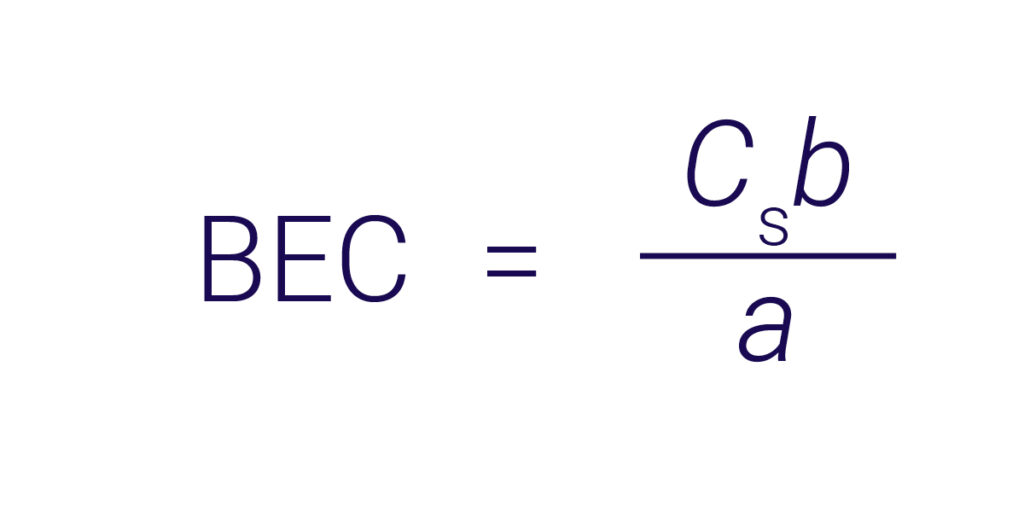
If you’ve ever sat in front of your workstation wondering why your Blank and Background Equivalent Concentration (BEC) values are stubbornly high, you aren’t alone. It is a common frustration for geochemical analysts: your instrument is calibrated, your reagents are fresh, yet the background noise refuses to quieten down. These elevated values aren’t just technical nuisances; they directly impair your Limit of Quantification (LOQ). In a world where a $0.1\text{ g/t}$ difference in a gold tailings project can determine financial success, “noisy” data is a risk you cannot afford to take.


Understanding the noise: BEC and LOQ

To solve the problem, we first have to understand it. The BEC represents the total background signal of your analytical system – essentially the “noise” the instrument sees when no sample is present. When this noise is high, your instrument struggles to distinguish a genuine analyte signal from the background. This directly pushes up your LOQ, making it impossible to accurately quantify the lower concentrations that modern mining exploration demands. The root cause of these high values? It usually comes down to one single, persistent word: CONTAMINATION.



Clean up your act with expert training and standards

If your sample preparation isn’t meticulous, even the most advanced mass spectrometer will produce compromised results. Contamination is a silent thief that enters your workflow through water purity, reagent quality, and even the laboratory personnel themselves – common culprits include cosmetics, jewellery, and the powder in traditional gloves.


The Chemetrix Edge: We don’t just supply tools; we build expertise. Through the Chemetrix Lab Advisor, we provide your team with the specialised skills needed to identify and eliminate these “time traps”. By pairing this training with high-purity Inorganic Ventures Certified Reference Materials (CRMs), you ensure your calibration is built on a foundation of absolute purity.


Practical advice:

  • Stop the “Double-dip”: Never pipette directly from the stock bottle; transfer your working volumes into clean, secondary containers like pre-rinsed LDPE bottles.
  • Go gravimetric: Switch to weight-based (gravimetric) preparation. Mass doesn’t change with temperature, whereas volume does, leading to more reproducible and auditable results.



Technology that does the heavy lifting

While a clean bench is vital, the right hardware can act as your final line of defence against complex mineral matrices. Mining ores are notorious for their high levels of dissolved solids, which traditionally require extensive manual dilution – a process that introduces even more opportunities for human error and contamination.


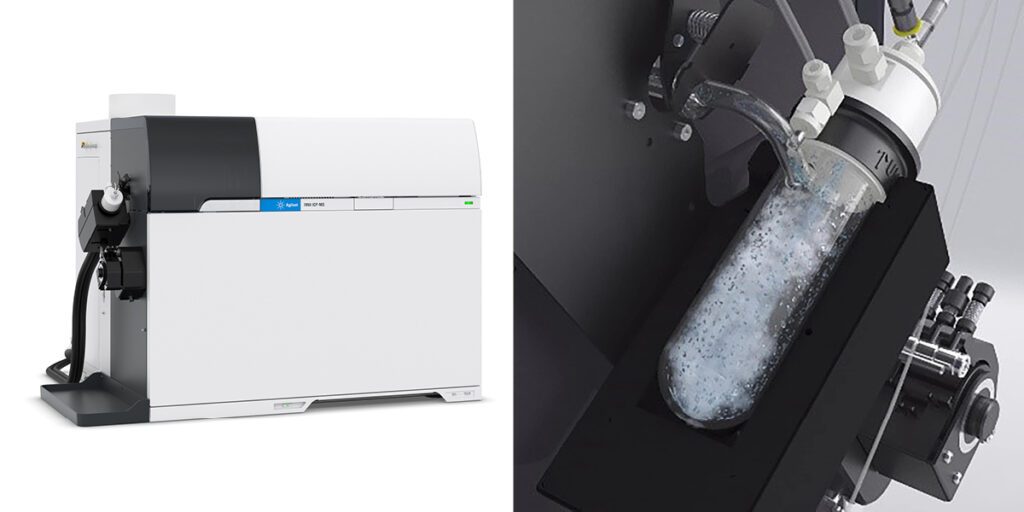
The Chemetrix Edge: We recommend the Agilent 7850 / 7900 / 8900 ICP-MS series as the physical solution to these high-matrix challenges. These instruments are equipped with Ultra High Matrix Introduction (UHMI) technology, which uses clean Argon gas to “dilute” your sample aerosol before it even reaches the plasma.


Practical advice:

By using the Agilent 7850’s UHMI system, your lab can directly analyse samples containing up to $25\%$ total dissolved solids without manual liquid dilution. This not only saves hours of labour but practically eliminates the risk of dilution errors and reagent-born contamination.


From waste to wealth: The reward of precision

The ultimate goal of refining your workflow is simple: lower LOQs and higher confidence. When you master your contamination control, you unlock the ability to see value where others see waste. Successful tailings reclamation depends on this precision. By accurately monitoring recovery at trace levels, mining operations can turn legacy liabilities into profitable resources, contributing to a more sustainable and circular mining economy.


Take the next step towards cleaner data

Ready to lower your detection limits and boost your lab’s productivity? It starts with a partnership that understands your specific challenges.

Review your prep: Identify one source of potential contamination today (check those gloves!)

Audit your standards: Ensure your CRMs are matrix-matched to your ores for better accuracy.

Connect with Chemetrix: Let our team of scientists help you tailor a solution that combines Agilent’s world-class technology with practical, on-the-ground support.

Let’s advance science together. Contact Chemetrix today to explore how we can elevate your laboratory’s performance.
Ensuring Food Safety with Mass Spectrometry

In an interconnected world where food production and trade span continents, ensuring the safety and quality of food products has become a critical priority. Rising consumer expectations and increasingly stringent regulatory standards mean stakeholders in the food industry must navigate a complex web of challenges. From detecting contaminants to meeting compliance requirements, the stakes are high. This is where cutting-edge technologies like mass spectrometry are stepping in to revolutionise food safety testing, delivering unmatched precision, efficiency, and reliability.


The growing importance of Food Safety

Food safety is non-negotiable. Defined by the World Health Organization (WHO) as the prevention of hazards – both chronic and acute – that can harm consumer health, it forms the backbone of a trustworthy food supply chain. Hazards may include microbial contamination, pesticide residues, heavy metals, and even naturally occurring toxins, all of which can pose serious risks if left unchecked.

Food quality, while often considered alongside safety, addresses different concerns. It encompasses attributes such as flavour, texture, appearance, and even the origin of a product. While safety ensures a product is fit for consumption, quality determines its value and appeal to consumers.

For food producers, striking a balance between these two aspects is essential to building trust and maintaining competitiveness.


Why Mass Spectrometry?

Mass spectrometry has become a cornerstone of modern food safety testing, thanks to its unparalleled sensitivity, accuracy, and versatility. Unlike traditional methods, which may require separate tests for different contaminants, mass spectrometry can detect and quantify multiple analytes in a single run. This capability significantly enhances efficiency and reduces the time required for analysis – a critical advantage for laboratories handling high sample volumes.


Key Advantages of Mass Spectrometry in Food Safety

Unmatched sensitivity and precision

Mass spectrometry can detect contaminants at trace levels, often in parts per billion (ppb) or even parts per trillion (ppt). This is vital as regulatory agencies worldwide demand more stringent detection limits to protect public health.

Multi-analyte detection

With mass spectrometry, laboratories can analyse multiple contaminants simultaneously, including pesticides, heavy metals, mycotoxins, and allergens. This not only improves throughput but also reduces the cost and complexity of testing.

Simplified sample preparation

Advanced mass spectrometry systems streamline sample preparation, reducing the likelihood of human error while speeding up the testing process.

Adaptability across food matrices

From solid foods like grains and meats to liquids like milk and juices, mass spectrometry can handle diverse food matrices, making it a versatile solution for the food industry.


📚 Download the Food Safety Applications in Mass Spectrometry primer for a practical reference for applying current developments in Agilent MS technologies to food analysis: https://chemetrix.co.za/wp-content/uploads/2024/12/5989-1270EN-AGI_74_combined.pdf


Transforming Food Safety Testing

One of the most significant developments in mass spectrometry is the rise of inductively coupled plasma mass spectrometry (ICP-MS). Historically viewed as complex and challenging to operate, ICP-MS has undergone a transformation. Modern instruments now feature user-friendly interfaces, automated optimisation, and built-in diagnostic tools, making them accessible to labs of all sizes.

ICP-MS is particularly valuable for detecting heavy metals such as lead, cadmium, and mercury, which can have severe health consequences even at low concentrations. The technique’s sensitivity and specificity ensure that contaminants are accurately identified and quantified, enabling producers to meet regulatory requirements with confidence.

Another breakthrough is the integration of liquid chromatography-mass spectrometry (LC-MS) and gas chromatography-mass spectrometry (GC-MS). These methods are widely used for detecting pesticide residues and volatile organic compounds in food products. The combination of chromatography and mass spectrometry allows for the separation and precise identification of compounds within complex mixtures, ensuring reliable results.

Agilent 7000D Triple Quadrupole GC-MSMS
Agilent 6495C LC/MSMS

📚 Download the Improving Food Safety Analysis with LC/Q-TOF compendium of application notes and explore analysis of pesticides, nontargeted screening approaches for contaminants, and food authenticity testing: https://chemetrix.co.za/wp-content/uploads/2024/12/Improving_Food_Safety_Analysis-with-LC_Q-TOF-Feb2020.pdf


Addressing the challenges of a globalised food supply chain

In a globalised food economy, the complexity of supply chains adds another layer of risk. Ingredients sourced from diverse regions can introduce contaminants at various stages, making robust testing protocols indispensable. Additionally, the transportation and storage of food products can create opportunities for microbial growth or chemical alterations.

Regulatory bodies worldwide, such as the European Food Safety Authority (EFSA) and the United States Food and Drug Administration (FDA), have responded by tightening standards and lowering acceptable thresholds for contaminants. As a result, food manufacturers must adopt advanced technologies to stay ahead of compliance requirements.

Mass spectrometry provides the tools needed to address these challenges. Offering rapid, reliable testing, enables stakeholders to identify potential issues early in the supply chain. For example, a shipment of imported spices can be tested for pesticide residues before distribution, preventing contaminated products from reaching consumers.

Moreover, mass spectrometry supports traceability – a key component of modern food safety systems. By linking test results to specific batches or production lots, producers can quickly identify and recall affected products in the event of a safety breach. This level of accountability is essential for maintaining consumer trust and avoiding costly disruptions.

📚 Download the Multi-Residue Pesticide Analysis in Food Matrices poster to see how the screening and quantitation of 250 pesticides was done using the Agilent Ultivo Triple Quad: https://chemetrix.co.za/wp-content/uploads/2024/12/Multi-Residue_Pesticide_Analysis-_Food_Matrices_Ultivo_AOAC_2017_PW044.pdf


Chemetrix: Your partner in Food Safety

Chemetrix is at the forefront of delivering advanced mass spectrometry solutions tailored to the needs of the food industry. With a deep understanding of the unique challenges faced by producers, regulatory agencies, and testing laboratories, Chemetrix provides comprehensive support to ensure optimal performance and compliance.

Why choose Chemetrix?

  • Cutting-Edge Instrumentation: Chemetrix offers state-of-the-art mass spectrometry systems, including ICP-MS, LC-MS, and GC-MS, designed for precision and efficiency.
  • Expert Guidance: From installation to training and ongoing support, Chemetrix’s team of experts ensures that clients can fully leverage their technology investments.
  • Tailored Solutions: Recognising that every client has unique requirements, Chemetrix works closely with stakeholders to develop customised workflows that meet their specific needs.

By partnering with Chemetrix, food producers and testing labs gain access to the tools and expertise needed to navigate the complexities of modern food safety testing with confidence.


The Future of Food Safety

As food systems evolve, so too must the methods used to ensure their safety. Mass spectrometry represents a critical step forward, offering the precision, speed, and adaptability needed to meet the challenges of an increasingly interconnected world.

For the food industry, adopting advanced testing technologies is not just about compliance – it’s about safeguarding public health, protecting brand reputation, and building trust with consumers. With partners like Chemetrix leading the way, the future of food safety is brighter, more secure, and more innovative than ever.