How to Get Reliable FTIR Identification Every Time with the Agilent Cary 630

Your raw material just failed its FTIR identity check. The match score came back at 87%, the batch is on hold and three people are standing around a spectrometer debating whether to reject a container of perfectly good excipient.

Here is the hard truth: in most cases, the material is fine. The instrument is fine. The problem is a misunderstanding of what FTIR matching actually measures, and it is costing pharmaceutical QC labs hours of unnecessary retesting, false rejections and eroded confidence in a technology that is genuinely excellent at its job.

This article unpacks the three real causes of low match scores, what FTIR can and cannot tell you, and how to build a workflow that turns your spectrometer into the trusted identification workhorse it was designed to be.


Why does my FTIR keep giving me low match scores?

Walk into most pharmaceutical QC labs and you will see some version of the same frustration. A technician places a powder loosely on the diamond crystal, presses the plunger halfway down, gets a poor match score and logs it as a suspected material failure. After years of working alongside QC teams across hundreds of laboratories, the Chemetrix team can tell you that this scenario almost always comes down to one of three things.

Poor ATR crystal contact: Infrared light only penetrates a few micrometres into the sample surface. Air gaps or inconsistent pressure mean the evanescent wave never reaches the material properly, producing a weak and noisy spectrum that will not match any reference cleanly.

Generic reference libraries: Most labs rely on commercial libraries built from a single reference sample under ideal conditions. When your actual material arrives with slight batch variation, a different particle size or minor additives, it will not match that idealised reference, even if it is exactly the right material.

Misplaced expectations: A match score measures similarity under the conditions of measurement. It is not an absolute verdict on material identity. Even a correct material from the correct supplier can return a score well below 100% if technique or library quality is off.

The good news is that all three of these problems are fixable.

What is FTIR actually measuring?

FTIR spectroscopy works by focussing on infrared light at a sample and measuring which wavelengths the material absorbs. Every compound has a unique pattern of absorption peaks, its molecular fingerprint. The ATR (attenuated total reflectance) method makes this fast and practical by bouncing the infrared beam off a diamond crystal in contact with the sample, requiring no preparation beyond placing the material on the sensor.

Library matching then compares your sample’s fingerprint to a reference spectrum using a mathematical correlation algorithm. The result is a match score, not a binary yes or no,
but a measure of how similar the two spectra are under the conditions of that measurement. Importantly, standard library search methods are designed to detect differences in the 5 to 10% range between a sample and its reference, which means some variation is expected
and entirely normal.

This is a critical distinction. Natural spectral variation occurs between batches of the same material due to:

  • Moisture content and surface effects
  • Particle size differences between suppliers or manufacturing runs
  • Trace additives or stabilisers that are entirely acceptable within specification

None of these make the material wrong. But all of them will affect your match score if your reference library was not built to account for them.

Here is the insight that changes everything:

FTIR is an identification tool, not a purity tool. It will tell you what something is. It will not tell you how pure it is or quantify trace impurities. That is the job of HPLC. Stop asking your FTIR to do HPLC’s work and start letting it be the world-class ID workhorse it was built to be.

How do you improve ATR sample preparation?

Consistent results require consistent technique.
These are the four rules that make the biggest difference:

Powders: Spread the sample evenly across the full crystal surface before pressing. Apply firm and consistent downward pressure using the sample press. If the signal is weak, press harder and recollect the background.

Hard solids: Press a flat face directly onto the crystal or grind a small portion to a fine powder first. A smooth surface fragment beats a large irregular chunk every time.

Pastes and semi-solids: Apply a thin even layer onto the ATR surface with a spatula. These conform naturally to the crystal and are the easiest sample type to handle well.

Crystal hygiene: Clean the crystal between every sample with an appropriate solvent and a lint-free cloth. A contaminated crystal from the previous sample is an invisible source of error that will affect match scores across multiple runs.

Standardising these steps into a written SOP, what Chemetrix calls the “SOP of the Squeeze”, is the single fastest way to improve reproducibility across your team.

How can you build a pharmaceutical FTIR library that actually works?

The solution to false rejections in pharmaceutical raw material identification is not to lower your acceptance thresholds. It is to build a smarter library. A site-specific library collects reference spectra from your own approved batches of each material, across multiple suppliers and multiple delivery lots, so that the natural variation of your actual materials is built into the reference from the start. When a new batch arrives with slightly different moisture content or particle size, your library recognises it as the correct material because it has seen that variation before.

The instrument that makes this possible: the Agilent Cary 630 FTIR

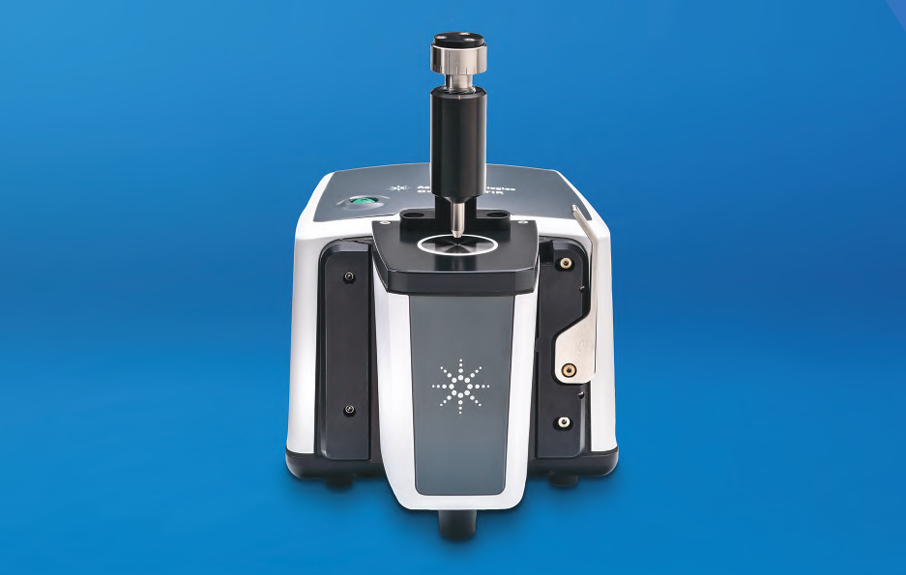
The Cary 630 is purpose-built for pharmaceutical QC applications. Its instrument configuration delivers energy throughput up to 30% greater than comparable routine FTIR systems, which means faster data collection, lower noise and more reliable spectra even when sample variation is present. Its diamond ATR crystal is impervious to abrasion, requires very small amounts of sample and is easy to clean between samples. Modular sampling accessories click in and out in seconds with no alignment required, and at just 20 x 20 cm on the bench and 3.8 kg, it lives where the work happens rather than in a centralised lab.


Most importantly, the Cary 630 runs Agilent MicroLab software, a method-driven and pictorial interface that makes building site-specific libraries an intuitive task rather than a data science project. MicroLab supports advanced classification methods including PLS-DA (partial least squares discriminant analysis). In published testing using the Cary 630 with MicroLab, a PLS-DA method achieved 100% correct classification of pharmaceutical samples and detected contaminants at levels as low as 0.5%. Results are displayed as colour-coded pass/fail indicators and automatically logged in 21 CFR Part 11 compliant audit trails.

This is what Chemetrix calls the Golden Reference Library: a site-specific and validated collection of spectra that reflects your materials, your suppliers and your real-world conditions. Not a generic database. Yours.


Practical resources:

What does a validated FTIR library mean for regulatory compliance?

For pharmaceutical manufacturers operating in a regulated environment, a site-specific library is not just a practical improvement. It is a compliance asset. The Cary 630 meets or exceeds the performance specifications of the US, European, Japanese, Chinese, Indian and International Pharmacopoeia. Its automated IQ/OQ qualification software generates documented and auditable performance reports covering wavenumber accuracy, spectral resolution and signal-to-noise ratio. MicroLab OQ handles qualification for the US, European and Indian Pharmacopoeia directly, while MicroLab PC can be configured for additional requirements including the Japanese Pharmacopoeia. The optional MicroLab Pharma software package adds full 21 CFR Part 11 and EU Annex 11 support including electronic signatures and data integrity controls.


But instrument qualification is only one part of the compliance picture. A validated reference library, with documented collection conditions, approved batch traceability and defined acceptance criteria, is what gives your QA team the scientific and regulatory confidence to act on FTIR results without
second-guessing every match score.

Chemetrix supports clients through the full validation process, from initial library design through to IQ/OQ documentation and method verification against pharmacopoeial requirements.


Practical resources:

📌 Contact Chemetrix to discuss validation support for your FTIR workflow.

There is a better way to run your QC lab

Too many pharmaceutical QC labs have quietly accepted that FTIR is unreliable. They have added extra retesting steps. They have lowered thresholds without understanding why. They have learned to work around the instrument rather than with it. That is not good science. And it is not a sustainable way to run a quality control operation. Chemetrix believes that every lab, regardless of its size, its budget or its current frustrations, deserves instrumentation that works, workflows that are documented and a team that understands what their results actually mean.

The Cary 630 is not just sold and installed. Chemetrix partners with your team through three practical engagement points:

  • Workflow audit: Identifying exactly why your current match scores are low and where the process is breaking down
  • Method development Assistance: Building and documenting the SOP of the Squeeze that standardises ATR technique across your team
  • Validation support: Ensuring your custom library meets the compliance requirements of your QC environment

When your library is right and your technique is standardised, FTIR stops being a source of anxiety. It becomes what it was always supposed to be: fast, reliable and auditable identification, every time.


Low FTIR match scores are almost never an instrument problem.
They are a library problem or a technique problem, and both are fixable.

The three things to take away from this article:

    • A match score measures similarity under the conditions of measurement. Natural batch variation, particle size differences and trace additives will affect it even when the
      material is correct.
    • ATR sample preparation technique has a bigger impact on match scores than most labs realise. Standardising your approach with a documented SOP is the fastest win available.
    • A site-specific library built from your own approved batches will outperform any generic commercial database for your materials, in your lab and from your suppliers.

The Agilent Cary 630 FTIR makes the instrument side of this straightforward. Chemetrix makes the rest straightforward too.

Ready to stop second-guessing your FTIR results?

📩 Contact the Chemetrix team to book a workflow audit, arrange a Cary 630 demonstration or discuss building your Golden Reference Library: chemetrix.co.za

Beyond the Bench: Why Partnership is the Critical Component in Pharmaceutical Analysis

In the pharmaceutical industry, the most valuable asset isn’t the active ingredient or the patented molecule – it is the integrity of the data that proves it works. In a sector governed by uncompromising regulatory standards, a laboratory’s reputation is built on its ability to produce consistent, compliant, and accurate results. However, as drug formulations grow more complex and detection limits move lower, many laboratories find that having the right equipment is only half the battle. The real challenge lies in the support system that keeps that equipment performing within the narrowest of margins.

At Chemetrix, we have been an authorised Agilent distributor in Southern and East Africa for decades. While our heritage is diverse, our commitment to the pharmaceutical sector is foundational. We don’t just supply instruments; we provide the technical scaffolding that allows pharmaceutical analysts to move from a raw sample to a validated report with total confidence.

Why great hardware isn’t enough

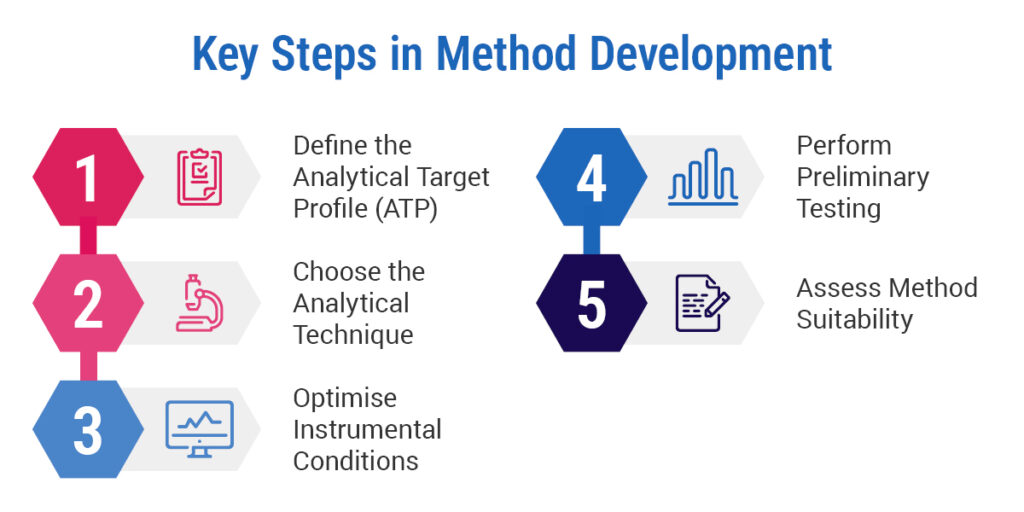
One of the most persistent challenges in the pharmaceutical workflow is the transition from a concept to a robust, validated method. It is a common misconception that high-end instrumentation automatically guarantees ease of use. In reality, pharmaceutical analysts often struggle with the “blank space” between unboxing an instrument and running their first compliant sample.

Whether you are identifying trace impurities, performing stability testing, or conducting complex bioanalysis, the method development phase is often where projects stall. A method that works in a controlled environment can fail in a high-throughput production setting if it hasn’t been stress-tested for robustness. This leads to a reactive cycle of troubleshooting and re-validation, which drains resources and delays time-to-market.

Navigating a shifting regulatory landscape

Data integrity is the non-negotiable cornerstone of the pharmaceutical industry. Global research shows that 90% of pharmaceutical professionals agree that reliable instruments are the single most important factor for a successful workflow. This is because, in this sector, a failure in reliability is a failure in compliance.

The pressure to process more samples while maintaining absolute adherence to 21 CFR Part 11 and EudraLex Annex 11 is immense. Without a partner who understands the nuances of IQ/OQ (Installation and Operational Qualification) and ongoing maintenance, labs risk falling into the “efficiency gap.” This is where sophisticated instruments sit underutilised because the method is too temperamental or the staff lack the specific training required to navigate the software’s compliance features.

Mastery of complex matrices with Agilent LC/MS

For laboratories tackling the most demanding pharmaceutical applications – such as nitrosamine analysis or impurity profiling– Agilent’s LC/MS solutions are globally recognised as the definitive standard. These systems provide the sensitivity and specificity required to detect analytes at levels that were previously unimaginable.

However, the “Chemetrix Edge” lies in how we support this technology. We recognise that method development for LC/MS is a specialised skill. Our support department acts as an extension of your own team, providing on-site assistance to help you develop, optimise, and troubleshoot your pharmaceutical methods. By leveraging our local application expertise, you can reduce the time spent in method development and ensure that your LC/MS system is performing at its peak from day one.

Driving throughput with the Agilent 1290 Infinity III LC

The workhorse of any modern pharmaceutical lab is the Liquid Chromatograph, and the Agilent 1290 Infinity III LC is engineered specifically for high-throughput environments. It is designed to handle the everyday pressures of pharmaceutical analysis with ultra-low carryover and exceptional pressure stability.

Chemetrix supports this hardware through a comprehensive service programme that goes beyond simple repairs. We offer tailored preventive maintenance and rapid-response technical support to ensure your 1290 Infinity III stays in a qualified state. By integrating our service expertise with this robust hardware, we help labs eliminate the “time traps” of manual intervention. Our goal is to ensure your staff spend less time worrying about baseline
drift and more time focusing on high-value data interpretation.

Agilent 1290 Infinity III LC

The reward of proactive support

The transition from a reactive laboratory to a proactive one is transformative. When you partner with a specialist who understands pharmaceutical applications, the results are measured in more than just uptime. You gain the peace of mind that comes from knowing your methods are robust, your instruments are qualified, and your data is defensible.

Our most successful pharmaceutical partners are those who have moved away from viewing instrumentation as a commodity and have embraced it as a collaborative workflow. This partnership leads to faster validation cycles, fewer “Out of Specification” (OOS) investigations, and a laboratory team that is empowered by their technology rather than frustrated by it.


Take the next step in laboratory excellence

The road to an optimised pharmaceutical workflow doesn’t have to be a solitary one. Whether you are looking to expand your LC/MS capabilities or need to refine the efficiency of your current chromatography setup, the expertise you need is available locally.

Your Action Plan:

Identify your most temperamental method – the one that requires the most manual intervention or frequent re-runs. Contact a Chemetrix specialist today for a workflow audit. Let’s work together to resolve your method development challenges and ensure your lab is equipped for the future of pharmaceutical discovery.

Lab Automation for Increased Productivity

In today’s fast-paced scientific landscape, laboratories are under growing pressure to deliver faster, more accurate results while grappling with resource constraints. Lab automation is emerging as a transformative solution, offering a path to increased productivity and efficiency across a variety of industries, from healthcare and pharmaceuticals to environmental testing. Chemetrix is at the forefront of this transformation, equipping African laboratories with state-of-the-art automated solutions to meet rising demands.


What Is Lab Automation?

Lab automation refers to the use of advanced technologies to streamline and optimise laboratory processes. This involves replacing or augmenting manual tasks – such as sample preparation, analysis, and data management – with automated systems that work with greater speed, precision, and consistency.

Key components of lab automation include:

  • Robotic systems for tasks like pipetting and liquid handling.
  • Software solutions to manage workflows, collect data, and ensure compliance.
  • Integrated instruments that combine multiple steps into a single, seamless process.

By automating repetitive or labour-intensive tasks, laboratories can redirect human expertise towards higher-value activities, such as data interpretation and problem-solving.

The benefits of Lab Automation

Enhanced productivity

Automation enables laboratories to process significantly larger volumes of samples in less time. For instance, an automated liquid handling system can perform hundreds of pipetting tasks in the time it would take a technician to complete just a fraction manually.

Improved accuracy and consistency

Human error is a significant concern in manual lab work, especially for processes requiring extreme precision. Automated systems minimise variability, ensuring consistent and reproducible results across large datasets.

Cost efficiency

While the initial investment in automation technology can be substantial, the long-term benefits include reduced labour costs, minimised waste, and faster turnaround times, all of which contribute to overall cost savings.

Data management and integration

Automation often comes with software platforms that streamline data acquisition, storage, and analysis. These systems not only ensure regulatory compliance but also provide actionable insights that drive decision-making.

Flexibility and scalability

Modern automation tools are highly adaptable, allowing labs to scale operations as demand increases or shift workflows to accommodate new research priorities.

📚 Watch the Unraveling the Myths of Laboratory Automation video for compact, modular, and flexible solutions that are ideal for both expert and novice users alike >

Applications of Lab Automation

Lab automation is making a significant impact across various domains, offering tailored solutions to meet specific challenges. In clinical diagnostics, automation has revolutionised workflows by enabling high-throughput testing for complex panels, such as infectious diseases or genetic screening. This capability proved invaluable during the COVID-19 pandemic, as diagnostic laboratories were inundated with unprecedented sample volumes. Pharmaceutical research also benefits from automation, particularly in drug discovery processes.

Automated high-throughput screening allows researchers to test thousands of compounds efficiently, expediting the identification of viable drug candidates and accelerating their path to market.


Environmental testing is another area experiencing profound benefits from automation. Laboratories tasked with monitoring water quality or detecting contaminants rely on automated systems for streamlined sampling and analysis. These tools ensure compliance with regulatory standards while maintaining operational efficiency. Similarly, the food safety sector has adopted automation to enhance pathogen detection and allergen testing, ensuring both consumer safety and product quality. By addressing the unique demands of each sector, lab automation is enabling laboratories to deliver reliable, timely results across diverse applications.


Trends Shaping Lab Automation

Emerging trends in lab automation highlight how technology is reshaping traditional workflows to create smarter, more efficient laboratories. One key trend is the integration of artificial intelligence (AI) into automated systems. AI enables advanced data analysis and predictive modelling, helping labs process vast datasets more effectively while identifying subtle patterns that might otherwise go unnoticed. For instance, AI can optimise experimental designs or predict equipment failures, ensuring seamless operations.

Miniaturisation and microfluidics also play a transformative role. Technologies like lab-on-a-chip systems allow laboratories to perform complex assays on a much smaller scale, reducing reagent use and waste while enhancing analytical precision. These compact systems are particularly advantageous for laboratories with limited resources or space.

Additionally, the rise of Internet of Things (IoT) devices has facilitated remote monitoring and control of laboratory equipment. This capability not only boosts productivity but also enhances safety by reducing the need for physical intervention in potentially hazardous environments.

Together, these advancements reflect the dynamic nature of lab automation, equipping laboratories with the tools to tackle future challenges while pushing the boundaries of scientific innovation.

📚 Watch The Answer is Digitisation webinar to learn how automating processes and connecting instruments can drive efficiency and set your lab on the path to innovation >

Bringing automation to African laboratories

Chemetrix is committed to empowering laboratories across Africa with cutting-edge automation solutions. By offering advanced technologies tailored to the unique challenges of the region, we help labs optimise productivity, maintain accuracy, and meet growing demands.

Our portfolio includes a wide range of automated instruments and platforms, from liquid handlers and robotic workstations to integrated systems for high-throughput screening. Beyond providing equipment, Chemetrix offers comprehensive support, including training, maintenance, and software integration, ensuring clients can fully harness the benefits of lab automation.

Agilent SPS 4 Autosampler

Lab automation is not just a trend; it is a necessity for modern laboratories aiming to stay competitive in a demanding scientific landscape. By automating key processes, labs can achieve unparalleled levels of productivity, precision, and scalability. With Chemetrix as a partner, laboratories in Africa are well-equipped to embrace the future of science, leveraging innovative technologies to drive progress and deliver impactful results.

📚 Download the Automated Plasma Proteomic Sample Preparation application note to discover a protocol that will make your workflow much more efficient and make the preparation of hundreds or even thousands of plasma samples more feasible >

Improving Lab Efficiency for Business Growth

Lab managers play a pivotal role in ensuring the smooth and efficient operation of laboratories, contributing to the success of research and development activities. It’s a tough job as their responsibilities are diverse and cover various aspects of lab management, from administrative tasks to technical oversight.

Over the years, Agilent has conducted independent global surveys of lab managers from different market segments. The objective of the surveys is to understand lab managers’ pain points and find out what they need to address their most pressing concerns, as well as reveal the differences and similarities of the challenges they face.


Why lab efficiency is important

Lab efficiency is a fundamental aspect of successful lab management, driving productivity, quality, safety, and financial performance. An efficient lab is able to control its time and resources to ensure project milestones and deadlines are met. It’s also important to maintain consistent procedures and protocols, leading to more reliable and accurate results. With an optimised workflow, labs can enjoy quicker completion of tasks and experiments, accelerating the pace of research and development. Finally, by streamlining processes, labs can increase the throughput of experiments and projects without a proportional increase in costs or resources.

Watch our webinar on how to Free Your Workflows From Common Time Traps >


In a nutshell, an efficient lab operates at a higher level of productivity, with greater accuracy, and with ideal use of resources. Sounds simple, right? Well, achieving optimal efficiency in a lab is not so straightforward and Agilent’s surveys have revealed the challenges and pain points lab managers face in getting efficiency right.


What lab managers want

In Agilent’s survey, “‘Understanding Key Challenges and Pain Points in the Global Laboratory Market’, 45% of respondents indicated that they face significant pressure to process more samples. These pressures stem from advancements in technology, rising demand across various sectors, and the need for faster and more accurate results.

The pain point for lab managers is that they have to be able to grow the lab’s business without raising costs. So, it’s quite demanding to tackle more samples but not increase expenses. Where Chemetrix can help is offering incredible analytical technology that is much more flexible, adaptable and able to process more samples with greater accuracy in analysis. As our product portfolio includes variations options, our expert team is able to listen to the needs of lab managers and advise potential solutions that can offer great return on investment. This can help the lab grow and thrive without drastically increasing operating costs.

Improved workflow is another challenge for lab managers, with 75% of global respondents saying that instrument maintenance and downtime are their biggest challenges. In pharma labs specifically, around 90% of respondents said that having reliable and accurate instruments would be the top two factors that would best improve workflow.

For business to grow, business has to flow, and that means the instruments should be humming along without downtime. In many instances, preventative maintenance can help labs avoid unplanned downtime. This is why Chemetrix recommends instruments that provide digital alerts for regular maintenance so that lab staff can take care of the equipment before any challenges arise. In addition to smart technology, Chemetrix also provides great instrument support. From online troubleshooting guides to our Fresh Desk support system, we’re able to help labs quickly so they can continue their valuable work.

Watch the webinar on how to Reduce Instrument Downtime With Usage-Based Maintenance >

Download the brochure on 5 Tips To Prevent Unplanned Lab Downtime >

When people think of business growth for labs, the automatic assumption is that space will grow as well. This may not be the case as smaller labs might not be able to or might not want to move into bigger premises for any number of reasons. 75% of lab managers surveyed in Agilent’s global research indicated they believe space-saving analytical instruments can help overcome the challenge of small lab premises.

Agilent 1260 Infinity II

It’s true that lab instruments are becoming smaller and much more space-efficient. Certain instruments can do more in a smaller footprint than some larger instruments and possibly fit right in to an existing instrument setup. Chemetrix is able to assess laboratory space requirements and recommend instruments that are robust and powerful but will occupy less bench space. This can improve business efficiency through improved instrument configuration and allowing some more space for other tasks or instruments.

Agilent 7850 ICP-MS


Support efficiency for labs to thrive

Efficient labs ensure consistent quality and reliability, fostering innovation and maintaining a competitive edge. It is crucial for business growth because it leads to increased productivity, cost savings, and faster turnaround times, which enhance customer satisfaction and speed to market. For lab managers, there are additional benefits because it improves employee satisfaction and retention, allowing for focused professional growth. Delving into the process of tackling these challenges and pain points also provides valuable data-driven insights for strategic decision-making, driving long-term business success and adaptability.

What Chemetrix can do is support the goals of lab managers and truly listen to their challenges and pain points to provide effective solutions. We are more than an analytical instrument supplier – we are a partner in the business journey. Our track record and decades-long relationships with laboratories that have grown into successful operations prove that we understand the need for business efficiency and we are more than able to help labs and lab managers achieve their goals.


Free Your Workflows from Common Time Traps

The smarter way to avoid time traps in your laboratory.

Do you think time-consuming tasks in ICP-MS are inevitable? Something that has to be accepted as part of routine operations? Find out how ICP-MS 7850 helps you easily meet your analytical requirements while simplifying laboratory workflow and improving performance and satisfaction for analysts and laboratory managers.

The intelligence embedded in the ICP-MS 7850 provides a more efficient way to perform metal analysis by reducing unnecessary wasted time so that your staff can focus on activities that generate greater value for the laboratory.


What you will learn

  • Simplify the preparation of your samples and standards.
  • Facilitate the implementation of analytical methods and the handling of the instrument.
  • Improve confidence in your results whatever the matrix analysed
  • Maintenance operations and reduce instrument downtime
  • Optimise and obtain better instrument and sample insights


Date: Thursday, June 14, 2024
Time: 01:00 PM – 02:00 PM (GMT)
Speaker: Dr. Raimund Wahlen, Product Specialist, Agilent Technologies


Register now >


5 Tips to Reduce Instrument Downtime

Labs are meant to be shining examples of precision, innovation and efficiency. But, imagine a high-tech instrument, meticulously calibrated, sitting idle, its potential squandered. Meanwhile, researchers wait impatiently, experiments are delayed, and costs mount. Labs cannot thrive when they aren’t operating at the highest level possible.

Unplanned downtime affects your lab’s ability to deliver data quickly and accurately – which can hurt your bottom line. It should be a top priority for every lab to optimise its operations and paying attention to downtime is vital to success. But the good news is: that you can significantly reduce the frequency and impact of downtime.

Watch our webinar on how to Reduce Instrument Downtime With Usage-Based Maintenance webinar >


Do preventative maintenance

Scheduling regular preventive maintenance maximises uptime, extends the useful life of your instruments, and increases the accuracy of your results. It can even reduce unexpected repairs by 24%. Check if instruments provide early maintenance warnings and follow them closely. If not, create a schedule for instrument maintenance that all staff must follow. Lab software can also send alerts for preventative maintenance. It’s also advised to run analysis or diagnostics on instruments to see if they are operating efficiently.


Increase users’ knowledge and skills

When staff are empowered with access to learning and troubleshooting resources, it can improve lab throughput and analytical accuracy. Chemetrix provides many troubleshooting resources so staff can respond to minor instrument challenges first. As additional support, Chemetrix Academy provides training resources, tips and tricks to make the most of instruments and methods, thereby reducing instrument downtime.

Download our poster on GC/MS Best Practices >


Optimise methods

Ready-to-go methods for regulated and routine analyses, plus prewritten standard operating procedures can save weeks of method development and documentation time plus reduce instrument downtime. A robust method also reduces the risk of unexpected downtime due to unreliable results. Additionally, instruments and software that provide the option of automation for certain tasks reduce human error.

Download our poster on How to Optimise Your ICP-OES Methods >


Check lab data

An analysis of instrument data can provide insights such as when and where downtime issues are prevalent. By using the instrument data available, it is far easier to an overall picture of the lab’s downtime incidents and identify solutions for specific challenges. If a lab doesn’t yet have a robust software solution implemented, doing so may save time and money as it can analyse instrument performance, including downtime, and monitor overall performance for improved operational efficiency.

Agilent Cary 3500 UV-Vis


Plan upgrades based on equipment lifespan

Instruments have a finite lifespan. It’s essential to know when equipment was purchased or installed and also regularly assess its age and performance. Use historical data to predict when an instrument might fail. Predictive maintenance involves analysing patterns and identifying early warning signs. It’s vital for labs to plan for upgrades or replacements before critical failures occur. This proactive approach minimises unplanned downtime. Remember, treating instruments as long-term investments rather than disposable tools pays off in the long run.

Customers expect reliable and timely services from labs. When the integrity and quality of the results or the timely delivery of analysis is compromised, labs may find that their reputation and customer trust are compromised leading to poor business outcomes. Instrument downtime is in fact easily addressed if staff and management work together with a holistic approach. By working with Chemetrix, labs can be supported with the resources they need to enjoy a great return on investment from their instruments.

Watch our webinar on how to Free Your Workflows from Common Time Traps >

Agilent 7850 ICP-MS


Having the best instruments is just one factor of lab success, using them well is the other. As the scientific landscape continues to surprise with discoveries and developments, it is possible to adapt methods and instrument functions to remain abreast of industry trends or client requirements. Chat with our team to find out how we can provide the instruments you need along with our renowned after-sales support to help your lab achieve its goals.