Boost Your Lab’s Performance with Chemetrix’s Latest Agilent Additions

Every lab wants to know that it’s got tools that are reliable and that have the technology to help achieve it’s goals. Perhaps it’s time to replace the trusted instruments that have been in use for years because more space or efficiency is needed. Perhaps the lab is expanding and needs new instruments to accommodate the additional workload. Whatever your lab’s need may be, we’ve got you covered.

Chemetrix is thrilled to announce the expansion of our portfolio with the latest state-of-the-art instruments from Agilent Technologies. These cutting-edge additions are set to revolutionise laboratory workflows, offering unparalleled performance, efficiency, and reliability.


Agilent 8850 GC system: Compact yet powerful

The Agilent 8850 Gas Chromatograph (GC) System is a game-changer for laboratories seeking high performance in a compact design. Tailored for single-channel applications, the 8850 GC is ideal for routine analyses in environmental, food, and pharmaceutical sectors.

Key Features:

  • Compact design: Occupying minimal bench space, the 8850 GC is perfect for laboratories with space constraints.
  • Rapid heating: Equipped with a direct heating oven, it ensures swift temperature ramping, significantly reducing analysis time.
  • User-friendly interface: The intuitive touchscreen interface simplifies operation, making it accessible even for users with minimal GC experience.
  • Energy efficiency: Designed with energy conservation in mind, the 8850 GC consumes less power, contributing to sustainable laboratory practices.

By integrating the 8850 GC into your laboratory, you can expect enhanced throughput, reduced operational costs, and reliable results, making it an invaluable asset for routine GC analyses.

From monitoring air and water quality to detecting contaminants in soil, environmental laboratories require highly sensitive instrumentation. The 8850 GC is an excellent solution for testing volatile organic compounds (VOCs) and pollutants in environmental samples. It also offers fast and reliable results for characterising crude oil, gas composition, and refining processes for the petrochemical industry and precise analysis of hydrocarbons, fuels, and lubricants.

Agilent 8850 GC System

🖥️ Watch the GC Method Development from Beginner to Expert webinar to discuss what to consider, where to start, and what to optimise – focusing on inlet parameters, column selection, and oven programming. >


Agilent Infinity III LC series: A new era of liquid chromatography

Agilent’s Infinity III LC Series is engineered to meet the demands of modern laboratories, providing increased precision, reliability, and flexibility. With new features that enhance workflow efficiency, the Infinity III LC Series sets a new standard for high-performance liquid chromatography (HPLC) and ultra-high-performance liquid chromatography (UHPLC).

Key Features:

  • Optimised system performance: The Infinity III LC Series offers improved pressure resilience, higher flow rates, and enhanced detector sensitivity, making it ideal for both routine and complex analytical tasks.
  • InfinityLab technology: Integrated with InfinityLab Assist, this system provides real-time monitoring and diagnostics, reducing downtime and improving instrument longevity.
  • Versatile applications: Designed for seamless integration into regulated environments, it supports pharmaceuticals, food safety, environmental testing, and more.

By incorporating the Infinity III LC Series, laboratories can expect heightened accuracy, faster analysis times, and superior reproducibility—key factors for high-throughput environments.
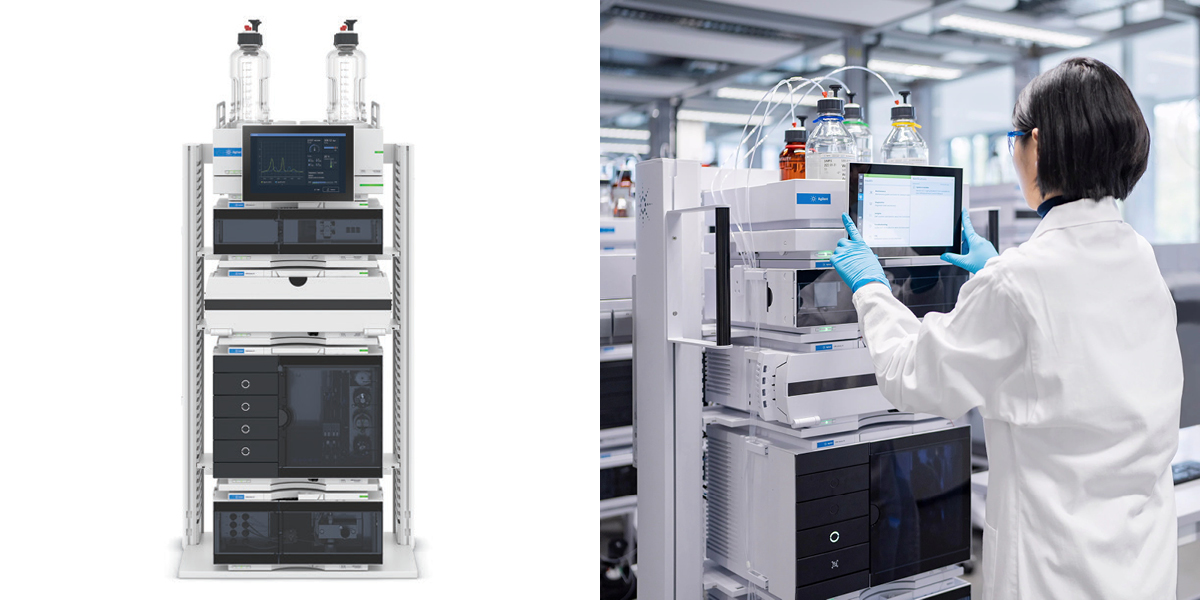
Agilent Infinity III LC series

📚 Download the HPLC Made For Tomorrow brochure and discover how the Agilent InfinityLab LC Solutions provide the broadest range of liquid chromatography options for any application and budget.

Precision and reliability are essential in pharmaceutical and biopharmaceutical analysis, where strict regulatory compliance is required. Infinity III is designed for high-throughput drug development, stability testing, and impurity profiling. It offers a cost-effective solution for routine quality control and formulation analysis, making it a trusted choice for pharmaceutical manufacturing. It is also particularly effective in pesticide residue analysis, mycotoxin screening, and nutritional profiling for the food and beverage sector.
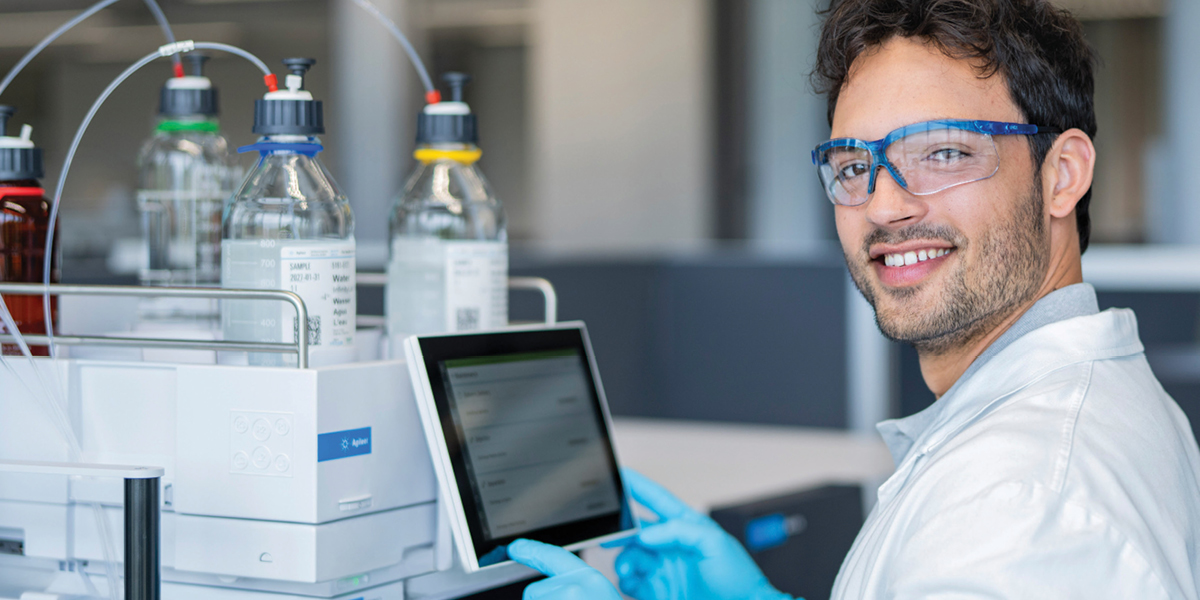
 

Transform your laboratory with Agilent and Chemetrix

At Chemetrix, we are committed to providing cutting-edge solutions that empower laboratories to excel. The introduction of the Agilent Infinity III LC Series and 8850 GC System to our portfolio ensures that our clients have access to the latest advancements in analytical instrumentation.

From pharmaceutical quality control and food safety analysis to petrochemical testing and life sciences research, these powerful instruments enhance productivity, accuracy, and efficiency.

Discover how Agilent’s latest innovations can redefine your lab’s potential – contact Chemetrix today for expert guidance and support.

HPLC-Beginner Webinar Series

Liquid Chromatography Fundamentals

We start the LC Beginner webinar series with an overview of basic terms relevant to liquid chromatography.

Speaker

Laura Montis
Product Specialist Liquid Phase Separations
Agilent


Stationary Phases in HPLC – Part I

Reversed phase or normal phase?
Fully porous, partially porous, end capping?
In this webinar, we will cover different stationary phases (RP and NP) and the selection of the particle.

Speaker

Cecilia Mazza
Product Specialist, EMEA IDO – Chemistries & Suppliers
Agilent


Stationary Phases in HPLC – Part II

In the second part of the stationary phases webinars, we look at other separation modes: IEX, SEC, ligand exchange and HILIC and what we think they are best suited for.

Speaker

Cecilia Mazza
Product Specialist, EMEA IDO – Chemistries & Suppliers
Agilent


LC Instrument Hardware

This webinar will give an overview of the different LC modules and how they work.

Speaker

Laura Montis
Product Specialist Liquid Phase Separations
Agilent


HPLC Detectors

In liquid chromatography, various detectors can be used. In this seminar, we will take a closer look at UV, fluorescence, refractive index and ELSD detection.

Speaker

Ansuman Mahato
Product Specialist Liquid Phase Separations
Agilent Technologies, Inc.


Single Quad Mass Detection for Chromatographers

This webinar is about single quad mass detectors. We will look at the development of single quads together and highlight the possibilities offered by today’s single quads and how they support the user. The aim of the webinar is to show users how they can easily add mass-selective confirmation to their HPLC-UV methods. In other words: achieve greater security without more complexity.

Speaker

Shaun Pritchard
Product Specialist Liquid Phase Separations
Agilent Technologies, Inc.


SingleQuad II

This webinar is about single quad mass detectors. We will look at the development of single quads together and highlight the possibilities offered by today’s single quads and how they support the user. The aim of the webinar is to show users how they can easily add mass-selective confirmation to their HPLC-UV methods. In other words: achieve greater security without more complexity.

Speaker

Shaun Pritchard
Product Specialist Liquid Phase Separations
Agilent Technologies, Inc.


GPC/SEC Detector Selection

This session will explore detectors commonly used in polymer analysis (RID, UV, MALS, Viscometer), emphasizing their specific applications based on polymer types (Branched, Linear, high Mw, low Mw). We will discuss their roles in Mw determination, Quantitation, Viscosity measurement, size and shape determination etc.

Speaker

Ansuman Mahato
Product Specialist Liquid Phase Separations
Agilent Technologies, Inc.


Sample Preparation

In this part of the course we will deal with sample preparation: why, how and which sample preparation is the most suitable for the target analyte?
SPE, LLSE, or syringe filter?

Speaker

Shaun Pritchard
Product Specialist Liquid Phase Separations
Agilent Technologies, Inc.


Method Development

When developing an LC method, there are various factors that can be tested to achieve the desired resolution and symmetry of the analytes. In this webinar, we will discuss the various factors and give tips on developing a robust method.

Speaker

Laura Montis
Product Specialist Liquid Phase Separations
Agilent


Troubleshooting and Everyday Routine for the Instrument

In this webinar, typical LC problems are discussed – how to identify and solve them.

Speaker

Ansuman Mahato
Product Specialist Liquid Phase Separations
Agilent Technologies, Inc.


Troubleshooting and Everyday Routine (Columns)

Tailing, fronting, and peak doubling are all topics that we will cover during troubleshooting. After the session, we will be able to identify causes and avoid errors.

Speaker

Giorgio Ferlat
MSc, EMEAI IDO Product Specialist, Chemistries and Supplies
Agilent Technologies, Inc.


Register now >


Unveiling the Hidden Threats: Researching Emerging Contaminants in Water

The water we have on Earth is finite. Although we have water in abundance, caring for this resource has been one of the world’s most pressing environmental challenges. Sadly, we simply do not know the vast majority of chemicals that are discharged into the environment through human activities. For this reason, the detection and identification of these compounds are essential for accurate toxicological profiling of environmental samples.

Ensuring water quality and safety through analytical testing is crucial for public health and environmental protection. Comprehensive testing involves analysing regulated pollutants, including pesticides, semi-volatile organic compounds, metals, and disinfection byproducts. It also extends to emerging contaminants such as PFAS, microplastics, hormones, and various unknown chemicals.

As environmental challenges continue to evolve, detecting and identifying emerging contaminants in water has become a critical task for researchers. Advanced analytical technologies, such as high-resolution mass spectrometry (HRMS), gas chromatography-mass spectrometry (GC-MS), and liquid chromatography-tandem mass spectrometry (LC-MS/MS), play a pivotal role in this effort. These sophisticated instruments not only enhance the detection capabilities but also contribute to a deeper understanding of the toxicological impacts of unknown chemicals.

The role of advanced analytical technologies

High-Resolution Mass Spectrometry (HRMS)

HRMS provides unparalleled precision and accuracy in measuring the mass of chemical compounds. It allows for the detection of a wide range of contaminants, even those present at trace levels. This technology is particularly beneficial for non-targeted analysis, where the goal is to identify unknown compounds in water samples. By delivering high-resolution data, HRMS enables researchers to pinpoint the exact mass of contaminants, facilitating their identification and characterisation.

Watch our webinar on Using Liquid Chromatography with QTOF High-Resolution Mass Spectrometry to Identify Emerging Contaminants in Urban Waters >

Gas Chromatography-Mass Spectrometry (GC-MS)

GC-MS is a powerful tool for separating and analysing volatile and semi-volatile organic compounds. It combines the separation capabilities of gas chromatography with the detection prowess of mass spectrometry. This technology is essential for identifying contaminants that may not be detectable through other means. GC-MS excels in providing detailed information about the chemical composition of water samples, making it indispensable for comprehensive water quality assessments.

Liquid Chromatography-Tandem Mass Spectrometry (LC-MS/MS)

LC-MS/MS is renowned for its sensitivity and specificity in detecting and quantifying contaminants. This technology is particularly effective for analysing non-volatile and polar compounds that are challenging to detect with GC-MS. LC-MS/MS allows researchers to conduct multi-residue analysis, detecting multiple contaminants simultaneously. Its high throughput and precision make it a cornerstone in environmental monitoring and toxicological studies.

New threats emerging

Microplastics are tiny synthetic particles or polymeric matrices derived from plastic, ranging from 1 µm to 5 mm in size and insoluble in water. According to an article published by Agilent, current research believes that microplastics will also degrade into smaller particles on a nanoscale, called ‘nanoplastics’. Despite increasing analysis, their environmental risk remains unclear. The World Health Organisation (WHO) has called for more scientific research to better understand the potential toxicity of microplastics.

Download the infographic poster on Accurate Microplastics Analysis >

A recent study found that humans could be consuming between 39,000 to 52,000 microplastic particles a year.

A recently published study* stated, “The prevalence of micro and nanoplastics (MNPs) in various environmental and human compartments has highlighted the need for analytical methods to accurately detect and quantify these contaminants. Pyrolysis-gas chromatography coupled with mass spectrometry (Py-GC-MS), one of the thermo-analytical methods, is evolving as an analytical technique to quantify MNPs in complex matrices.”

Agilent 990 Micro GC

This study evaluated the impact of using diverse polystyrene (PS) standards with different molecular weights, polydispersity indexes, tacticity, end-capping, and chain branching, on quantifying the mass concentration of PS in various products. The results for the PS-based products showed inconsistencies across different standards, indicating that the measurements for a single product varied substantially when different polystyrene (PS) standards were applied.

The team behind the study made use of Agilent technologies for their research and found there is a need for refined calibration strategies and standardised reference materials to improve the reliability of the MNP analysis method.

From this example, it’s clear that advanced analytical technologies are not only about detection but also about understanding the broader implications of contaminants, like microplastics. By accurately identifying and understanding newer chemicals and contaminants, researchers can assess their toxicological impacts on human health and the environment. This knowledge is crucial for developing effective mitigation strategies and regulatory policies.

Watch our webinar on Microplastics Analysis Just Got Easier: Analysis Direct On-Filter >

Continuous improvement of water analysis

Chemetrix is at the forefront of providing state-of-the-art analytical instruments that empower researchers in their quest to safeguard water quality. By offering cutting-edge technologies such as HRMS, GC-MS, and LC-MS/MS, Chemetrix supports comprehensive environmental research. The instruments are designed to meet the rigorous demands of modern laboratories, ensuring reliable and accurate results.

A prime example of the application of these technologies is non-targeted analysis in water. This approach involves screening water samples for a wide array of contaminants without prior knowledge of their presence. By employing HRMS, GC-MS, and LC-MS/MS, researchers can detect and identify unknown compounds, providing a holistic view of water quality. This method is essential for uncovering emerging contaminants that may not be included in routine monitoring programs.

To preserve our planet’s resources for future generations, the scientific community has to be the trailblazers of today that’ll help find the solutions to protect our tomorrow. There is an incredible amount of passion and dedication among the researchers and scientists who are fighting the good fight against emerging water contaminants and providing valuable insights that everyone can use to make better choices. They can’t do this work without great analytical instruments.

Agilent 8700 LDIR Chemical Imaging System

These instruments enhance detection capabilities, provide valuable insights into toxicological impacts, and support informed decision-making. Chemetrix’s commitment to providing cutting-edge solutions underscores its vital role in environmental research. As we continue to face new environmental challenges, the adoption of these advanced technologies will be crucial in ensuring the safety and sustainability of our water resources.

*Quantitation of polystyrene by pyrolysis-GC-MS: The impact of polymer standards on micro and nano plastic analysis by M. Brits, B. van Poelgeest, W. Nijenhuis, M.J.M. van Velzen, F.M. B´een, G.J.M. Gruter, S.H. Brandsma, M.H. Lamoree

New to HPLC? Tips for Avoiding Beginner Pitfalls

Operating an HPLC (High-Performance Liquid Chromatography) system can be overwhelming for a new user. There are numerous pitfalls or “gotchas.” Even the matter of which tubing and fittings are compatible, and which are not, can pose a serious impediment to successfully operating the HPLC.

In this discussion, we will cover:

  • The significance of connections
  • Considerations for the mobile phase
  • Quality considerations
  • Preventing microbial growth
  • Compatibility of sample and solvent
  • Characteristics of the column; their significance and limitations
  • The importance of sample preparation


Speakers

Rita Steed
Application Engineer
Agilent Technologies, Inc.

Rita Steed began supporting the LC column line for Agilent in 1999. As a Chromatography Specialist (first with Chromatography, Inc., then directly for Agilent), Rita worked on-site with researchers in Pharmaceutical and other industries presenting technical seminars and assisting researchers with troubleshooting and method development. Rita has over 20 years of Chromatography experience in the Biotechnology, Chemical, and Pharmaceutical industries. She has held positions in Research, Sales, and Technical Service. Rita has earned degrees in Microbiology and Life Sciences/Biochemistry. In her current position, she is an inside Application Engineer supporting LC columns.

Register and watch on demand >


Decoding Automation of Metabolite and Lipid Extraction Workflows

Technology improvements in liquid chromatography/mass spectrometry have enhanced the detection and identification of metabolites and lipids from complex biological samples. As metabolomics and lipidomics measurements become increasingly valued, there is a growing need to automate sample preparation workflows.

Specifically, Agilent automation offers intuitive workflows that provide high data reproducibility and increased throughput while reducing hands-on time. In this webinar, we describe key learnings revealed during the automation of several workflows that extract metabolites and/or lipids from plasma and mammalian cell samples.


Speakers

Genevieve Van de Bittner, Ph.D.
R&D Researcher
Agilent Research Laboratories
Agilent Technologies, Inc.


Register and watch on demand >


Benefits of Dedicated Bio LC Instruments and Columns

Got 20 minutes to increase your knowledge?


What will you learn

  • Watch this webinar to learn how dedicated UHPLC instrumentation and chromatography columns can help overcome the hurdles of compromised sample integrity and surface interaction.


Preventive and Routine Maintenance for Your HPLC System

Similar to our cars needing regular oil changes, tire pressure adjustments, or washer fluid top ups, our HPLC systems also need routine maintenance in order to keep them performing at their best.  Even if you pay a mechanic to change your oil or a Field Service Engineer to change your pump seals, you should still know how frequently these preventive maintenance activities need to occur.


This presentation will look at several key issues, such as:

  • How often typical preventive maintenance (PM) tasks should be performed.
  • What signs to look for that may indicate a need for maintenance.
  • Tools for testing the LC systems before and after maintenance.
  • Basic troubleshooting and diagnostics.

The goal of this talk is to lay a strong and broad foundation from which to build a better understanding of your own HPLC systems and their specific maintenance needs.


Paul Altiero
Application Engineer
Agilent Technologies, Inc.


Paul Altiero is an Applications Engineer located at the Agilent Little Falls site in Wilmington, DE. Prior to coming to Agilent in 2009, Paul worked in the pharmaceutical industry performing LCMS bioanalysis supporting Drug Discovery DMPK. While at Agilent, Paul has been a field service engineer for LCMS as well as the integrating program manager for the RapidFire high throughput LCMS system. In his current role Paul’s responsibilities include technical support and application assistance for LCMS consumables.


Register and watch on demand >


HPLC Column Care

Are you just getting started with a new column you have never used before? Are you looking for ways to help your columns last a bit longer? These are some of the most common questions asked of our HPLC columns technical support team. In this webinar, we will discuss best practices for HPLC column care, including reversed phase, SEC, HILIC and more. This will include initial equilibration, benchmarking a new column, column storage, and other tips to help make your columns last longer.


Mark Powell
Application Engineer
Agilent Technologies, Inc.


Mark Powell is an Applications Engineer located at Agilent’s Little Falls site in Wilmington, DE. Before joining Agilent in 2011, Mark worked in the pharmaceutical industry synthesizing, purifying and analyzing drug candidates. He provides applications assistance and technical support for Agilent’s HPLC columns and consumables.


Register and watch on demand >


Reliability of Multi-residue Identification

It is of utmost importance to ensure that the analytical results from residue testing for food products are reliable. “False positive” findings of hazardous residues in food result in safe product being rejected and leading to potential huge financial and juristic implications. “False negative” findings result in contaminated product being on the shelf and increase the risk of a foodborne disease. The reliability of testing results depends on the type of methodology and the performance criteria. Identification is the important step before a residue is reported. Procedures for identification should be rigorous and depend on sensitivity and selectivity of the MS techniques. The causes of “false positive” and “false negative” derived from both QqQ-MS and HR-MS detection will be discussed. The approaches of establishing a “fit-for-purpose” methodology and identification criteria for both QqQ-MS and HR-MS will be introduced. This will help the testing labs build the protocols/procedures to follow to reduce the incidence of “false detections”; help set up the criteria for identification; and help deliver the highly accurate results.


Hui Zhao
Pre-Sales Application Engineer
Agilent Technologies, Inc.


Hui has 13 years of industry experience developing and validating analytical methods for food/feed nutrition, food safety, dietary supplements and botanicals testing, using a variety of analytical techniques including LC-TQ, LC-QTOF, LC-DAD and GC-MS and a breadth of sample preparation methodologies. She has worked as a Research Scientist at Monsanto, EPL-Bioanalytical Services, Tate & Lyle, Inc. and Lead Staff Scientist at Covance Food Solutions. She holds a Master of Science degree in Analytical Chemistry from Lanzhou University in China and a Ph.D. in Analytical Chemistry from the University of Missouri.

Prior to becoming a Pre-Sales AE, Hui worked as an LCMS application scientist in Agilent’s global market development group where her primary focus was food and environmental market development.


Register and watch on demand >


Liquid Chromatography

Chemetrix InfinityLab solutions for high- and ultrahigh-performance liquid chromatography include instruments, columns, and supplies to help your lab achieve highest operational efficiency. From routine analysis to cutting-edge research, the InfinityLab LC Series offers the broadest portfolio of HPLC, UHPLC and Preparative HPLC solutions for any application and budget.


Fundamentals

Learn about liquid chromatography systems and their main components, as well as the basics of LC separation and the common industries where they are used.


HPLC Fundamentals

Learn about liquid chromatography systems and their main components, as well as the basics of LC separation and the common industries where they are used.

High Performance Liquid Chromatography Fundamentals – Theory

Presentation

Enabling datascience through creation of a chromatography results database

Chromatography Database

The LC Handbook

A Comprehensive Guide to LC Columns and Method Development

LC Handbook


Tips & Tricks

Get tips and tricks for keeping your chromatography alive with an insightful presentation that’ll show you how to bring your column back to life, when it is time to get a new and preventative measures you can take.

Presentation