
Beyond the Bench: Why Partnership is the Critical Component in Pharmaceutical Analysis

In the pharmaceutical industry, the most valuable asset isn’t the active ingredient or the patented molecule – it is the integrity of the data that proves it works. In a sector governed by uncompromising regulatory standards, a laboratory’s reputation is built on its ability to produce consistent, compliant, and accurate results. However, as drug formulations grow more complex and detection limits move lower, many laboratories find that having the right equipment is only half the battle. The real challenge lies in the support system that keeps that equipment performing within the narrowest of margins.

At Chemetrix, we have been an authorised Agilent distributor in Southern and East Africa for decades. While our heritage is diverse, our commitment to the pharmaceutical sector is foundational. We don’t just supply instruments; we provide the technical scaffolding that allows pharmaceutical analysts to move from a raw sample to a validated report with total confidence.

Why great hardware isn’t enough

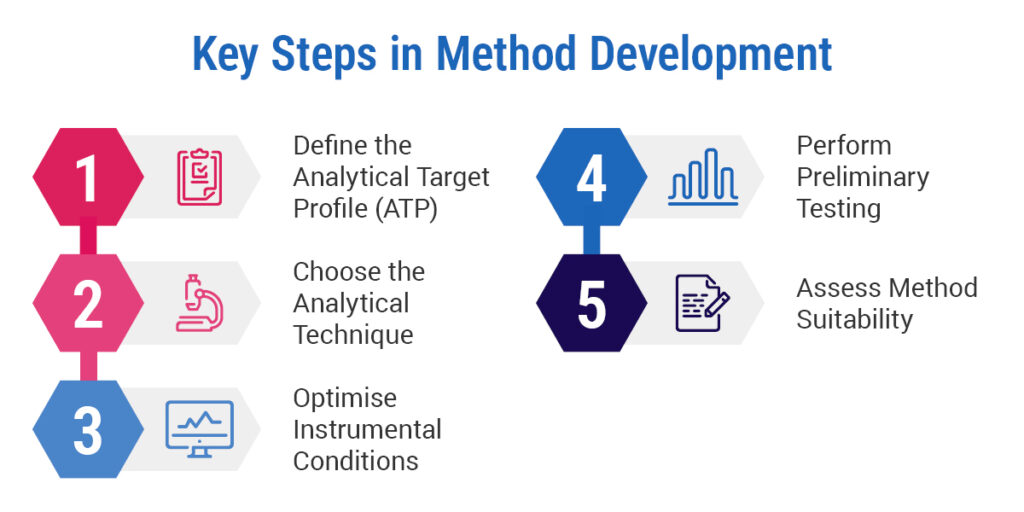
One of the most persistent challenges in the pharmaceutical workflow is the transition from a concept to a robust, validated method. It is a common misconception that high-end instrumentation automatically guarantees ease of use. In reality, pharmaceutical analysts often struggle with the “blank space” between unboxing an instrument and running their first compliant sample.

Whether you are identifying trace impurities, performing stability testing, or conducting complex bioanalysis, the method development phase is often where projects stall. A method that works in a controlled environment can fail in a high-throughput production setting if it hasn’t been stress-tested for robustness. This leads to a reactive cycle of troubleshooting and re-validation, which drains resources and delays time-to-market.
Navigating a shifting regulatory landscape

Data integrity is the non-negotiable cornerstone of the pharmaceutical industry. Global research shows that 90% of pharmaceutical professionals agree that reliable instruments are the single most important factor for a successful workflow. This is because, in this sector, a failure in reliability is a failure in compliance.

The pressure to process more samples while maintaining absolute adherence to 21 CFR Part 11 and EudraLex Annex 11 is immense. Without a partner who understands the nuances of IQ/OQ (Installation and Operational Qualification) and ongoing maintenance, labs risk falling into the “efficiency gap.” This is where sophisticated instruments sit underutilised because the method is too temperamental or the staff lack the specific training required to navigate the software’s compliance features.

Mastery of complex matrices with Agilent LC/MS

For laboratories tackling the most demanding pharmaceutical applications – such as nitrosamine analysis or impurity profiling– Agilent’s LC/MS solutions are globally recognised as the definitive standard. These systems provide the sensitivity and specificity required to detect analytes at levels that were previously unimaginable.

However, the “Chemetrix Edge” lies in how we support this technology. We recognise that method development for LC/MS is a specialised skill. Our support department acts as an extension of your own team, providing on-site assistance to help you develop, optimise, and troubleshoot your pharmaceutical methods. By leveraging our local application expertise, you can reduce the time spent in method development and ensure that your LC/MS system is performing at its peak from day one.

Driving throughput with the Agilent 1290 Infinity III LC

The workhorse of any modern pharmaceutical lab is the Liquid Chromatograph, and the Agilent 1290 Infinity III LC is engineered specifically for high-throughput environments. It is designed to handle the everyday pressures of pharmaceutical analysis with ultra-low carryover and exceptional pressure stability.

Chemetrix supports this hardware through a comprehensive service programme that goes beyond simple repairs. We offer tailored preventive maintenance and rapid-response technical support to ensure your 1290 Infinity III stays in a qualified state. By integrating our service expertise with this robust hardware, we help labs eliminate the “time traps” of manual intervention. Our goal is to ensure your staff spend less time worrying about baseline
drift and more time focusing on high-value data interpretation.
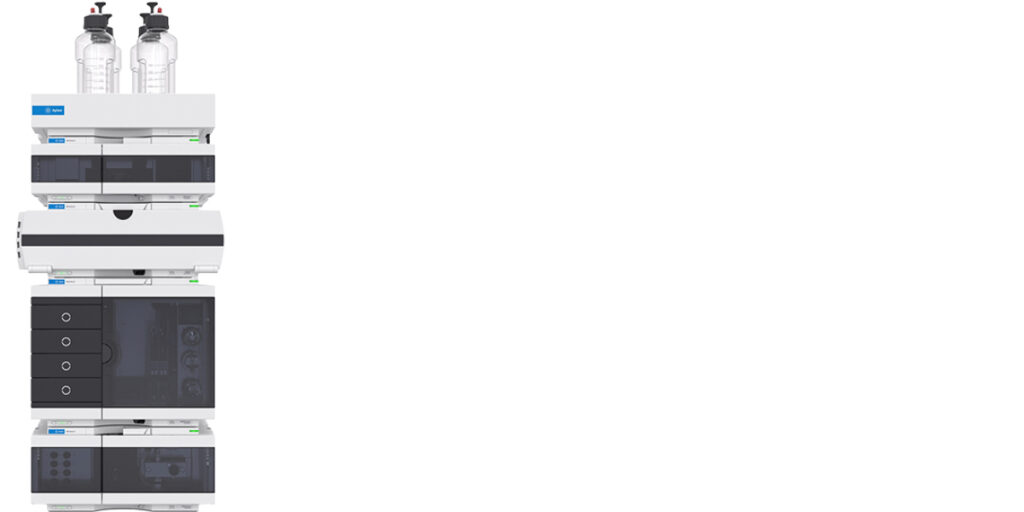
Agilent 1290 Infinity III LC

The reward of proactive support

The transition from a reactive laboratory to a proactive one is transformative. When you partner with a specialist who understands pharmaceutical applications, the results are measured in more than just uptime. You gain the peace of mind that comes from knowing your methods are robust, your instruments are qualified, and your data is defensible.

Our most successful pharmaceutical partners are those who have moved away from viewing instrumentation as a commodity and have embraced it as a collaborative workflow. This partnership leads to faster validation cycles, fewer “Out of Specification” (OOS) investigations, and a laboratory team that is empowered by their technology rather than frustrated by it.


Take the next step in laboratory excellence

The road to an optimised pharmaceutical workflow doesn’t have to be a solitary one. Whether you are looking to expand your LC/MS capabilities or need to refine the efficiency of your current chromatography setup, the expertise you need is available locally.

Your Action Plan:

Identify your most temperamental method – the one that requires the most manual intervention or frequent re-runs. Contact a Chemetrix specialist today for a workflow audit. Let’s work together to resolve your method development challenges and ensure your lab is equipped for the future of pharmaceutical discovery.

A Look at Data Integrity in Pharma Labs

Data integrity problems in pharmaceutical quality control laboratories are driving more regulatory action than ever before. What has changed to drive all this activity? While plenty of information is available, much of it seems to confuse rather than clarify.

Data integrity is a critical aspect in pharmaceutical laboratories, ensuring that the data generated during business operations and drug manufacturing is accurate, complete, and reliable. When data is reliable, business owners can make informed decisions, improve product quality, and contribute to overall success.

Data integrity is important because it builds trust with stakeholders and ensures that the information used to evaluate drug safety, efficacy, and quality is trustworthy. For patients using a pharmaceutical product, it assures them of the safety that is promised and provides qualitative evidence to support the manufacturer’s guarantee.

As W.E. Deming said,

“Without data, you are just another person with an opinion.”

Let’s explore some common myths of data integrity by looking at facts, based on a study of available resources and direct interactions with U.S. Food and Drug Administration (FDA) staff and their consultants.


Myth: All this regulation around data integrity is new

Data integrity has been a concern for decades. The FDA’s focus on it began with 21 CFR Part 11 in 1998. In 2003, after the pharmaceutical industry spent years struggling with the regulation, the FDA released its Scope and Application guidance, clarifying some of the requirements in Part 11. This guidance also included a discussion of the FDA’s selective enforcement strategy based on what the administration was finding during its inspections. In 2010, the FDA announced its focus on data integrity inspections. At that time, however, few people within the FDA were qualified to understand the data integrity aspects of computerised systems. Thus, beginning in 2013, data integrity has been a primary inspection point, and there has been a visible increase in data integrity enforcement across all geographies. In addition, starting in 2014, as a result of those inspections, the FDA has often included the names of hardware and software products in their warning letters and related public information documents in a less than subtle message to the hardware and software makers that the administration expects them to assist customers with data integrity and compliance concerns.


Myth: Data integrity is an IT issue

Success in addressing data integrity relies less on technology and more on fostering a culture, organisation, and mindset conducive to excellence. Key contributors to effective data integrity solutions include a shared vision of data integrity practices and a commitment to continuous improvement. In both paper-based and electronic systems, data integrity issues can arise, each presenting unique challenges and requiring tailored remediation strategies. Many responses to these issues overlook the possibility of such occurrences in paper-based systems, failing to conduct risk assessments or identify areas for remediation. Compliance and best practices must span data generation, transformation, maintenance, accuracy, and consistency. Cultivating the right culture, assembling capable teams, ensuring transparency in data integrity performance, and aligning company goals with data integrity objectives are all essential components of a successful data integrity initiative.


Myth: Only the software needs to be compliant

Software often does not comply with regulations. The software itself is inert; software contains the technical controls to support compliance with the applicable regulations. In addition to technical controls, procedural controls must also be in place. A discussion about procedural controls versus technical controls is often seen in FDA warning letters, particularly when gaps in a system’s ability to support technical controls required by various regulations have been exploited.

A standard operating procedure (SOP), used as a procedural control, can substitute for a technical control as long as:

• People are trained on that SOP

• The SOP is followed

• Adherence to the SOP is confirmed by quality oversight and/or compliance auditing

Often, however, even if SOPs exist, they are not followed, and adherence isn’t properly verified. Consequently, the FDA will demand system remediation to prevent a recurrence of the behaviour. Audit trails within computerised systems are an example of technical controls. The software must be able to generate audit trails that contain all the components the regulations require, and then those controls must be enabled.

Analytical instrument manufacturers are taking compliance and regulations into account with their products. As an example, Agilent is applying critical thinking to redesigning laboratory software to help respond to new regulatory compliance realities. Many systems may generate audit trail reports in printed form, but the new version of the Agilent OpenLAB Chromatography Data System has a built-in tool that allows a user to electronically review electronic audit trails entries. These audit trail entries are organised by type, an online review can be performed, and electronic signatures incorporated.

Chromatography Data Systems


If data integrity regulation compliance is a necessity for your pharma lab, Chemetrix is able to provide solutions that include instruments and software that can help ensure your data is not only well managed and organised, but kept safe and generated with adherence to all the regulatory guidelines.

Data integrity problems can severely impact business operations, leading to financial losses, legal issues, and damaged reputation. It forms the foundation of for reliable pharmaceutical research, development, and manufacturing and, therefore, should be as error-free and precise as possible. It goes beyond being just a practice; data integrity is the cornerstone of trust and excellence in pharmaceutical labs, paving the way for groundbreaking discoveries and lifesaving innovations.


Tips for Preserving Data Integrity

Credible lab results depend on the quality and reliability of your data, regardless of which industry or function your lab serves. The complexities of ensuring data integrity can be overwhelming, but we are here to assist you and optimise your lab’s performance.

The final phase of the analytical process is perhaps the most critical stage for assuring data integrity. This is where raw data, factors, and dilutions come together to create reportable values, and labs must consider and respond to the potential for improper manipulation — in all its various forms.

There are a few critical choices to be made around calculation and reporting that impact compliance, the trustworthiness of results, and even the reputation of the lab.

Watch our webinar on Addressing Data Integrity Gaps webinar

No lab wants to go through all the work of setting up methods, conducting analysis and gathering data only for it to be for nought or at risk because the data integrity system wasn’t up to par. Here is our advice for maximising lab efficiency and data integrity simultaneously:


Go paperless as far as possible

No matter where calculations happen, it must be possible to see the original data, calculation procedure (method), and outcome. In addition, there must be sufficient transparency to capture any changes to factors, values, or the calculation procedure for review. To meet these requirements, there are three primary options to consider:

A spreadsheet: This remains the least efficient, least compliant, and least effective option for data integrity. A spreadsheet typically has manual data entry and permits an analyst to recalculate results before printing and saving the desired result values for the permanent batch record. Why do so many labs continue to choose it? Not simply to support the paper industry but because it is familiar and comfortable. It is time to move on to better options.

A LIMS or ELN application: If configured correctly, many of these applications have audit trail capabilities, access controls to prevent unauthorised actions and versioning of calculations, the ability to perform calculations that are problematic for chromatography applications, and more. However, their ability to interface is a process strength and data integrity weakness. Data sent into LIMS or ELN can be manipulated externally and then sent to the LIMS or ELN for calculation.

A CDS application: The chromatography data system is often the best calculation location. It usually provides access control to prevent unauthorised changes, versioning of calculations, and audit trail reviews for changes in calculated values and the calculations themselves. In addition, the calculations are in the same system that holds the original (raw) data, so that review is usually within one system.


Cut reporting time without increasing data integrity risks

Focus on the highest risks and use a CDS application to accelerate the reporting process. Interestingly, the greatest data integrity risks are sometimes indicated by a lack of out-of-specification (OOS), out-of-trend (OOT), or out-of-expectation (OOE) results. In many cases, falsification activities are directed at making test results that would fail the specification into passing results through various forms of data manipulation. This makes it prudent to carefully review results near specification limits (say, within 5%) to verify that all changes and calculations are scientifically justified.

To accelerate your reporting process, don’t print all your data; print a summary. An exhaustive printout makes it harder for the second person to review. Instead, leave most data electronic, print the summary, and facilitate a quicker review process.


Review your management policies

Management can inadvertently create a climate where personnel are encouraged to manipulate test results. Mandates such as “zero deviations,” “no product failures,” and “meeting production targets” can encourage data manipulation. Throw in the possibility of a demotion or dismissal for failure to meet any of these mandates, and the environment is ripe for data manipulation.

The irony is that two losers are created: the patient who receives a sub-standard product, and the company that no longer knows its true capability or process trend—or worse, suffers reputational damage. This phenomenon is recognised by the Pharmaceutical Inspection Convention and Pharmaceutical Inspection Co-operation Scheme (PIC/S) data integrity guidance, warning that management should not institute metrics that cause changes in behaviour to the detriment of data integrity.


Learn more about the capabilities of OpenLab CDS

The newest release of OpenLab CDS software helps you strengthen data integrity while accelerating calculation and reporting processes. To cite just a few key features and capabilities:

The Custom Calculator tool: automatically computes unique values directly within the software, removing error-prone calculation steps and allowing you to meet compliance requirements faster and with less effort. Custom Calculator can also flag changes made after initial use of the calculation procedure — telling the reviewer that audit trails should be checked to assess the scientific merit of the change or changes. Download the Technical Overview

Automated reporting: with OpenLab CDS, analysts no longer have to enter data manually or print everything. If you analyse approximately 500 samples per month at 10 minutes per sample, including data review time, manual data entry takes about 1000 hours per year or about 25, 40-hour weeks—half of an analyst’s time. Using OpenLab CDS, reporting time can be reduced to 5 minutes per sample for time savings of 500 hours or 12.5 weeks per year.

Technical controls: within the audit trail give analysts the ability to highlight data changes and deletions to facilitate the review process, enable review by exception and create efficient search routines within an individual project or the whole database to identify data trends and inconsistencies. The application also documents that audit trail entries have been reviewed.

To learn more about OpenLab CDS for your lab and the preservation of your data integrity, learn more about the software on our Solutions page.


Addressing Data Integrity Gaps: Does Your Lab Have a Strategy?

Data integrity is paramount in today’s digital world. Data Integrity Insights helps your lab stand up to any regulatory examination by informing you about the latest global enforcement trends and the strategies you can use to stay compliant. Presenting uncompromised results and maintaining compliance with the latest regulations and standards, including those issued by the pharmaceutical, environmental and food regulatory bodies, is a necessity.

The traditional approaches to laboratory data integrity are insufficient to meet today’s increased scrutiny of computerised systems and the terabytes of data they produce. To successfully present your results, you must be prepared to prove that your data have not been compromised—and that can be a challenge.

Does your lab have a data integrity strategy? Are data integrity gaps putting your company at risk?

Learn how to perform data process mapping on a chromatographic process from the set-up of analysis through calculating the reportable result. From this map, the data integrity gaps can be identified, and the risk assessed to determine how critical the gaps are so that a plan and strategy to remediate or remove the risks can be implemented.


What you will learn

  • Understand the scope of a data integrity program
  • How to perform data process mapping on a chromatographic process to identify data integrity gaps, assess the risk posed by those gaps, and determine how to remediate or solve them.
  • Understand options for short-term remediation and long-term solutions


Who should attend

Analytical chemists, technicians, laboratory managers, regulatory affairs personnel and others working in R&D and QA/QC in the pharmaceutical industry.


Bob McDowall
Director, RD McDowall
Limited, Bromley,
Kent, UK

Register and watch on demand >