Reducing the Environmental Impact of Laboratories: A Call to Sustainable Action

Did you know that laboratories, the epicentres of scientific discovery, also leave an indelible footprint on the environment, contributing significantly to waste and energy consumption? It’s time we scrutinise the environmental impact of labs and explore actionable steps toward a more sustainable future.

In the pursuit of scientific breakthroughs, laboratories often overlook their environmental impact, but the repercussions are significant. As we grapple with climate change and environmental degradation, the imperative to reduce the ecological footprint of labs becomes ever more critical. Sustainable practices in laboratories not only contribute to global environmental conservation but also foster a culture of responsibility and forward-thinking innovation within the scientific community.


Why it matters: The environmental imperative for labs

The environmental impact of laboratories is substantial, from energy-intensive equipment to disposable plastics and hazardous waste. A survey by Agilent revealed that nearly 80% of labs surveyed recognise the importance of sustainability but only 44% have established formal sustainability initiatives. The urgency to address this dissonance lies in the fact that labs are significant contributors to pollution, resource depletion, and carbon emissions. By adopting eco-friendly practices, labs can mitigate their environmental impact and lead the charge toward a more sustainable scientific future.


Tips for reducing lab environmental impact: A roadmap to sustainability

  • Energy efficiency: Invest in energy-efficient lab equipment, such as fume hoods, freezers, and autoclaves. Regular maintenance and calibration can further optimise energy usage.
  • Waste reduction: Minimise single-use plastics by opting for reusable alternatives. Implement waste segregation practices and explore recycling programs for items like pipette tip boxes and sample vials.
  • Green procurement: Choose suppliers and products with eco-friendly certifications. Consider the life cycle of consumables and equipment, prioritising those with minimal environmental impact.
  • Water conservation: Implement water-saving measures, such as using water-efficient autoclaves and incorporating responsible water-use practices in experiments.
  • Sustainable lab practices: Foster a culture of sustainability within the lab. Encourage staff to turn off equipment when not in use, adopt electronic documentation systems, and participate in eco-friendly initiatives.
  • Decreasing Helium usage: There is an increased shortage in the supply of helium, which is causing a shift to using hydrogen for GCMS instead. Agilent is realising new upgrades on various instruments to allow GCMS to run on hydrogen safely.

Agilent is also focusing on decreasing argon consumption in their Agilent 4210 MP-AES by using nitrogen as an alternative. The Agilent 5800 ICP-OES also utilises the least amount of argon.

Did you know that utilising more efficient UHPLC methods can decrease waste generation by 5 times or more on average? It can also increase lab productivity substantially.

Explore our range of Agilent 1290 HPLC systems with a variety of different detectors and MassSpecs to suit your lab’s needs.

Explore our products

Sustainability has always been a crucial factor for Agilent Technologies. The below article shares how they are leading the way in sustainable supply chains and instrument production from a holistic approach.

Read the article here


Reflecting on your lab’s impact

Imagine the collective impact of every lab committed to sustainable practices. By reflecting on your lab’s environmental impact, you not only contribute to a healthier planet but also set an example for the broader scientific community.

The responsibility to reduce the environmental impact of laboratories rests not just on researchers and lab managers but on the entire scientific community. By adopting sustainable practices, labs can align their efforts with global initiatives for environmental conservation and contribute meaningfully to a healthier planet. Consider the legacy your lab leaves behind – one that goes beyond scientific discoveries to embrace a commitment to environmental stewardship.


Partnering with Chemetrix for a sustainable tomorrow

As we embark on the journey toward greener labs, it’s essential to collaborate with industry leaders committed to sustainable solutions. Chemetrix stands at the forefront of providing environmentally conscious options for analytical instruments and consumables. By partnering with Chemetrix, your lab can actively contribute to a sustainable tomorrow.

Reach out today to explore how together, we can redefine the future of scientific research with a shared commitment to environmental responsibility.

AI Technology and the Lab of the Future

In 2022, Agilent announced its acquisition of advanced artificial intelligence (AI) technology developed by Virtual Control, an AI and machine learning software developer that creates innovative analysis solutions in lab testing. Agilent will integrate the software, known as ACIES, into its industry-leading gas chromatography and mass spectrometry (GS/MS) platforms to improve the productivity, efficiency and accuracy of high-throughput labs the company serves around the world.

ACIES automates the labour-intensive task of gas chromatography/mass spectrometry data analysis improving efficiency in the laboratory workflow, from sampling to reporting. Agilent will integrate the technology into its MassHunter software package for LC/MS and GC/MS instruments.


Digital labs

This move by Agilent signals that the digital age is very much here for laboratories. Science has always driven the world forward and now it will do the same for laboratories.

The lab of the future is a concept built on the foundation of digitalised labs. It encompasses smart technological workflow systems that are connected and capable of collecting vast amounts of data via integrated automation.

A digitalised lab should be considered a more advanced lab as it has more access to data. With data being key to transforming science, increasing amounts of data generated in any lab, let alone a digitally connected lab, could be a game-changer – but only if it’s collected and synthesised into information and knowledge that is useful.

The digital environment (i.e., paperless work in an electronic format) capitalises on digitalisation. It incorporates all of the necessary instrumentation for complete data analysis and enables the full value of the data for decision-making. The ability to monitor operations and provide more sophisticated insights is a core reason for introducing AI into the operational lab environment.


Transforming science

Artificial intelligence (AI) is often defined as the ability of a machine to learn how to solve cognitive challenges. However, in the context of scientific methodology and laboratory interconnectivity, AI is starting to be used for capturing data to model human observation and decision-making processes.

Taken forward, connecting all instruments in a lab via AI enables the opportunity for an even more astute understanding of the interactions between technology and also users, potentially providing an all-inclusive view of all laboratory operations.

Accessing this powerful source of information will become a necessary component of scientific productivity. This is an inevitable next step in creating lab management systems that are so efficient and provide knowledge that is so valuable that only AI will be able to produce them.

AI, coupled with universal sensing capabilities to detect and monitor a range of variables, e.g., an instrument’s power draw, enables companies to realise certain operational and financial benefits to their business and plan for the future. Through high-quality and readily available insights, AI enables the simultaneous monitoring of all equipment usage in the lab and holistic capacity tracking.

Watch our webinar on Industrialising High-Throughput Glycoproteomics Using AI for Clinical Use


Staying competitive in a competitive world

Globally, scientific innovation is accelerating, so labs need to consider the technology investments required to become digitally enabled in order to keep up and stay competitive. We live in a data-driven world, so scientific laboratories must fundamentally transform how they create, manage, and effectively use all the data that is generated in their lab ecosystem. Achieving and sustaining a competitive edge in a world of constant change will require the continual transformation of lab operations and scientific data management. This will be the first and most important step toward becoming a truly digitalised lab.


Standardising honey fingerprinting methods

Although previous work has been done developing case studies for fingerprinting foodstuffs, including honey, the approaches among laboratories have been different regarding sample preparation and instrumental conditions. There are also differences in terms of data processing and analysis. As a result, two laboratories analysing the same sample may obtain slightly different results. Ideally, developing a standardised fingerprinting method that could be used across all LC/MS-based workflows, enabling the same testing technique to be used across multiple laboratories, would be optimal and where future work is aimed.

Read our article on Fingerprinting Honey to Ensure Purity

When addressing the issues of food safety, product quality, and authenticity, each may be governed by separate sets of regulations. For example, looking at the residues of contaminants in honey, such as pesticides, there may be differences globally. Countries may have their restrictions for the maximum limit for specific compounds. Contaminants are a part of the picture when considering fingerprinting for honey, but permitted levels may vary between countries.

Additionally, as samples come from the field to the lab for testing, there is potential interest in reversing this and bringing the lab out into the field instead. This interesting but not yet recognised capability would enable regulators and the global food industry to respond more quickly to honey contamination and food fraud.

Step into the future, elevate your business and talk to our team of experts about how you can improve the productivity, efficiency and accuracy of your lab.

Tips for Preserving Data Integrity

Credible lab results depend on the quality and reliability of your data, regardless of which industry or function your lab serves. The complexities of ensuring data integrity can be overwhelming, but we are here to assist you and optimise your lab’s performance.

The final phase of the analytical process is perhaps the most critical stage for assuring data integrity. This is where raw data, factors, and dilutions come together to create reportable values, and labs must consider and respond to the potential for improper manipulation — in all its various forms.

There are a few critical choices to be made around calculation and reporting that impact compliance, the trustworthiness of results, and even the reputation of the lab.

Watch our webinar on Addressing Data Integrity Gaps webinar

No lab wants to go through all the work of setting up methods, conducting analysis and gathering data only for it to be for nought or at risk because the data integrity system wasn’t up to par. Here is our advice for maximising lab efficiency and data integrity simultaneously:


Go paperless as far as possible

No matter where calculations happen, it must be possible to see the original data, calculation procedure (method), and outcome. In addition, there must be sufficient transparency to capture any changes to factors, values, or the calculation procedure for review. To meet these requirements, there are three primary options to consider:

A spreadsheet: This remains the least efficient, least compliant, and least effective option for data integrity. A spreadsheet typically has manual data entry and permits an analyst to recalculate results before printing and saving the desired result values for the permanent batch record. Why do so many labs continue to choose it? Not simply to support the paper industry but because it is familiar and comfortable. It is time to move on to better options.

A LIMS or ELN application: If configured correctly, many of these applications have audit trail capabilities, access controls to prevent unauthorised actions and versioning of calculations, the ability to perform calculations that are problematic for chromatography applications, and more. However, their ability to interface is a process strength and data integrity weakness. Data sent into LIMS or ELN can be manipulated externally and then sent to the LIMS or ELN for calculation.

A CDS application: The chromatography data system is often the best calculation location. It usually provides access control to prevent unauthorised changes, versioning of calculations, and audit trail reviews for changes in calculated values and the calculations themselves. In addition, the calculations are in the same system that holds the original (raw) data, so that review is usually within one system.


Cut reporting time without increasing data integrity risks

Focus on the highest risks and use a CDS application to accelerate the reporting process. Interestingly, the greatest data integrity risks are sometimes indicated by a lack of out-of-specification (OOS), out-of-trend (OOT), or out-of-expectation (OOE) results. In many cases, falsification activities are directed at making test results that would fail the specification into passing results through various forms of data manipulation. This makes it prudent to carefully review results near specification limits (say, within 5%) to verify that all changes and calculations are scientifically justified.

To accelerate your reporting process, don’t print all your data; print a summary. An exhaustive printout makes it harder for the second person to review. Instead, leave most data electronic, print the summary, and facilitate a quicker review process.


Review your management policies

Management can inadvertently create a climate where personnel are encouraged to manipulate test results. Mandates such as “zero deviations,” “no product failures,” and “meeting production targets” can encourage data manipulation. Throw in the possibility of a demotion or dismissal for failure to meet any of these mandates, and the environment is ripe for data manipulation.

The irony is that two losers are created: the patient who receives a sub-standard product, and the company that no longer knows its true capability or process trend—or worse, suffers reputational damage. This phenomenon is recognised by the Pharmaceutical Inspection Convention and Pharmaceutical Inspection Co-operation Scheme (PIC/S) data integrity guidance, warning that management should not institute metrics that cause changes in behaviour to the detriment of data integrity.


Learn more about the capabilities of OpenLab CDS

The newest release of OpenLab CDS software helps you strengthen data integrity while accelerating calculation and reporting processes. To cite just a few key features and capabilities:

The Custom Calculator tool: automatically computes unique values directly within the software, removing error-prone calculation steps and allowing you to meet compliance requirements faster and with less effort. Custom Calculator can also flag changes made after initial use of the calculation procedure — telling the reviewer that audit trails should be checked to assess the scientific merit of the change or changes. Download the Technical Overview

Automated reporting: with OpenLab CDS, analysts no longer have to enter data manually or print everything. If you analyse approximately 500 samples per month at 10 minutes per sample, including data review time, manual data entry takes about 1000 hours per year or about 25, 40-hour weeks—half of an analyst’s time. Using OpenLab CDS, reporting time can be reduced to 5 minutes per sample for time savings of 500 hours or 12.5 weeks per year.

Technical controls: within the audit trail give analysts the ability to highlight data changes and deletions to facilitate the review process, enable review by exception and create efficient search routines within an individual project or the whole database to identify data trends and inconsistencies. The application also documents that audit trail entries have been reviewed.

To learn more about OpenLab CDS for your lab and the preservation of your data integrity, learn more about the software on our Solutions page.


Enhancing Labs With Digitalisation

This article was originally published by Agilent

The topic of optimising laboratory efficiencies is at the forefront of discussions for many lab managers. With the support of new and improved smarter technologies, previous efficiency- and productivity-related challenges are beginning to dissipate as manual processes are starting to be replaced with automated and integrated applications, helping to pave the way towards a fully digitalised lab as part of the internet of things (IoT) movement.

According to the global advisory firm Gartner, a digitalised lab is one that is using digital technologies to change the way they operate their lab, optimise their business model, and ultimately provide new revenue and value-producing opportunities. In a nutshell, it is the process of moving to a digital business.

The results from a survey of pharma lab leaders support this observation. Responses highlighted the urgency to improve and update laboratory processes. Survey takers said that they:

  1. Wanted to achieve quicker results (55%)
  2. Saw a demand for superior quality (44%)
  3. Wanted to improve data integrity (43%)
  4. Found that their current workflow requires optimisation (83%)

Additional survey results showed that only 4% of lab managers are using utilisation data (a tool to understand how all instrumentation in labs is performing) for decision-making. More astonishingly, on average, some lab instruments were only being used 35% of the time.


Goodbye Laborious Systems, Hello Smart Technology

To combat some of the key challenges often faced with existing lab workflows, smart technology is increasingly at the core of change. By helping transform ordinary labs into smart technological labs, companies such as Chemetrix can provide better instrumentation and services to their customers without compromising the quality of results, cost-effectiveness, or laboratory space.

The lab of the future is a concept built on the foundation of digitalised labs. It encompasses smart technological workflow systems that are connected and capable of collecting vast amounts of data via integrated automation. At the Lab of the Future 2020 congress in Cambridge, UK, a keynote speaker at the event was quoted as saying “The lab of the future won’t be bound by walls,” suggesting that the digitalisation of labs will enable more fluidity and interconnectivity between assays and other procedures.


Transforming Science With Digitally Connected Labs

A digitalised lab should be considered a more advanced lab as it has more access to data. With data being key to transforming science, increasing amounts of data generated in any lab, let alone a digitally connected lab, could be a game-changer – but only if it’s collected and synthesized into information and knowledge that is useful.

The digital environment (i.e., paperless work in an electronic format) capitalizes on digitalisation. It incorporates all of the necessary instrumentation for complete data analysis, and enables the full value of the data for decision making.

Artificial intelligence (AI) is often defined as the ability of a machine to learn how to solve cognitive challenges. However, in the context of scientific methodology and laboratory interconnectivity, AI is starting to be used for capturing data to model human observation and decision-making processes. Taken forward, connecting all instruments in a lab via AI enables the opportunity for an even more astute understanding of the interactions between technology and also users, potentially providing an all-inclusive view of all laboratory operations.

By monitoring and identifying inefficiencies and making recommendations, AI goes beyond data interpretation to the level of suggestive intelligence, which could be used to more effectively manage lab operations, and ultimately accelerate research and discovery.


Ai Technology Will Augment Digitalisation Of The Lab

The ability to monitor operations and provide more sophisticated insights is a core reason for introducing AI into the operational lab environment. Accessing this powerful source of information will become a necessary component of scientific productivity. This is an inevitable next step in creating lab management systems that are so efficient and provide knowledge that is so valuable that only AI will be able to produce them.

AI, coupled with universal sensing capabilities to detect and monitor a range of variables, e.g., an instrument’s power draw, enables companies to realize certain operational and financial benefits to their business and plan for the future. Through high-quality and readily available insights, AI enables the simultaneous monitoring of all equipment usage in the lab and holistic capacity tracking.


Providing Digitalised Innovations To Address Customers’ Key Challenges

Chemetrix is proud to supply Agilent technologies and platforms that have pushed the boundaries in providing solutions that support the needs of its customers by enhancing the interconnectivity of its instrument products, services, and consumables through:

  • Integrated products and services that advance the digital lab
  • Faster, customer-preferred online interactions that improve the ease of doing business
  • Solutions that increase operational efficiencies

As an example, part of the Agilent CrossLab Group, the Digital Lab Program, is an ecosystem of products designed to complement one another by delivering enhanced digital capabilities to customer end-users, improving their laboratory experience. This initiative has brought certain technologies to life with industry-leading tools in data intelligence to enhance the scientific and economic outcomes of labs worldwide, such as:

  • Asset Monitoring – Agilent CrossLab Asset Monitoring combines advanced IoT sensor technology and data analytics to enable lab-wide visibility. It integrates sensor-based utilisation monitoring with business analytics, allowing you to capture lab-wide instrument utilisation data across all of your workflows, view analytics compiled in dashboards to drive insights for improvements and justify CapEx, OpEx, and productivity decisions using fact-based data.
  • Smart Alerts – Monitoring instrument health and providing email-based alerts, notifying lab operators when to consider replacing key consumables, when to perform preventive maintenance, and when an Agilent instrument stops running anywhere in the lab. Digital lab-wide connectivity lets users remotely monitor all of their Agilent instruments.
  • SLIMS – End-users can effectively track samples as they progress through the laboratory from sample receipt to automated result reporting. SLIMS combines the best of a laboratory information management system (LIMS) with an electronic laboratory notebook (ELN) to enable end-to-end solutions and manage the full content and context of your laboratory.
  • OpenLab Software/Cloud Storage – This has become a viable option for virtually every computing workload in the laboratory, from sample management to complex analytics to secure data storage.


Staying Competitive In A Competitive World

Globally, scientific innovation is accelerating, so labs need to consider the technology investments required to become digitally enabled in order to keep up and stay competitive. We live in a data-driven world, so scientific laboratories must fundamentally transform how they create, manage, and effectively use all the data that is generated in their lab ecosystem. Achieving and sustaining a competitive edge in a world of constant change will require the continual transformation of lab operations and scientific data management. This will be the first and most important step toward becoming a truly digitalised lab.


Nuclear Fusion: A Vision for Clean Energy

On 13 December 2022, the U.S. Secretary of Energy announced a major scientific breakthrough from a Department of Energy (DOE) National Laboratory: Lawrence Livermore National Laboratory (LLNL) in California has carried out the first nuclear fusion experiment to achieve a net energy gain in the context of the National Ignition Facility (NIF) project.


What is nuclear fusion?

Nuclear fusion is a reaction that powers our main source of light and energy: the sun, as well as other stars. In the reaction, two (or more) atomic nuclei – encompassing protons and neutrons – fuse to form larger nuclei while releasing energy. This energy release occurs because the total mass of the resulting nuclei is less than the mass of the original nuclei that were fused. The leftover mass becomes energy that can be used to run a turbine-electrical power generator.


Making a star on Earth to create energy

Research scientists are attempting to recreate nuclear fusion – the reaction in which stars of our universe are generated – on Earth because the reaction can create enormous amounts of energy.
For nuclear fusion to occur, stellar-like temperatures (i.e., 100 million+ degrees) must be achieved. This process forces the positively charged nuclei to form plasma within a contained vector, overcome their repulsion by moving independently at speeds of around 1,000 km/s, and fuse.

Theoretically, if the energy generated from lab-controlled nuclear fusion could be harnessed and effectively stored on a global scale, this technology could transform how we fuel our homes, businesses, and vehicle transportation. The reaction is so efficient that 1 kg of fusion fuel could provide the same amount of energy as 10 million kg of fossil fuel.


Urgent demand for clean energy

Since the 19th century, Earth’s temperature has increased by approximately 1.1 °C. The amount of carbon dioxide has risen by 50% because greenhouse gases have been released from fossil fuels burnt for energy.

Average temperature increases should not exceed 1.5 °C by the start of the 22nd century, scientists are warning. However, there is an urgent demand for clean energy implementation on a global scale, as a UN report from October 2022 predicts Earth’s temperature will rise by at least 2.4 °C by 2100.4


An emerging solution for clean energy

Research scientists in this field highlight the fact that nuclear fusion may be the solution for generating clean energy while mitigating the effects of global warming. The process does not rely on using energy sourced from fossil fuels and does not produce greenhouse gas pollutants or long-lived radioactive waste. Fusion reactor materials can also be recycled or re-used within 100 years.

In essence, nuclear fusion provides a vision toward clean and low-price energy that is within our grasp, and which one day may be able to support our daily lives, economies, and technological evolutions.


A milestone achievement at LLNL

On 5 December 2022, the LLNL team at its National Ignition Facility (NIF) conducted a nuclear fusion experiment that resulted in a milestone achievement to date: energy breakeven – meaning that the experiment produced more energy than required to initiate the process.
The breakthrough represents a historic moment; it comes at a much-needed time, as the world faces high and unstable energy prices and unprecedented effects of global warming due to continual, global fossil-fueled energy use.

NIF development and testing spans over 50 years, and the facility leads the international laser fusion scientific community where other experiments operate, such as the Japanese FIREX and SG-III in China.


Advancing the research field

Now that LLNL’s research team has successfully demonstrated net-energy gain from a nuclear fusion experiment, there are still some technical challenges to overcome, such as:

  1. Replicating the experiment – if the conditions of the reaction are not favourable, it halts
  2. Further optimisation of all reaction conditions while ensuring that all components are robust enough to withstand the extreme environment necessary for nuclear fusion to occur
  3. Yielding and extracting an even higher energy output from the nuclear fusion reaction

The next R&D phase at LLNL – as well as associated research labs – will most likely involve replication and method development to achieve higher energy gains, and make advancements toward longer-term commercial viability. When it comes to vacuum technology support, Agilent products and expertise will continue to play an important role in advancing this research field.


In the meantime, sustainable lab solutions

While work continues to produce clean energy, what we can do now is make better choices that are in line with sustainability goals. Partnered with My Green Lab, Agilent supports scientists in achieving their lab sustainability goals. Several Agilent instruments also carry My Green Lab certification.

The opportunity to reduce the environmental impact of labs through smarter purchases is tremendous. By procuring instruments and products that will reduce waste, reduce energy consumption, reduce solvent/consumable consumption, and last longer (reducing the need to buy and discard more instruments), laboratories can operate in a more environmentally sustainable way.

Speak to a consultant at Chemetrix to learn more about sustainable instruments with technology that can help your lab achieve its sustainability goals. View our products to learn more about technology that’ll save energy and other resources for a more efficient lab.


Chemetrix supports The Children’s Hospital Trust

According to Arrive Alive, 20 children are hospitalised due to trauma and bone injuries. In 2019, The Road Traffic Management Corporation also reported 45,000 children being hospitalised due to head, neck, and abdominal injuries. The Red Cross War Memorial Children’s Hospital treats many of these patients and Chemetrix is proud to support this organisation in its life-saving work.

On 23 September 2023, Chemetrix was able to make a donation to the Children’s Hospital Trust, with the support of our customers. These funds have been allocated to the Orthopaedic Unit Project at the Red Cross War Memorial Children’s Hospital. It will aid in the building of a new 30-bed Orthopaedic Unit to accommodate all ortho patients within one facility. The unit will give Orthopaedic patients a chance to regain their mobility and freedom of movement. Education and training for medical and para-medical services form part of these services.

The hospital remains the only specialised paediatric facility in the Western Cape, treating all little Orthopaedic patients. Through the new Orthopaedic Unit, patients will have access to the multidisciplinary team comprised of surgeons, physiotherapists, dieticians, and occupational therapists during one single visit – saving the parents both time and money.

Time was especially important for little Fayaad. He was hit by a motor vehicle while crossing the road with his father and it was a 13-minute drive from the scene of the accident to the Red Cross War Memorial Children’s Hospital. Within half an hour of arriving, Fayaad was examined. He was able to go home within the same day following X-rays and a cast being fitted on his injured leg. Orthopaedic clinics at the hospital will ensure he will regain optimal use of his leg as he continues to grow.

Above chronic and hereditary bone abnormality treatments, the hospital also cares for acute trauma injuries. The specialised services and multidisciplinary care are aimed at helping these little ones go on to live healthier and normalised lives. For now and in the future, Chemetrix hopes that its contribution to the Orthopaedic Unit will bring the joy of movement and smiles back to many children.

Sustainability Through Lab Optimisation

The average lab consumes more energy per square meter than many hospitals or other commercial buildings—the US EPA estimates that a 30% reduction in lab energy use in the United States translates to removing 1.3 million cars from highways per year. Now, imagine what that would mean for labs around the world.

Scientific labs are experiencing an increasing demand for greater efficiency and productivity and, at the same time, a strong desire to maximise sustainability from the organisation-wide level to daily operations. Combining new data intelligence technologies and better industry insight guidance allows for advancing lab operational efficiency through better asset utilisation and increased sustainability in the digital lab era.


Lab managers want sustainability and optimisation

The central premise for discussing sustainability and optimisation together is that a more efficient lab is a more sustainable one. Most lab managers are mindful of both sustainability and optimisation needs. A global survey of lab managers highlighted a strong desire to meet sustainability goals and remain conscious of sustainability in their daily operations.

Key takeaways from the survey included:

  • 68% of labs surveyed acknowledged that they require further work to improve sustainability.
  • The most common sustainability expectations from instrument vendors are to reduce emissions and energy consumption. 68% of the respondents expected instrument vendors to help them reduce emissions, while 58% expected a reduction in energy.
  • Increased efficiency and optimisation are also factors, with the most critical concern being speed as demand for higher sample throughput increases dramatically. The importance that lab leaders place on improving speed, optimisation, and efficiency was also highlighted in a pharmaceutical lab leaders survey.
  • Of those surveyed, 83% believed their workflows needed optimisation, and 63% would welcome innovations to increase efficiency.


Advanced asset control, digital analytics, and expert guidance

The opportunity for lab optimisation improvement is profound. On average, lab instruments are running only 35% of the time, and only 4% of labs employ data intelligence to ascertain fleet utilisation.

James Connelly, chief executive officer of My Green Lab agrees, “Lab equipment makes up a significant portion of the total plug load in any lab and can lead to high energy consumption. Optimisation of lab equipment through solutions such as asset performance management can dramatically lower the overall energy consumption and be a significant step toward achieving lab sustainability.”

A holistic method of assuring lab-wide optimisation and efficiency is required to address this gap effectively. A combination of advanced asset control, digital analytics, and expert guidance allows greater visibility and utilisation of all lab assets. Maximising the availability and utilisation of all assets will reduce a lab’s carbon footprint and enable more science to be done. Increasing operational efficiency and productivity positively impacts lab sustainability. Reducing energy consumption through increased efficiency is a win-win, especially for the environment.

Data intelligence systems with real-time sensing technology and interconnectivity provide better visibility into lab operations and help drive decisions. Gaining clarity on asset utilisation enables more informed decision-making that advances lab operations to new levels of efficiency and productivity—while increasing sustainability at the same time. Measuring asset utilisation opens the door to appropriate fleet right-sizing and technology refresh, resulting in higher throughput, less power consumption, a smaller workflow footprint, and redeployment of under-used or redundant instruments.


Connected labs reduce waste and increase productivity

Labs that are connected benefit from multiple efficiencies that bolster sustainability. Technologies such as smart alerts foster a proactive approach to instrument monitoring. Rather than reacting to an instrument breakdown, an interconnected lab with smart alert software will prevent it from happening in the first place. Interconnectivity also enables the ability to make data-driven decisions.

Interconnective technology can also increase instrument utilisation because it calculates how much science any particular instrument performs per square meter. Sustainability isn’t limited to the traditional ‘green’ metrics of waste and water— it is equally achieved through technology.

For example, having visibility of all instruments at once to produce an overall lab footprint from which adjustments can be made to make the lab more effective and efficient. Or not having to waste time performing duplicate runs because the smart alert system fires when the first doesn’t go through.


Go greener with asset monitoring

The process of lab optimisation involves integrating utilisation data with instrument service histories and end-of-guaranteed support to measure the instrument’s health. Understanding instrument utilisation and health can determine the optimal footprint and workflow composition.

A central operations strategy provides lab managers with profound insight into asset composition and health and the means to make data-driven decisions and optimise lab operations. The subsequent improvement of lab-wide efficiency not only increases the productivity of the laboratory as a whole but also lab sustainability by doing more science with less energy and resources. A win for both science and the environment.


This article is modified from content originally published by Agilent


Fueling Precision Medicine: From Sequence to Therapeutics

We are on the precipice of the next major shift in science as it relates to medicine. The 20th Century saw an explosion of technological advances that reshaped modern life completely. Today, the surge of discoveries and development continues particularly in biology. It is very possible that our counter arts in the future may look back on the 21st century as the Century of Biology.


A look at precision medicine

Precision medicine is the ability to understand and treat disease at a molecular level and it is driving revolutionary change in fields such as oncology. It aims to improve therapeutic outcomes by adding a previously missing but critical factor – the unique biology of the patient being incorporated into the treatment equation. This is done by including DNA sequence information.

According to the U.S. Food and Drug Administration, “Precision medicine, sometimes known as “personalised medicine” is an innovative approach to tailoring disease prevention and treatment that takes into account differences in people’s genes, environments, and lifestyles. The goal of precision medicine is to target the right treatments to the right patients at the right time.”

Based on this foundation, one megatrend to keep an eye on is cellular manufacturing. This is the ability to reprogram cells for practical purposes and it is transforming industrial biotechnology. Many chemicals and materials traditionally produced through petrochemical processes are now the products of engineered biological cells. Cellular manufacturing also requires a deep understanding of cellular metabolism and pathway interdependencies which are being accelerated by the vast amount of metabolomic information becoming available through advancements in mass spectrometry.

Although mass spectrometry is not new, its application in the clinical realm is fairly recent by medical research standards. For over half a century, diagnostics relied on immunoassays but mass spectrometry is addressing many of the limitations of immunoassays and also becoming vitally important to precision medicine. The high accuracy and sensitivity of mass spectrometric analysis of proteomes are suited for the incorporation of proteomics into precision medicine. Mass spectrometry can provide an understanding of how a patient reacts and interacts with a drug. With new instruments now able to easily fit on a benchtop and deliver results accurately at remarkable speeds with lower costs, it’s become the perfect test for precision medicine patient management.


A key example of megatrend impact: Cardiovascular disease

Inroads are being made in the treatment of cardiovascular disease through sequencing of the PCSK9 gene where it was discovered that various mutations of this gene are associated with high low-density lipoproteins (LDL) cholesterol levels a factor in multiple diseases. The knowledge that this gene plays a role—that high LDL levels weren’t simply a matter of poor diet—has contributed to the development of inclisiran, a small or short interfering RNA (siRNA) therapeutic that acts to silence the PCSK9 gene and effect clinically significant reductions in LDL cholesterol levels. Sequencing and mass spectrometry are essential to identify which patients have mutations in the PCSK9 gene to identify candidates for inclisiran therapy.


The future: Predicting biology

The megatrends of precision medicine and cellular manufacturing share a common driver: the past 20 years have seen a marked shift in our ability to understand and characterise biology as a primarily qualitative science to one that is increasingly quantitative. This shift carries the promise of eventually allowing us to understand, model and predict biology in the same way that we are able to do in the physical sciences—an exceptionally complex proposition that lies beyond our current capabilities. At a fundamental level, as our capacity to understand and control biology at the molecular level deepens our understanding of disease fuels parallel advances in industrial biotechnology.

This article was originally published by Agilent and has been amended here.


Join us at analytica Lab Africa 2023

analytica Lab Africa is the premier trade fair for the analysis, laboratory-technology and biotechnology sectors, bringing together scientists, entrepreneurs and users from around the world. Welcome to the perfect platform for your international business relations.

Chemetrix will be taking part in this prestigious event to showcase some of our latest instruments, innovations and partnerships.


Why you should visit

The international trade fair analytica Lab Africa focuses on innovative and applied product and system solutions for laboratories in the industrial, research and science sectors. As the industry’s regional forum for Southern Africa, analytica Lab Africa combines global and local market leaders and innovations with country specific main themes, precisely tailored to the market.


A global network

analytica gives you access to the world’s largest network of trade fairs for laboratory technology, analysis and biotechnology. Open the door to global success for your company. Present your products and solutions to the markets of the future.Germany, China, India, South Africa and Vietnam.


Exciting innovations

Get new and deeper insights into the Agilent product and solution portfolio with Agilent InterAct! Experience your favourite Agilent system in a virtual 3D environment. Visit our stand at the event for the exclusive launch of an immersive experience like never before.


Event details

Gallagher Convention Centre is one of Africa’s largest conference and exhibition venues. Located in Midrand, between Pretoria and Johannesburg, Gallagher is conveniently positioned in the business hub of Gauteng.


Show Dates

5-7 July, 2023

Venue

Gallagher Convention Center, Johannesburg, South Africa

Opening Hours

Wednesday, 5th July, 0900 hrs – 1700 hrs

Thursday, 6th July, 0900 hrs – 1700 hrs

Friday, 7th July, 0900 hrs – 1600 hrs


Register to attend the event >


We look forward to connecting with you an analytical Lab Africa 2023


Fingerprinting Honey to Ensure Purity

How pure is that honey in your jar?

Although there’s a rising demand for honey, the honey bee population is also under threat. Another not-so-sweet issue is the number of products labelled as honey on retail shelves that don’t meet the criteria to be classified as pure honey.

The term “adulterated honey” means any honey to which has been added honeydew, glucose, dextrose, molasses, sugar, sugar syrup, inverted sugar, or any other similar product or products other than the nectar of floral exudations of plants gathered and stored in the comb by honey bees.

Food fraud is a significant concern for consumers and producers, with research indicating that fraud accounts for up to 25% of all globally reported food safety incidents. The growing demand for food authenticity means consumers regularly pay a premium for organic and sustainably produced goods like honey. Fraudsters have been flooding markets with adulterated, low-quality, or mislabeled foodstuffs, damaging the livelihoods of legitimate businesses and potentially risking consumer health.


Increasing demand

Consumers have become quite specific in their demand for honey, focusing on unifloral honey or monofloral honey obtained predominantly from bees that feed on a single species of plant flowers. This results in a unique colour, flavour, and fragrance exclusive to each type of unifloral honey. As consumers are willing to pay more for these products, protections must ensure that they purchase what they expect.

According to data from the Food and Agriculture Organization of the United Nations, China, Mexico, Russia, Turkey, and the United States are among the major honey-producing countries accounting for approximately 55 per cent of world production. The most common form of adulteration involves extending or diluting honey with other less expensive sweeteners. Commonly identified extenders are corn, cane, and beet syrups.


Testing for authenticity to mitigate honey fraud

Global e-commerce is placing honey sales outside regulatory oversight more frequently—a trend expected to continue. This, combined with increased fraudulent activities, makes tackling the problem critical. This is why it is important to identify these substances quickly, efficiently, and consistently. The food industry requires analytical instruments and testing techniques to consistently and rapidly analyze food and identify trace chemicals.

Analytical testing is essential for assessing food authenticity, which is important to protect consumers’ health, the brand, and producers’ income. Testing is a necessary part of an overall strategy to mitigate fraud risk, and methods for authenticity testing are rapidly evolving, with innovative technologies now available for developing robust food testing techniques.


Agilent 1290 Infinity II LC System

For example, it has been demonstrated in recent years that coupling high-performance liquid chromatography with quadrupole time-of-flight (LC/Q-TOF), such as the Agilent 1290 Infinity II LC System with Agilent 6545 LC/Q-TOF, provides a sensitive method to reveal the chemical composition of honey samples. Using this method with a non-targeted approach enables the identification of new types and sources of fraud through the chemical markers in the honey, highlighting which kind of fraudulent activity is occurring. Since this technique evaluates multiple markers in honey to determine authenticity, it is very difficult for fraudsters to cheat by adding one or a few adulterants. This innovative technique is called honey fingerprinting.


Agilent 6545 LC/Q-TOF


Determining honey’s unique chemical composition

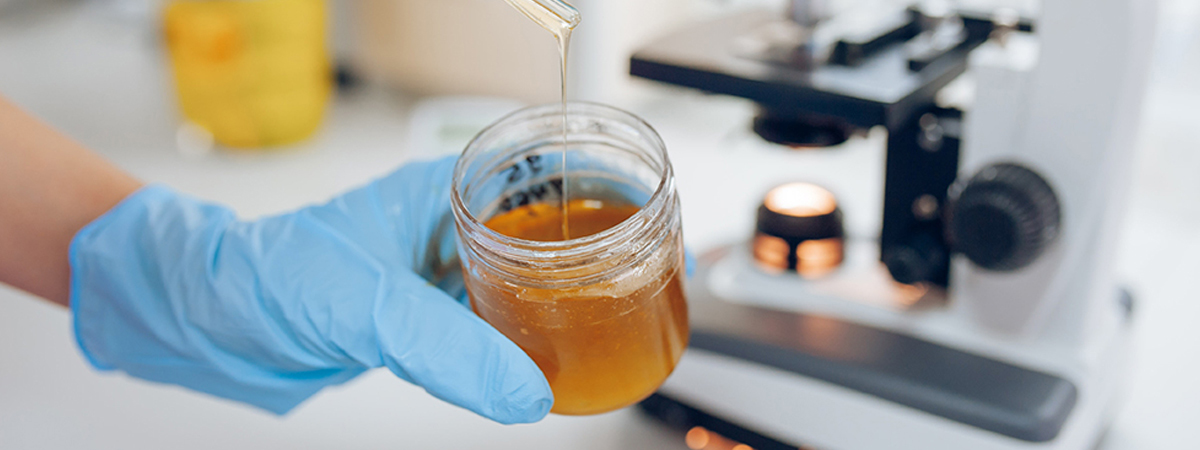
Honey fingerprinting is the practice of using a suitable technique to record as much information as possible on the chemical composition of a particular honey sample. In the same way, a human fingerprint is unique to individuals, this fingerprinting method unlocks and records the unique molecular composition of authentic honey samples. This enables the mapping of food components in an unprecedented fashion that will revolutionize how honey is regulated for quality, safety, and authenticity.

Utilizing a non-targeted workflow begins with identifying other compounds, including pesticides, molecules that indicate freshness, like a compound called HMF (which suggests thermal processing or age if present in high numbers), and phenolic compounds, which are related to the floral origin of honey. The advantage of using LC/Q-TOF for this technique is its efficiency: higher molecular/trace information levels can be obtained from just one sample in less time versus targeted methods focusing on just a few parameters.


Standardising honey fingerprinting methods

Although previous work has been done developing case studies for fingerprinting foodstuffs, including honey, the approaches among laboratories have been different regarding sample preparation and instrumental condition. There are also differences in terms of data processing and analysis. As a result, two laboratories analyzing the same sample may obtain slightly different results. Ideally, developing a standardized fingerprinting method that could be used across all LC/MS-based workflows, enabling the same testing technique to be used across multiple laboratories, would be optimal and where future work is aimed.

When addressing the issues of food safety, product quality, and authenticity, each may be governed by separate sets of regulations. For example, looking at the residues of contaminants in honey, such as pesticides, there may be differences globally. Countries may have their own restrictions for the maximum limit for specific compounds. Contaminants are a part of the picture when considering fingerprinting for honey, but permitted levels may vary between countries.

Additionally, as samples come from the field to the lab for testing, there is potential interest in reversing this and bringing the lab out into the field instead. This interesting but not yet recognised capability would enable regulators and the global food industry to respond more quickly to honey contamination and food fraud.


Taking a global approach to ensure honey purity

As the food supply chain becomes increasingly globalized, raising the opportunity for food fraud, experts predict that testing, such as those described above, will become more accessible, increasingly automated, and easier to perform. Fingerprinting methods—in which the entire molecular profile of food can be obtained—will be a feature of future fraud prevention and identification systems.

A positive step forward is the focus on building a library of authentic honey samples and making it an accessible, open database so that honey fingerprinting information is available across multiple stakeholders in the global supply chain. With increased knowledge, more scientists will be able to adopt techniques such as LC/Q-TOF and could also use this testing for other types of food—for example, maple syrup.

The ultimate goal is for food testing laboratories to confidently measure contaminants that threaten the global food chain and tackle food fraud head-on to ensure that consumers can access authentic and safe honey.

(This article has been modified from its original appearance on the Agilent website)