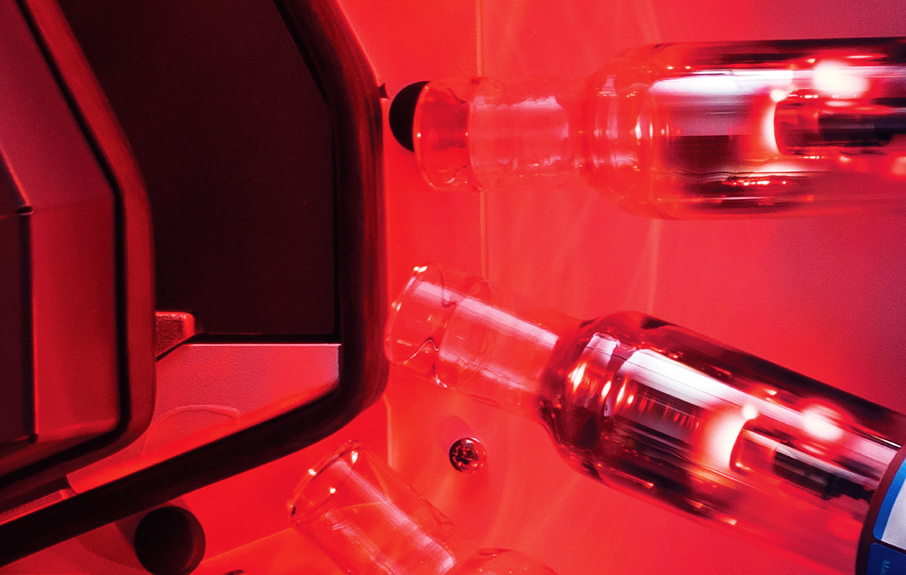
Automate Method Development using a Smart ICP-OES

Agilent ICP-OES instruments are packed with smart functions that deliver reliable analytical results and slash wasted time in the lab. Analysts will know exactly when to do cleaning and maintenance of their ICP-OES or ICP-AES, thanks to sensors built into the ICP instrument. Lab managers will know results from their ICP-OES instruments are accurate thanks to algorithms that find interferences and provide backup results.


Register Here >


Get the Most Out of Your AA – Achieve the Productivity and Speed of Sequential ICP-OES with Agilent’s AA Systems

Agilent’s AA range is productive, user-friendly, and exceptionally reliable. The instruments deliver the high performance that analysts require, while being equally at home in routine laboratories where reliability and simple operation are vital.

In this webinar we take a look at maximizing productivity and speed fo Sequential ICP-OES with the use of Agilent’s AA Systems.


Register Here >


Microplastics in the Environment Virtual Symposium

Agilent’s expertise provides a range of analytical solutions to both identify and quantify microplastics in the environment.

In our Microplastics Symposium, hear from industry experts and peers working within the field of Microplastics.

With a mixture of live talks across various topic areas and product demonstrations, this event is a great opportunity to uncover more about microplastics analysis in the lab. We will also have our experts available to chat live on the day, allowing you to further increase your knowledge and skills on this topical issue.


What topic areas can you expect to see on the day?

  • Microplastics Analysis with the 8700 LDIR with a focus on the marine environment;
  • Quantification of Microplastics with GC/MSD;
  • Current activities in the world of standardization;
  • Microplastics Analysis with the GC/Q-TOF;
  • And more.


Agenda


Register Here >


Rapid QC Tablet Testing with Transmission Raman Spectroscopy

The Agilent TRS100 Raman system is ideal for fast assay of tablets, capsules, and other dosage forms. Transmission Raman technology from Agilent enables simple method-development and deployment in QC applications. It is easy to implement in analytical laboratories and production areas, and has regulatory approvals for content uniformity (CU), assay, and identification (ID) applications. This online seminar provides a comprehensive introduction to the Transmission Raman technology and the Agilent TRS100 Raman system in the pharmaceutical quality-control applications.


Speakers

Yanqia Wang, PhD, Application Engineer, Molecular Spectroscopy, Agilent Technologies, Inc.

Dr. Yanqia Wang started working for Agilent Technologies Inc. as a FTIR application Engineer in 2013, providing pre-&post-sale application support. The products he covers from Bench-top FTIR microscopes to various Mobile FTIR spectrometers. Dr. Wang received his PhD of analytical chemistry from Duke University in 2004, doing dynamic IR spectroscopy research. Then he joined Fitzpatrick Center for Photonics at Duke University, doing Tissue Raman spectrometer instrumentation. Since 2007, Dr. Wang worked for Avery Dennison Corp. as a spectroscopist, providing molecular analytical support to the research & development.


Register Here >


High-throughput LC-MS Analysis to Systematically Map Gut Microbiome Drug Metabolism

Individuals vary widely in their drug responses, which can be dangerous and expensive due to significant treatment delays and adverse effects. Growing evidence implicates the gut microbiome in this variability, however the molecular mechanisms remain mostly unknown.

To systematically map the drug metabolizing capacity of the gut microbiota and assess its potential contribution to drug metabolism, the speaker measured the ability of 76 diverse human gut bacteria to metabolize each of 271 oral drugs. They found that two-thirds of these drugs are chemically modified by at least one of the tested microbes.

Through combination of high-throughput bacterial genetics with mass spectrometry-based metabolomics, the speaker systematically identified drug-metabolizing microbial enzymes. These proteins better explain the drug metabolizing capacity of bacterial strains than their phylogenetic classification.

The speaker further demonstrated that the abundance of homologs of these proteins predict the capacity of complete human gut communities to metabolize the targeted drugs. These causal links between microbiota gene content and metabolic activities connect inter-individual microbiome variability to interpersonal differences in drug metabolism, which has translatable potential on medical therapy and drug development across multiple disease indications.


Learn how to:

  • Employ high-throughput LC-MS analysis to map gut microbial metabolism
  • Combine bacterial genetics with high-throughput LC-MS analysis to identify metabolic enzymes in the gut microbiome
  • Integrate in vitro drug metabolism of gut bacteria, genomic information, and metagenomic data.


Register Here >


Analysis of Alcohol Levels in Hand Sanitizer by FTIR

Alcohol quantification is a common FTIR measurement. Measuring calibration standards and creating a method for routine analysis takes little expertise and approximately 15 minutes with Agilent instrumentation. Measuring samples and generating accurate color-coded pass/fail results takes less than a minute per sample and can be done in the lab or at site. 


Register Here >


Identification of Microplastics Using the 8700 Laser Direct Infrared Imaging (LDIR) System

Contamination in our waterways, soil, air, and drinking water from microplastics is gaining significant public interest due largely to its emergence as an environmental threat. Researchers are now working towards standardized analytical solutions to best characterize these small particles in terms of chemical identity, size, shape, and total mass.

Organizations such as the National Oceanic and Atmospheric Administration define a microplastic as any particle of a plastic polymer that is less than 5 mm in size. However, it is smaller microplastic particles, less than 100 μm in size, that are often of the most interest. They are not visible to the naked eye and can make their way into the food chain.

Register Here >


Forensics Series Part 3: Using UV-Vis as a Rapid Screen for the Purity of a Drug of Abuse – Methamphetamine

In the world of Forensic Analysis, purity is an important calculation.  Using UV-Vis as a rapid screening technique for methamphetamine allows labs to optimize their time which is critical due to increase caseloads. The Cary 60 and 18-cell changer or fiber optic probe is ideal for this application. This presentation will look at the mechanics behind using the Cary 60 to determine the purity of a methamphetamine sample.


Speakers

Mark Fisher, PhD, Application Engineer, Molecular Spectroscopy, Agilent Technologies, Inc.

Mark, an Application Scientist for Agilent Technologies, has over 30 years of experience in molecular spectroscopy. He has held roles in Agilent’s UV-Vis-NIR, fluorescence, and atomic absorption product portfolios. In addition to identifying industry trends and new business needs, Mark’s responsibilities include application development, pre and post-sales support, as well as acting as a customer advocate for new product and technology opportunities. Mark received his doctorate in analytical chemistry from the University of Nebraska-Lincoln.


Register Here >


Forensics Series Part 1: Forensic Identification using Infrared Spectroscopy

Find out how the Cary 630 FTIR with ATR enables the identification of Forensic samples quickly and accurately.


Luciana Terra, Application Scientist, Molecular Spectroscopy, Agilent Technologies, Inc.

Luciana Terra has a Bachelor’s degree in Industrial Chemistry from the Federal University of Alfenas (Unifal-MG) as well as a Ph.D. in Analytical Chemistry, on Chemometrics, from the State University of Campinas (Unicamp), where she developed work focused on petroleum quality and derivatives using high-resolution Mass Spectrometry, NIR, and chemometrics methodologies. As part of her Ph.D., she also worked at the University of Calgary in Canada. While completing her Master’s Degree at Unicamp, Luciana developed a new methodology for drug polymorphism detection using NIR imaging and chemometrics tools for quality assurance in the pharmaceutical industry. In 2019, she joined Agilent Technologies as an Application Scientist for Molecular Spectroscopy in UV-Vis, Fluorescence, IR, and Raman techniques, at Agilent Technologies, in Brazil.

Register Here >


ICP-OES Analysis in an Organic Matrix – Tip, Tricks, and Hacks for Making Direct Organic Analysis Easy

Laboratories are frequently asked to perform non-routine analysis and sometimes this involves changing over from aqueous sample analysis to analysis of an organic solvent.  Even to the experienced operator, running an organic solvent can be a daunting task.  We will discuss all facets of the problem including sample and standard preparation, sample introduction options, and instrument conditions.


Greg Gilleland, Application Scientist, Agilent Technologies, Inc.

Greg began his spectroscopy career in 1987 in Colorado, working at a series of environmental labs. After 14 years working in the world of commercial environmental labs, he moved on to a spectroscopy instrument manufacturer where he performed service and sales functions over the course of 11 years. He has been with Agilent Technologies, Inc., since 2012 in the role of Application Scientist for ICP-OES, MP-AES and AA products.


Register Here >