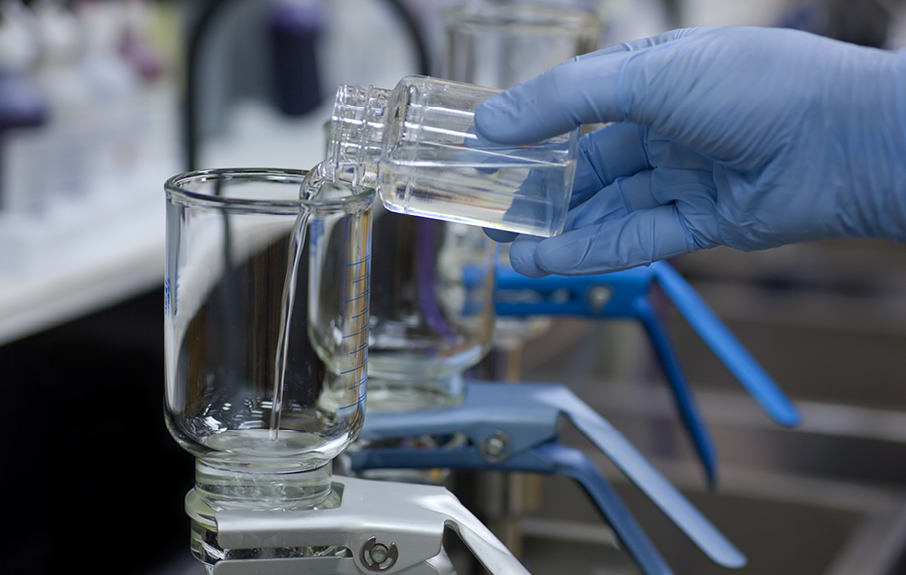
Why is water safety critical during South Africa’s festive season?
Summer in South Africa brings heat, travel, and thousands of holidaymakers to beaches, pools, and picnic spots. But the spike in water consumption, and pressure on water infrastructure, raises serious concerns. Ensuring the safety of drinking water and recreational waters during this period is essential to safeguard public health and support tourism.
The challenges of high-volume water testing during summer
As demand increases, testing labs face rising sample loads and tighter turnaround times. Detecting a range of contaminants, from microbial threats and industrial chemicals to PFAS (“forever chemicals”) and microplastics, requires sensitive, fast and reliable instrumentation. Traditional methods can struggle to keep up, leading to bottlenecks that may delay the detection of critical hazards. That’s where advanced instrumentation and workflow automation become indispensable.
Agilent water testing solutions: Speed, sensitivity, and scale
Agilent’s comprehensive water testing portfolio supports laboratories with state-of-the-art analytical tools, including:
Key Agilent Instruments for Water Quality Testing
Agilent Ultivo LC/MSMS – Ideal for ultra-trace PFAS and persistent organic pollutants in drinking and environmental water. Compact yet powerful, it supports high-throughput labs with limited space.
Agilent 6475 LC/MSMS – Offers sensitive, reproducible quantification of a wide range of contaminants in complex matrices.
Agilent 8860 GC and Agilent 5977B GC-MSD – Combines rugged GC performance with high-sensitivity mass detection, ideal for volatile organic compound analysis.
InfinityLab PFC-Free HPLC Conversion Kit – Helps reduce PFAS background interference for cleaner data and better detection accuracy.
Together, these tools allow for simultaneous detection of pesticides, metals, PFAS, organic pollutants, and microbiological indicators in both drinking and recreational water samples.
South African municipalities, water boards, and private labs rely on fast, precise testing to ensure that public taps, swimming pools, and beaches remain safe during peak tourist periods. With Agilent’s integrated systems and automation-ready workflows, labs can handle seasonal surges efficiently, reducing wait times and delivering timely insights to stakeholders.
By enabling early detection and fast reporting, labs support both immediate public safety and long-term environmental health.
Ready to modernise your water testing workflows?
Whether you’re managing municipal water quality or testing surface water for environmental compliance, Agilent’s proven technologies and application support can help you handle festive season demand with confidence.
✅ TL;DR – Key Takeaways
South Africa’s festive season significantly increases demand for water testing.
Water contamination risks rise in both drinking supplies and recreational sources.
Agilent offers a suite of instruments for rapid, high-sensitivity testing (LC/MS, GC/MS, HPLC).
Automation-ready workflows improve throughput and reduce manual handling.
Accurate testing ensures public health, supports tourism, and builds trust in infrastructure.
Want to bring exceptional speed and throughput to your microplastics research?
Microplastics in the environment are becoming a greater concern as scientists begin to understand their penetration into our ecosystems and food chains. Typically, techniques such as vibrational spectroscopy have been used to chemically identify microplastics. However, this approach is often complex and slow.
What you will learn
The Agilent Laser Direct Infrared (LDIR) chemical imaging system introduces an automated approach to imaging and spectral analysis. Its Quantum Cascade Laser (QCL) technology—coupled with rapidly scanning optics—provides fast, high-quality images and spectral data. Using the 8700 LDIR, experts and non-experts alike can:
Analyse samples in minutes, not hours.
Determine the chemical identity, size, and shape of microplastics in their samples.
Obtain useful statistical data to advance their microplastics research.
Take rapid, detailed images of large sample areas with intuitive Agilent Clarity software.
It is estimated that more than 75% of the 8.3 billion metric tons of plastic produced over the last 65 years have turned into waste, of which up to 13 million metric tons end up in our oceans every year.
Plastic is one of the most enduring materials created by humans. Unfortunately, it can take hundreds of years to degrade, and even then, it often becomes microplastics – tiny particles that can be ingested by marine animals. These microplastics enter the food chain, leading to disastrous consequences for our planet and its inhabitants.
Improving plastic waste management globally is critical and individuals and organisations can play a part in reducing plastic pollution and regenerating oceans. Researchers are exploring biodegradable plastics and alternative materials to reduce plastic’s impact and there are many alternative solutions available to reduce single-use plastics.
What labs are doing to reduce plastic pollution
Labs can be influential advocates and encourage industry-wide shifts toward more sustainable practices. Of course, labs are key players in the research of plastic pollution, analyzing to help organisations develop a better understanding of the scope of plastic waste worldwide and use those insights to create innovative solutions, especially for marine environments.
But there’s also no denying that labs consume vast amounts of single-use plastic items, including pipette tips, tubes, gloves, and reagent bottles. These plastics are essential for maintaining sterile conditions and avoiding contamination, but their disposal contributes significantly to plastic waste. Lab instruments are also made up of plastic parts and do most of us know the process for disposing of those instruments at the end of their life?
What’s exciting to see is the scientific community strongly advocating for change and implementing practices that already have a significant impact such as:
Reviewing the materials used in common consumables and opting for products with minimal plastic content or those made from recyclable materials.
Incorporating re-using along with recycling and engaging with suppliers to support re-useable product options and recycling programs
Designing experiments and workflows with circular economy principles in mind.
Setting targets for reducing plastic waste.
An example of plastic sustainable solutions
With a focus on forming a biotech company to tackle plastic pollution, ULUU was started in 2020 by Dr Julia Reisser and Michael Kingsbury. They are trying to solve the growing issue of plastic pollution by prototyping alternative materials to market.
ULUU’s PHA product sample
“Unlike synthetic plastics, our materials are not produced using petrochemicals derived from fossil fuels. Instead, they are made from sustainable feedstocks with much more sustainable production processes. And, in the end, our products are compostable and marine-biodegradable, so they don’t pose a lasting impact on the environment,” described Dr. Luke Richards, lead scientist at ULUU.
The mission at ULUU is to replace plastics with materials that are good for the world. They’re producing a versatile natural polymer called polyhydroxyalkanoates (PHA), using seaweed as a sustainable resource for that process. The result is a material that is biodegradable and won’t accumulate in oceans and landfills or linger as microplastics in biological systems.
ULUU scientists Dr Sheik Md Moniruzzaman and Vatsal Meshram in their QC lab using the Agilent 1260 Infinity II LC with Agilent InfinityLab LC/MSD iQ
In terms of climate change, using seaweed as a feedstock, ULUU captures carbon dioxide from the atmosphere and converts it into PHA. Their process also doesn’t rely on conventional land-based farming, which can take land away from natural ecosystems. Additionally, farming seaweed has some positive impacts on oceans. Research indicates that seaweed helps clean up environmental pollutants and reverses acidification and eutrophication.
ULUU uses bioreactors ranging from 1 to 50 L to make their products. They also use specialised equipment to investigate injection moulding and turn their PHA product into solid objects for prototyping. The entire production process from seaweed input to the finished PHA powder is monitored by their QC lab, in which most assays use chromatography instruments. These instruments include two Agilent 1260 Infinity II liquid chromatographs (LCs) and one Agilent 8890 gas chromatograph (GC), with detection by an Agilent InfinityLab LC/MSD iQ, an Agilent 1260 Infinity II refractive index detector (RID), and an Agilent 5977B GC/MSD.
Sustainability is the way of the future for all laboratories and investing in the right solutions now can turn the tide for the future. Chemetrix is the partner labs that need to reach its sustainability goals and implement solutions that will reduce its environmental impact and plastic waste now and in years to come.
As interest in microplastics in the environment and food chain grows, so does the interest in the potential impacts on environmental and human health. This, coupled with strong public attention, has led to various organizations worldwide looking towards the potential for regulations. For example, the European Chemical Agency is currently considering restrictions on the use of microplastics in the form of microbeads in personal care products. Furthermore, the first ISO standard document with general guidelines will be published this year. It can be expected that this will directly impact both official and contract laboratories and producers of drinking water, food, and other relevant products, which will need to better understand the amount, number, size, and ID of microplastic particles in their products. Alongside this broad approach, several countries are developing the standard testing methodology for microplastics in water, and the environment and organizations have been conducting interlaboratory studies as a step towards harmonization of testing methodologies to ensure the comparability of results.Â
During this webinar, we will explore the development of these standard methodologies and some of the key challenges faced in their implementation.
What will you learn
What progress has been made in the development of standardised methodologies for microplastics?
What are some of the key challenges that remain in implementing these methodologies?
How might these developments impact other areas and the potential for implementing regulations?
Who should attend this webinar
Microplastics researchers
Microplastics analysts from commercial, QA, or research labs who seek to understand how their methods might be compatible with developing standardised methodologies
Those interested in the contamination of wastewater, seawater, freshwater, air, sediments, and food (such as fish, shellfish, crustaceans, and bottled water)
Speaker
Dr. Anja Sokolowski Senior Project Manager
DIN Standards Committee Water Practice
Dr. Andreas Kerstan
Product Specialist
Agilent Technologies
Agilent’s expertise provides a range of analytical solutions to both identify and quantify microplastics in the environment.
In our Microplastics Symposium, hear from industry experts and peers working within the field of Microplastics.
With a mixture of live talks across various topic areas and product demonstrations, this event is a great opportunity to uncover more about microplastics analysis in the lab. We will also have our experts available to chat live on the day, allowing you to further increase your knowledge and skills on this topical issue.
What topic areas can you expect to see on the day?
Microplastics Analysis with the 8700 LDIR with a focus on the marine environment;
Quantification of Microplastics with GC/MSD;
Current activities in the world of standardization;
Contamination in our waterways, soil, air, and drinking water from microplastics is gaining significant public interest due largely to its emergence as an environmental threat. Researchers are now working towards standardized analytical solutions to best characterize these small particles in terms of chemical identity, size, shape, and total mass.
Organizations such as the National Oceanic and Atmospheric Administration define a microplastic as any particle of a plastic polymer that is less than 5 mm in size. However, it is smaller microplastic particles, less than 100 ÎĽm in size, that are often of the most interest. They are not visible to the naked eye and can make their way into the food chain.