Beyond the Inspection Notice: Modernising Laboratory Architecture to Prevent Regulatory Disasters

Two pharmaceutical manufacturers. Two FDA warning letters. Two data integrity failures that inspectors found within minutes of arriving on site.

Aspen SA Sterile Operations in Gqeberha received a warning letter on 24 February 2025 after a September 2024 inspection. Fareva Amboise in France received one on 10 April 2026 after a September 2025 inspection. Both cited failures under 21 CFR 211.68. Both resulted in import alerts and suspended US market access. Both were preventable.

The violations are not exotic edge cases. They are the exact failure modes that emerge when laboratories rely on standalone instrument PCs, manual audit trail reviews and computer systems with inadequate access controls — and they are the failure modes that most regulated analytical laboratories in Southern and East Africa are currently running with.
Why do pharmaceutical data integrity failures keep happening in regulated laboratories?

Most laboratory managers believe their data is protected because it exists on a local network. The assumption is that the data trail is intact.

It is not. Not if analysts have unrestricted administrative access to the operating system. Not if raw data resides on a local hard drive a service technician can wipe during a routine update. Not if audit trail review happens manually across multiple standalone workstations rather than from a centralised exception report.

The FDA does not inspect what laboratories intend their data controls to do. It inspects what the system actually does. Standalone CDS workstations create fragmented data environments where selective reporting is easy, orphan data is invisible and audit trail review bottlenecks are structural rather than accidental.

What do the Fareva Amboise and Aspen Pharmacare FDA citations actually reveal?

Both warning letters reveal the same structural failure, not rogue analysts but systems that made violations architecturally possible.

Fareva Amboise: inadequate computer system access controls

During the September 2025 inspection FDA investigators found that employees at Fareva Amboise could change system dates, alarm limits and access settings without restriction. No controls existed to prevent unauthorised modifications to master production and control records. The April 2026 warning letter cited failure under 21 CFR 211.68(a).

When any user can modify system parameters without generating a time-stamped user-attributed record the integrity of every data point generated by that system is in question. The fix is not procedural. It requires a system architecture in which changes to access settings and instrument parameters require authorised approval and generate a permanent audit trail entry visible to a centralised administrator.
Aspen Pharmacare Holdings: failure to review audit trails before batch release

During the September 2024 inspection FDA investigators found that Aspen SA Sterile Operations in Gqeberha did not review electronic raw data and audit trails before batch release. On 8 August 2024 operators ran four filter integrity tests, three failed and one passed. Only the passing result was reported. On 25 July 2024 nine tests were run on a single batch, five failed, three were aborted and one passed. Only the passing result appeared in the batch record.

Products were placed on US import alert on 10 February 2025. Production was suspended.
This is a system design problem. When raw data exists only on a local hard drive with no centralised monitoring selective reporting is structurally possible. A centralised CDS architecture that streams raw data to a server at acquisition removes that possibility because the data exists on the server before anyone can decide what to keep.

How can regulated laboratories eliminate CDS data integrity risk before an inspection?

Chemetrix regional expertise: local capability first

The primary solution to data integrity risk is not software. It is capability. A centralised CDS system deployed without adequate training and without local support will develop the same compliance gaps in a different format.

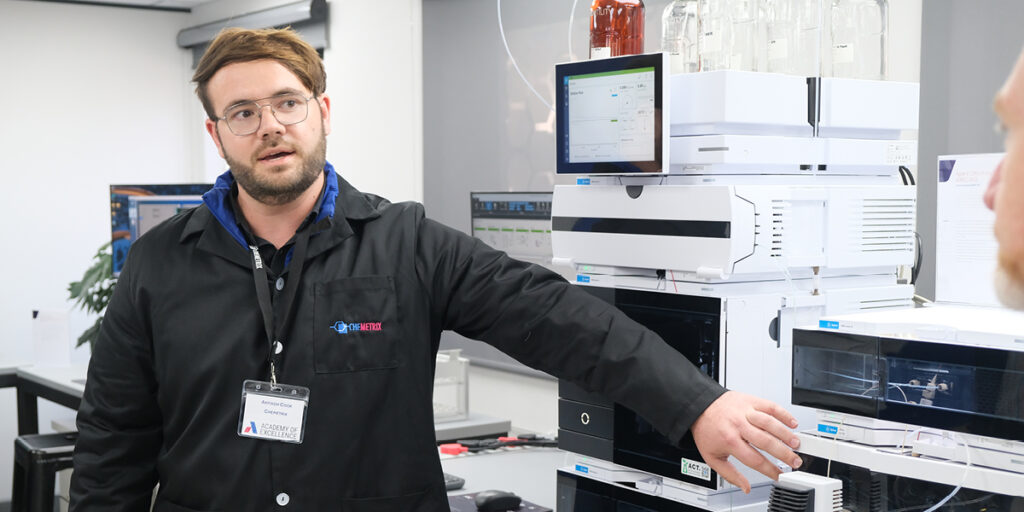
Chemetrix works inside client laboratories across Southern and East Africa. The Chemetrix Academy of Excellence delivers hands-on informatics training covering role-based access configuration, audit trail management and exception reporting before a system goes live. When instrument capacity expands or regulatory requirements change our specialists remain accessible as a long-term technical partner. This is the fix for vendor abandonment risk, not a contract clause but a regional team with 45 years of demonstrated commitment.

Agilent OpenLab CDS Client/Server with ECM XT: the technical foundation

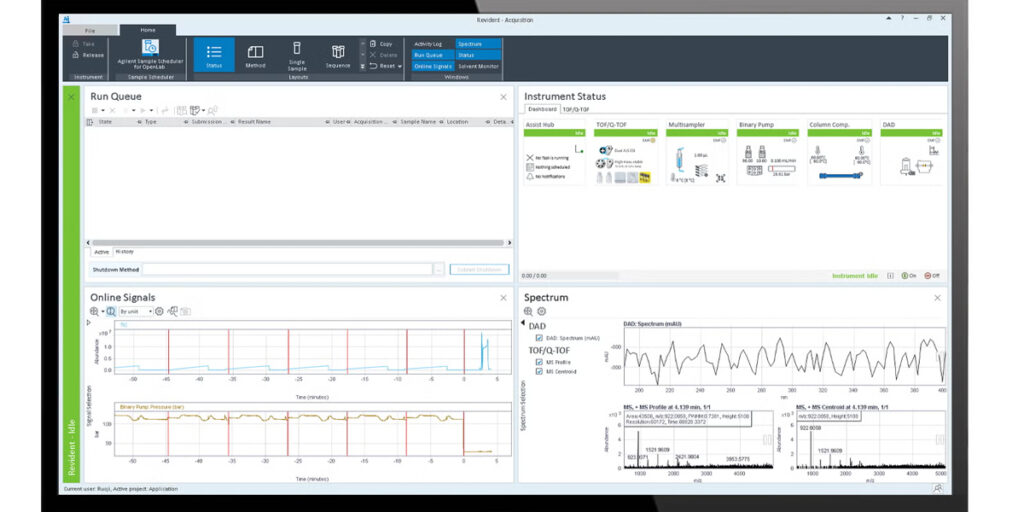
OpenLab CDS Client/Server streams raw data from every analytical instrument directly to a central server at acquisition. It never resides only on a local hard drive and cannot be selectively deleted before the record is established.

Role-based access controls prevent unauthorised modification of system parameters. Every change generates a time-stamped user-attributed audit trail entry visible to a centralised administrator. ECM XT provides automated archiving, exception reporting and electronic signature workflows that surface anomalous changes before batch release.

For laboratories running standalone workstations the migration consolidates multiple data environments into one server, one backup and one audit trail across every instrument on the network.

Speak to a Chemetrix informatics specialist about evaluating your current CDS architecture and designing a migration plan.
 

Data integrity is a design problem, not a discipline problem

The violations in both warning letters were attributed to operators. But the root cause in both cases was a system that made those violations structurally possible. Telling analysts not to selectively report results does not fix a system in which selective reporting is architecturally available.

Laboratories in Southern and East Africa are not immune to the same citations. The same standalone workstation architectures, manual audit trail review processes and access control gaps that generated both warning letters exist across the region. The question is not whether the risk is present. It is whether it is addressed before an inspector finds it or after.

Evaluate your CDS architecture before an inspection does it for you

Both warning letters cited violations visible to an inspector within days of arriving on site. The data was there. The gaps were structural. The consequences were severe, import alerts, suspended production and public enforcement action against a South African manufacturer.

Your data integrity is only as reliable as the system designed to protect it.

Before your next audit, work through four questions:

  1. Does your CDS architecture stream raw data to a central server at acquisition or does it reside on local hard drives?
  2. Do role-based access controls prevent analysts from modifying system parameters without an audit trail entry?
  3. Is audit trail review conducted from a centralised exception report before batch release?
  4. Does your laboratory have a regional technical partner who can support the system when problems arise?

Speak to a Chemetrix informatics specialist about your CDS architecture:

  • Pharmaceutical QC and sterile manufacturing labs: data integrity gap assessment and OpenLab CDS migration planning for CGMP compliance
  • Contract testing laboratories: centralised CDS architecture design for multi-instrument data governance
  • Quality assurance and regulatory affairs teams: audit trail review workflow modernisation ahead of FDA or SAHPRA inspections
  • Laboratory IT and operations management: standalone workstation consolidation and centralised user privilege management

TL;DR

Aspen Pharmacare Holdings received an FDA warning letter in February 2025 after operators selectively reported passing filter integrity results while suppressing failing ones, with no audit trail controls in place to catch it. Fareva Amboise received one in April 2026 after employees were found to be changing system dates, alarm limits and access settings without restriction. Both failures trace back to the same root cause: inadequate computer system controls and no centralised oversight of electronic data. Agilent OpenLab CDS Client/Server with ECM XT eliminates the structural vulnerabilities behind both citations, but technology alone is not the fix. Regional capability and hands-on implementation support are what make the difference between a system that is installed and a system that protects you.


Why Most Pharmaceutical Labs Are Still Using an RMID Protocol That Was Never Designed for Compliance

Eleven containers out of every hundred. That is the square root of n plus one protocol, the standard most pharmaceutical facilities use to verify incoming raw material identity before releasing to production.

The remaining 89 are assumed to be correct. That assumption is where compliance exposure begins.

Regulations including 21 CFR Part 211.84 and ICH Q7 require that each lot of incoming components is tested before use. The sampling protocol was a practical concession to the time and cost of opening every container. It was not designed as a compliance strategy. As regulatory scrutiny increases across pharmaceutical manufacturing in Southern and East Africa that concession is becoming harder to defend.

Why is the square root of n RMID protocol no longer sufficient for pharmaceutical compliance?

The core compliance problem is not the statistical model. It is the physical workflow that makes 100% testing impractical. Opening every incoming container requires a dedicated sampling area, contamination controls and documented chain of custody. For moisture-sensitive excipients, polysorbates and sterile materials, opening the container introduces degradation risk that reduces shelf life and generates additional documentation burden.

The containers hardest to sample safely are opaque plastic drums, sealed paper sacks and amber glass bottles. These are precisely the ones where undetected substitution or mislabelling poses the greatest risk. Chemetrix works with pharmaceutical QA and procurement teams across Southern and East Africa who identify this gap consistently during internal audits and pre-inspection reviews. The sampling protocol is in place. The documentation is compliant. And 89% of the shipment is sitting in the warehouse on an assumption.

What is Spatially Offset Raman Spectroscopy and why does it enable through-container identification?

Conventional handheld Raman directs a laser at the container surface. The resulting spectrum is dominated by the container material, whether plastic, glass or paper, masking the spectrum of the contents. For amber glass, opaque plastic tubs and multilayer paper sacks conventional handheld Raman cannot identify the contents without opening the container.

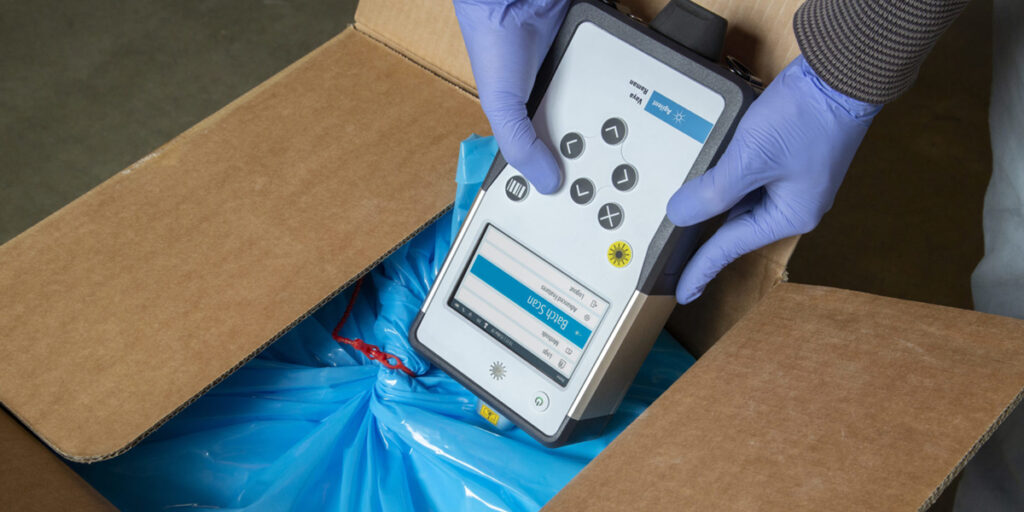
SORS separates the excitation point from the collection point. The laser fires at position A. The collection optics sit at offset position B. The superficial container signal is suppressed and the deeper backscattered photons from the contents reach the detector. The result is the chemical fingerprint of the material inside the sealed container, not the container wall.

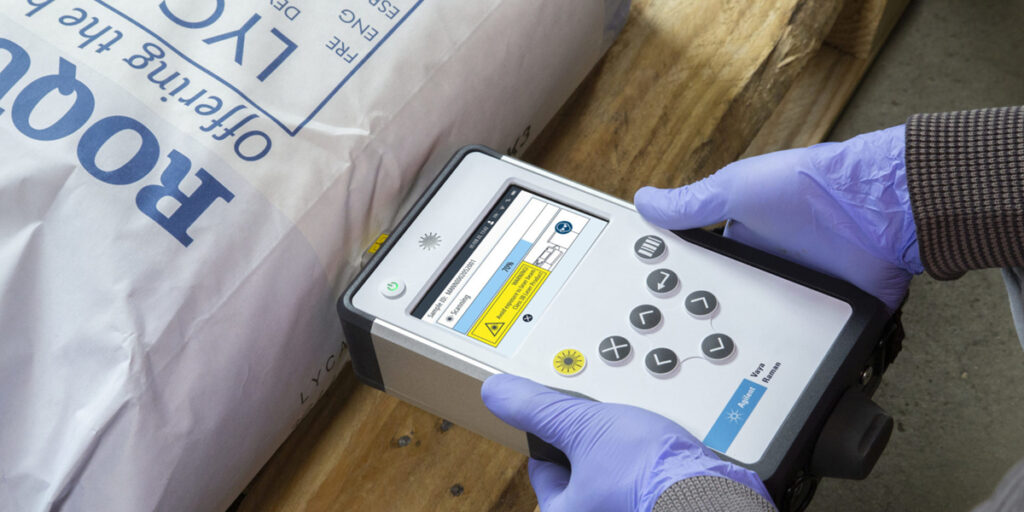
The Agilent Vaya handheld Raman spectrometer is the only handheld Raman spectrometer with true through-barrier SORS technology. It verifies raw material identity through clear glass, amber bottles, white and coloured plastic tubs, FIBCs, paper sacks and multilayer opaque containers in seconds at the dock without breaking the seal.

What does validated SORS performance look like for a pharmaceutical excipient?

Polysorbates are present in approximately 80% of monoclonal antibody drug formulations. PS 20 and PS 80 are chemically similar and degradation-sensitive. Opening the container to sample them introduces moisture exposure that reduces shelf life. Substituting one for the other is a critical quality defect.

The Agilent Vaya application note published in European Pharmaceutical Review demonstrates successful differentiation of PS 20 and PS 80 through sealed amber glass bottles using SORS. The identification is specific, rapid and requires no container opening. Shelf life is preserved. Degradation risk is eliminated. A PASS/FAIL result is generated at the dock in seconds.

100% raw material identification at the dock: Agilent Vaya handheld Raman spectrometer

The Vaya replaces the sampling protocol with a through-container identification workflow compatible with every container format in a standard pharmaceutical receiving area. SORS technology enables identification through clear glass, amber and coloured glass, white and coloured plastic tubs, opaque HDPE drums, FIBCs and multilayer paper sacks.

No sampling booth required. No container opened. No degradation risk introduced. The operator scans each container at receipt and receives a PASS/FAIL result against a validated spectral library within seconds.

The Vaya is fully compliant with 21 CFR Part 11 and PIC/S GMP requirements. It has been awarded My Green Lab’s ACT label for sustainability. For facilities currently operating under the square root of n protocol the transition to 100% identification requires no additional capital equipment and no sampling infrastructure.

📥 Practical resource: Download the Agilent Vaya Raman Raw Material Identity Verification System brochure
Speak to a Chemetrix specialist about building your validated RMID spectral library for pharmaceutical excipients and active ingredients.

Vaya Handheld Raman Spectrometer

Rapid molecular spectroscopy for QC beyond RMID: Agilent Cary 635 and Cary 60

Rapid oil analysis: Agilent Cary 635 with dialpath

For incoming oil and lipid-based excipients the Agilent Cary 635 UV-Vis spectrophotometer with dialpath technology provides rapid quantitative analysis without sample preparation. The variable pathlength approach eliminates dilution of concentrated samples and delivers accurate absorbance measurements on neat oils directly. For pharmaceutical facilities receiving lipid excipients for injectable or oral formulations the Cary 635 dialpath reduces incoming material hold time without compromising accuracy.


Cary 635 FTIR Spectrometer

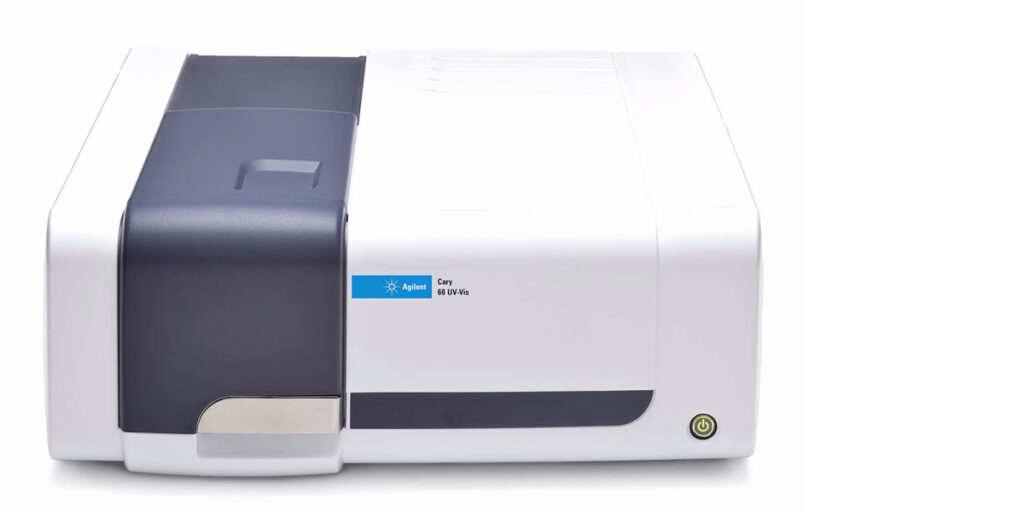
Water analysis: Agilent Cary 60 UV-Vis spectrophotometer

For water quality monitoring in pharmaceutical manufacturing the Agilent Cary 60 provides a robust and rapid analytical platform for routine compliance testing. Xenon flash lamp technology delivers no warm-up time and a 10-year average lamp lifetime under typical laboratory conditions. For water-for-injection, purified water and process water monitoring the Cary 60 delivers the reliability and audit trail capability required for GMP compliance.

Instruments: Agilent Cary 635 UV-Vis with dialpath and Agilent Cary 60 UV-Vis spectrophotometer.

Cary 60 UV-Vis Spectrophotometer

Speak to a Chemetrix specialist about an integrated incoming material QC workflow combining Vaya RMID, Cary 635 oil analysis and Cary 60 water monitoring.

Raw material identification is a regulatory requirement, not a sampling exercise

The square root of n protocol exists because 100% testing was operationally impractical with available technology. That constraint no longer exists. The Agilent Vaya makes 100% RMID faster than the sampling protocol it replaces, at the dock, on every container, without a sampling booth and without the regulatory exposure of an unverified shipment sitting in a warehouse.

Chemetrix works with pharmaceutical QA managers and procurement leads across Southern and East Africa to design RMID workflows built around current regulatory expectations rather than legacy sampling concessions. From Vaya spectral library development and method validation through to Cary 635 and Cary 60 integration for complete incoming material QC the goal is an RMID programme that reflects what the regulation actually requires.

If your RMID workflow is still testing 11% of incoming containers, start here

Before your next regulatory inspection or internal audit, work through four questions:

  1. Does your current RMID protocol verify the identity of every incoming container or a statistical sample of them?
  2. Are your most compliance-sensitive excipients being opened for sampling or verified through the sealed container?
  3. Does your current handheld Raman instrument identify materials through amber glass, opaque plastic and paper sacks or only through clear containers?
  4. If regulators require higher testing coverage in future, can your current RMID infrastructure scale without additional capital equipment?

Speak to a Chemetrix specialist about your RMID workflow:

  • Pharmaceutical QA and compliance managers: Vaya spectral library development and method validation for 21 CFR Part 11 and PIC/S GMP compliant 100% RMID
    Biopharmaceutical and monoclonal antibody manufacturers: polysorbate and excipient identification through sealed amber bottles without degradation risk
    Pharmaceutical receiving and procurement teams: dock-based RMID workflow design eliminating sampling booth dependency
    QC laboratories: integrated molecular spectroscopy workflow combining Vaya RMID, Cary 635 oil analysis and Cary 60 water quality monitoring

TL;DR

Pharmaceutical RMID regulations require identity verification of incoming raw materials before release to production. Most labs test 11 in every 100 containers under the square root of n plus one sampling protocol, leaving 89% unverified. The Agilent Vaya handheld Raman spectrometer uses patented Spatially Offset Raman Spectroscopy to identify raw materials through sealed paper sacks, opaque plastic tubs, HDPE drums and amber glass bottles, the only handheld instrument capable of analysing through opaque and non-transparent containers. Validated application data demonstrates successful differentiation of Polysorbate 20 and Polysorbate 80 through sealed amber bottles, chemically similar degradation-sensitive excipients present in approximately 80% of monoclonal antibody drug formulations.

Why Pharmaceutical Dissolution Stability Testing Fails: Lessons from Three SAHPRA Recalls

Three products.
Three SAHPRA-approved recalls.
Three dissolution failures that only appeared months after the batches had been released and distributed.

Lasix 80mg failed dissolution at six months. Lumont 10mg failed at twelve months. Cipla-Pioglitazone failed during ongoing stability monitoring. In every case the product passed initial release testing. In every case patients had already received it.

This is the central challenge of pharmaceutical dissolution stability testing: the conditions that cause a product to fail are often invisible at release and only become measurable after months of storage. When the dissolution testing method itself introduces uncontrolled variables, through manual sampling, inconsistent vessel setup or inadequate hydrodynamic control, failures become harder to detect and impossible to defend.

Why do products pass release testing and fail dissolution at stability?

The apparatus controls the dissolution conditions. It does not control what happens to the drug product during storage. That distinction is where most stability failures originate.

Three different storage mechanisms triggered three different failure modes in these recalls. Understanding each one is the starting point for building a dissolution programme sensitive enough to catch them before they become a market withdrawal.

What caused three SAHPRA dissolution stability failures?

Lasix 80mg: furosemide surface passivation

Sanofi Aventis South Africa recalled batch CG022A after dissolution dropped below 80% at 60 minutes at the six-month stability interval. Furosemide is a BCS Class IV drug with dissolution critically dependent on available surface area. During ambient storage, the tablet surface undergoes recrystallisation, converting to a more thermodynamically stable crystalline form that increases hydrophobicity, raises liquid contact angle and progressively retards media penetration. Invisible at release. Measurable at six months.

Lumont 10mg: montelukast excipient matrix hardening

Zydus Healthcare SA recalled Lumont 10mg after out-of-specification dissolution results at the 12-month time point under 30°C and 75% RH long-term conditions. The polymer excipient matrix undergoes cross-linking during extended storage at elevated temperature and humidity. Cross-linking increases structural rigidity, reduces water diffusion rates into the tablet core and creates a denser outer boundary that restricts media penetration. Drug release slows progressively and at month twelve it had slowed below specification.

Cipla-Pioglitazone: particle agglomeration and hydrodynamic dead zones

Pioglitazone is a BCS Class II drug with dissolution dependent on particle size and vessel hydrodynamics. During storage, particles agglomerate, clustering into larger masses that reduce total surface area. In a USP Apparatus 2 vessel those agglomerated masses settle into the near-zero velocity zone beneath the paddle shaft where fluid shear is insufficient to break them apart. Drug release drops. The result is a cone of undissolved material at the vessel base and an out-of-specification stability profile.


Why uncontrolled testing variables amplify stability failures

What connects all three recalls is not just the storage mechanism. It is the sensitivity of the dissolution method to detect the developing failure at the earliest possible time point.

Manual sampling introduces timing offsets between vessels. Variable cannula depth changes the concentration gradient at withdrawal. Inconsistent filtration alters the apparent dissolved fraction. Vessel misalignment and imprecise paddle height affect the hydrodynamic pattern within the vessel, including the stagnant zone directly implicated in the pioglitazone failure.

In a formulation where dissolution is already marginal, an uncontrolled testing variable is the difference between catching a failure at six months and missing it entirely until the batch has been on the market for a year.


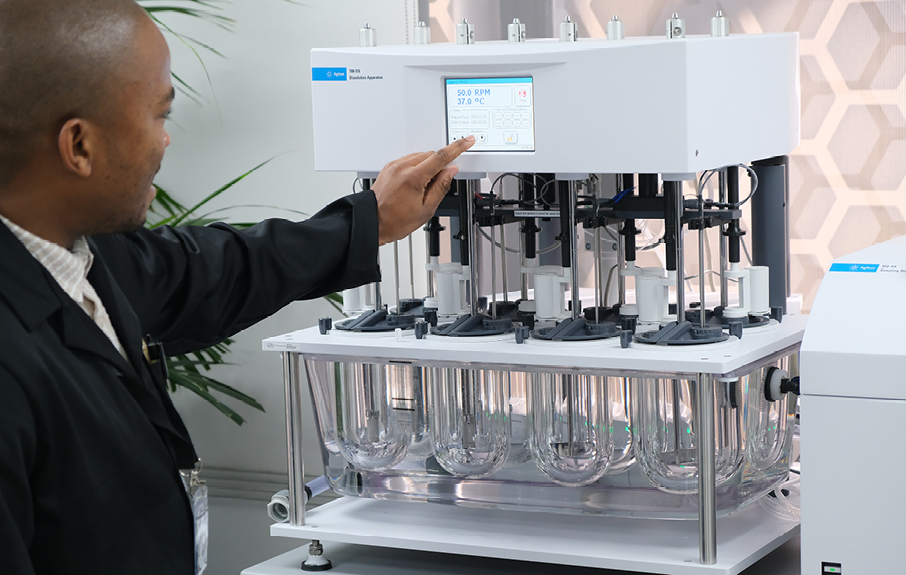
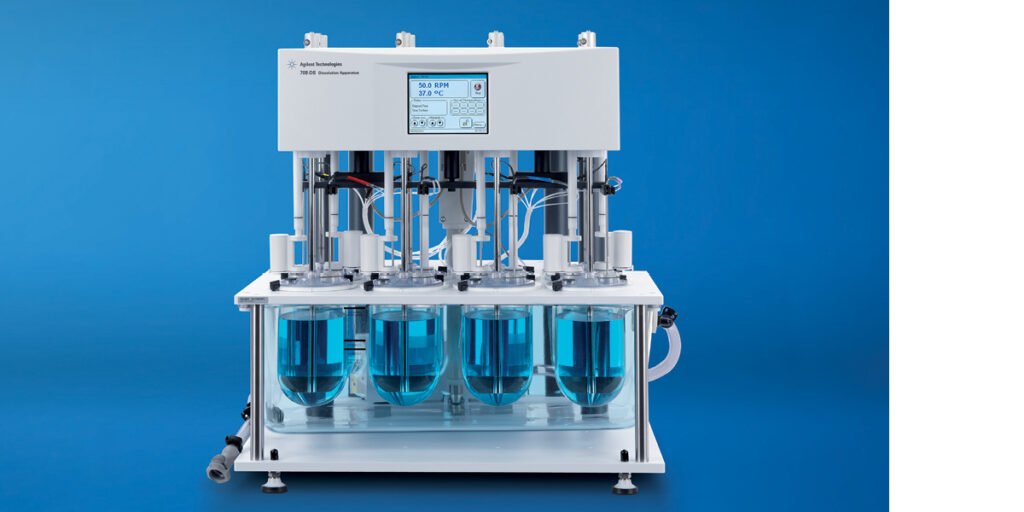
Controlled dissolution testing for pharmaceutical QC: Agilent 708-DS dissolution apparatus

For stability programmes, instrument-level variables must be controlled with the same rigour at month twelve as they are at initial release. The Agilent 708-DS addresses this directly.

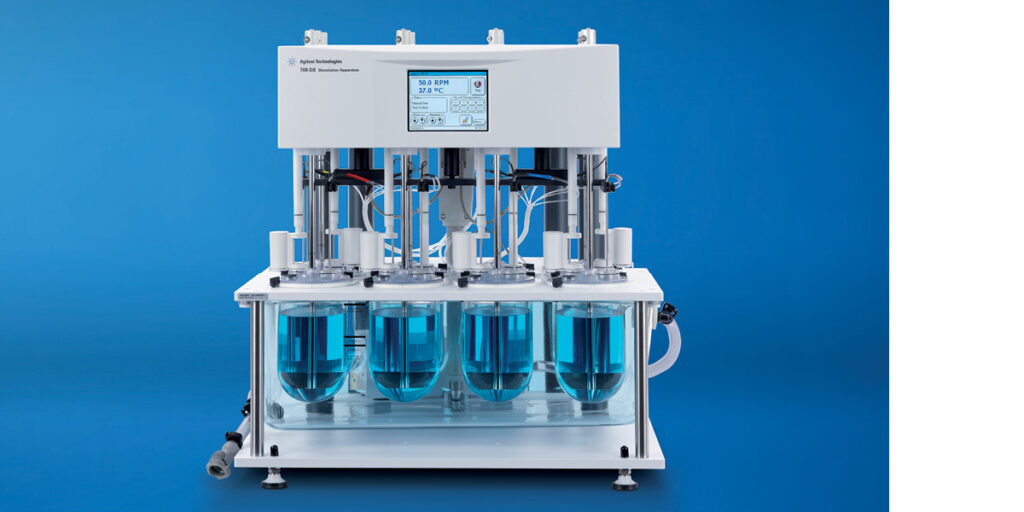
TruAlign vessels provide repeatable vessel-to-shaft centering, eliminating the asymmetric hydrodynamic profiles that contribute to stagnant zone formation and cone effect. AutoTemp in-vessel temperature monitoring confirms media temperature is maintained throughout the run. Programmable sampling depth eliminates vessel-to-vessel insertion depth variation. Dissolution Workstation Software provides electronic documentation and audit trail capability for 21 CFR Part 11 compliant environments.


Agilent 708-DS

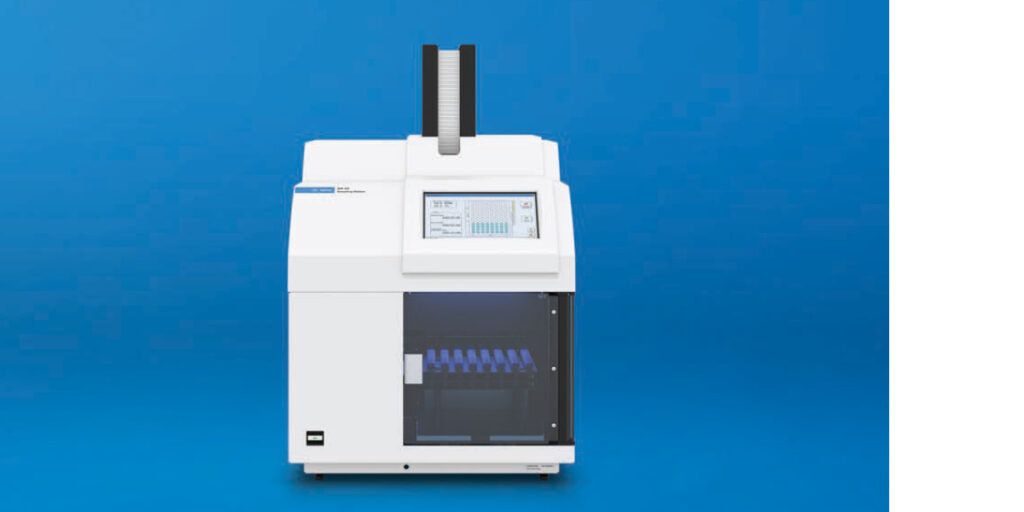
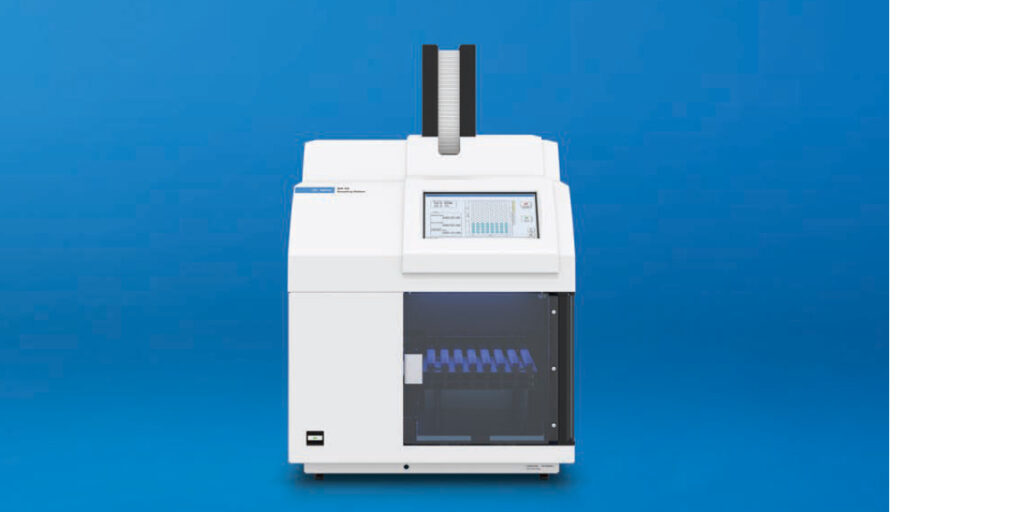
Automated sampling for reproducible stability data: Agilent 850-DS dissolution sampling station

The 850-DS removes the manual variables that amplify dissolution failures in stability testing. Automated withdrawal timing ensures every time point is sampled at the exact programmed interval across all six vessels simultaneously. Automated needle positioning ensures identical sampling depth at every vessel at every time point. Inline filtration at 0.2 or 0.45µm eliminates sample preparation variation from manual filter handling.

For the furosemide, montelukast and pioglitazone dissolution methods specifically, automated sampling is not a convenience. It is a methodological requirement. Detecting a developing stability failure before it becomes a recall requires a testing platform that removes the noise introduced by manual handling.

Practical resource: Agilent 850-DS product page

Speak to a Chemetrix specialist about configuring the 850-DS for your stability sampling volumes, filtration requirements and downstream analytical method.

Agilent 850-DS

📥 Explore the full Agilent dissolution testing portfolio
Agilent dissolution testing resources

Passing release testing is the beginning of compliance, not the end of it

Three recalls. Three different storage mechanisms. One shared failure: a dissolution testing methodology not designed to detect the failure early enough to prevent it.

The analysts who run stability dissolution programmes deserve a workflow that is built to detect what needs to be detected; not a manual sampling process that introduces enough variability to mask a developing failure until it’s too late.

Chemetrix works with pharmaceutical QC labs across Southern and East Africa to design dissolution testing programmes built around the sensitivity and reproducibility that stability monitoring actually requires. The goal is dissolution data that defends the product at every stability time point, not just the first one.

Build your stability dissolution programme around the results you need to defend

Before your next stability pull, work through four questions:

  1. Does your method control vessel centering, paddle height and sampling depth reproducibly across analysts and time points?
  2. Are your stability time points sampled within the required interval across all six vessels simultaneously?
  3. Is your filtration consistent enough to distinguish a genuine dissolution change from a methodological artefact?
  4. Does your audit trail support a SAHPRA inspection or GMP compliance review?

Speak to a Chemetrix specialist about your stability dissolution programme:

  • Pharmaceutical QC labs: apparatus qualification, stability method validation and automated sampling configuration for SAHPRA GMP compliance
  • Generic drug development labs: dissolution method development and bioequivalence stability testing for BCS Class II and IV compounds
  • Contract testing labs: high-throughput stability dissolution workflows with HPLC integration and LIMS connectivity
  • Regulatory affairs and QA teams: dissolution data integrity review and method robustness assessment ahead of SAHPRA submissions

Your dissolution data is only as reliable as the stability programme behind it.


TL;DR

Lasix 80mg, Lumont 10mg and Cipla-Pioglitazone all passed initial release testing. All three were recalled from the South African market after dissolution failures at 6 or 12-month stability intervals. The root causes were different in each case but the pattern is the same: subtle physical changes during storage interact with uncontrolled dissolution testing variables to produce results that passing release testing cannot predict. Automated, end-to-end dissolution workflow control is the primary defence.

Pharmaceutical Dissolution Testing: Why Sampling Causes More Variability than the Apparatus

The dissolution apparatus has been validated. Media temperature is correct. Paddle speed is set. Everything looks right. And yet results from one analyst to the next are not as consistent as they should be.

This is one of the most common and least-discussed problems in pharmaceutical dissolution testing. The problem is almost never the apparatus. It is almost always what happens next: the sampling.

Dissolution testing determines how an active pharmaceutical ingredient is released from a dosage form under defined conditions. A failed or inconsistent result can delay batch release, trigger a data investigation and consume analyst time that could be spent elsewhere. When that variability traces back to sampling rather than the product itself it is a workflow problem, not a formulation problem. And it’s a solvable one.

Why does pharmaceutical dissolution testing produce variable results even when the method
is correct?

The apparatus controls the dissolution conditions. It does not control what happens when the sample leaves the vessel. That distinction is where most labs have a gap.

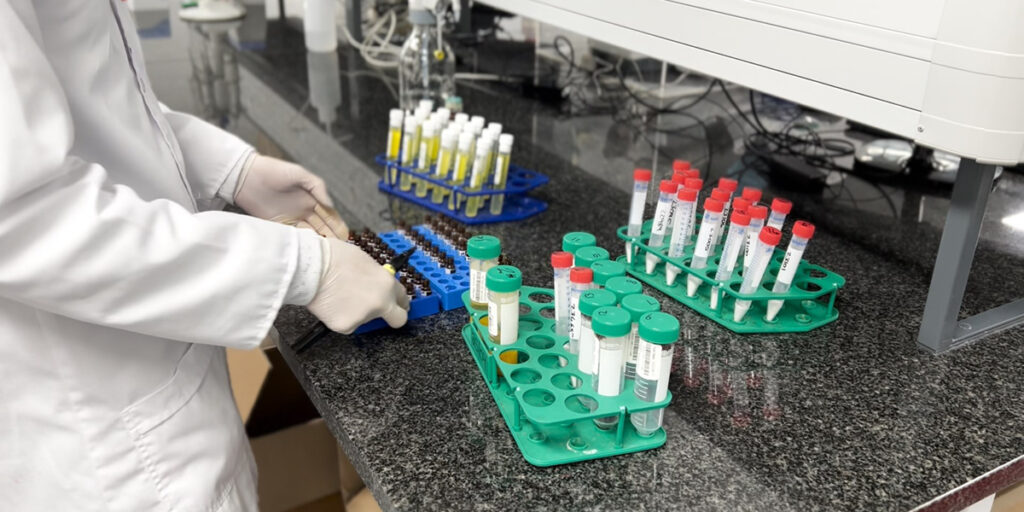
Manual sampling introduces variability at five distinct points: when the sample is taken, where in the vessel it is withdrawn from, how much is collected, how it is filtered and transferred, and how consistently that process is repeated across multiple vessels and time points. In extended-release products requiring sampling over several hours the opportunity for cumulative variation is significant.

The result is a dissolution profile that reflects the sampling process as much as the drug product itself. Chemetrix consultants see this pattern consistently across pharmaceutical QC labs: unexplained batch-to-batch variation traced back not to formulation but to manual sampling steps that were never formally controlled.

Dissolution testing explained

Every oral dosage form that reaches a patient has been through dissolution testing. The test simulates conditions the drug encounters in the body, exposing the finished product to a defined volume of media at controlled temperature and stirring speed, then measuring API release at defined time points.

Those results determine whether a batch is released for patient use. They underpin bioequivalence decisions in generic drug development and support regulatory submissions across USP, EP and JP pharmacopoeial frameworks. They are used throughout the product life cycle from R&D through to routine QC.

When dissolution data is compromised by sampling variability the consequences extend beyond a failed batch. They reach into data integrity queries, audit findings and regulatory submissions built on data that does not accurately reflect the product. The analytical lab’s responsibility is to produce dissolution data that reflects the drug, not the process of collecting the sample.


How can pharmaceutical QC labs reduce analyst-to-analyst variation in dissolution sampling?

Remove the manual steps. Not because analysts are careless but because repetitive manual sampling across six vessels at five or more time points is an inherently variable process regardless of analyst experience.

The labs that achieve the most consistent dissolution data are not necessarily the ones with the most skilled analysts. They are the ones that have replaced analyst-dependent sampling variables with automated controls. When timing, withdrawal position and filtration are managed by the sampling station the analyst is freed to review data, prepare subsequent runs and apply scientific judgement where it actually matters.

This is what Chemetrix means by treating dissolution as an end-to-end workflow. The apparatus handles dissolution conditions. The sampling station handles the rest. Both need to be
designed together.

Controlled dissolution testing for pharmaceutical QC: Agilent 708-DS dissolution apparatus

The Agilent 708-DS is the established platform for pharmaceutical dissolution testing across oral solid dosage forms, topicals, implants, transdermal patches and medical devices. It conforms to international pharmacopoeial specifications for Apparatus 1, 2, 5 and 6 and accommodates tablets, capsules, transdermal and semisolid formulations.

Key features that directly address variability at the apparatus level include TruAlign vessels for repeatable vessel orientation, motorised lift for integration with automated sampling systems, AutoTemp in-vessel temperature monitoring to confirm media conditions throughout the run and programmable sampling depth to eliminate vessel-to-vessel inconsistency in withdrawal position. The optional Dissolution Workstation Software provides electronic documentation of test parameters and audit trail capability for 21 CFR Part 11 compliant environments.

For labs requiring online UV analysis, the 708-DS pairs with the Agilent Cary 60 UV-Vis Spectrophotometer in multicell and fiber optic configurations enabling real-time dissolution profile monitoring without manual sample withdrawal at each time point.

Speak to a Chemetrix specialist about configuring the 708-DS for your specific dosage form and regulatory requirements.

Agilent 708-DS

Automated dissolution sampling for regulated pharmaceutical labs: Agilent 850-DS dissolution sampling station

The Agilent 850-DS Dissolution Sampling Station automates what the apparatus cannot control. It manages withdrawal timing, sampling position, filtration and sample collection into test tubes, HPLC vials or 96-well plates depending on the downstream analysis method.

For labs running HPLC analysis, samples collected by the 850-DS into Agilent HPLC trays can be placed directly into the HPLC autosampler without manual vial transfer. A validated end-to-end workflow demonstrated with multidrug capsules containing four APIs at different concentration ranges showed that the full sequence from dissolution sampling through LIMS integration to HPLC measurement and result reporting can be completed with minimal manual intervention. Barcoded vials scanned into the LIMS were automatically linked to vessel and time point data, passed to Agilent Sample Scheduler software and submitted to the LC instrument without the analyst managing the sequence manually.

The 850-DS includes an integrated syringe pump, optional filtration module for 0.2 or 0.45 µm filtration, variable pump speeds for different media types including surfactants, automated cleaning cycle and user access level controls to prevent unauthorised method changes.

Speak to a Chemetrix specialist about configuring the 850-DS for your sampling volume, filtration requirements and downstream analytical method.

Agilent 850-DS

📥 Explore the full Agilent dissolution testing portfolio

Dissolution data quality is a workflow decision, not just an instrument decision

There is a mindset Chemetrix consultants encounter regularly: that some variability between analysts or time points is an acceptable part of dissolution testing. That the apparatus is doing its job and the rest is just the nature of manual work.

It is not acceptable. Not when the data produced determines whether a product reaches a patient. The analysts running dissolution tests day after day under time pressure and throughput demands deserve a workflow that sets them up to produce reliable data consistently, not a process that makes accuracy dependent on replicating the previous analyst’s technique.

The labs that consistently produce defensible dissolution data treat sampling as a controlled variable from method design stage. They invest in the workflow that connects the apparatus to the result. Chemetrix works with pharmaceutical QC labs to design and supply that complete workflow, from instrument selection and qualification through to sampling automation and data management. The goal is dissolution data you can defend, not variability you have learned to explain.

How to diagnose dissolution sampling variability in your lab

Before assuming the problem is the product, work through four questions:
  1. Where is variability entering your sampling process? Timing, position, volume or filtration?
  2. Are your sampling time points being hit consistently across all vessels?
  3. How many manual transfer steps exist between the dissolution vessel and your analytical instrument?
  4. Does your current documentation trail support a 21 CFR Part 11 or GMP audit?
Speak to a Chemetrix specialist about your dissolution workflow:
  • Pharmaceutical QC labs: apparatus qualification, automated sampling configuration and Dissolution Workstation Software for 21 CFR Part 11 compliance
  • Contract research and testing labs: high-throughput dissolution workflows with HPLC integration and LIMS connectivity
  • Generic drug development labs: bioequivalence dissolution method development and semi-automated sampling for extended-release formulations
  • Compounding and hospital pharmacy labs: small-volume dissolution testing and method validation support for non-standard dosage forms

TL;DR

Most pharmaceutical labs assume that once the dissolution apparatus is correctly set up the test is essentially controlled. In practice sampling is where the majority of variability enters the workflow. Timing errors, inconsistent withdrawal depth and manual filtration steps all introduce analyst-to-analyst variation that the apparatus itself cannot prevent. The Agilent 708-DS Dissolution Apparatus combined with the 850-DS Dissolution Sampling Station automates these critical steps to produce more consistent reproducible dissolution data with significantly less manual intervention.div