

Eleven containers out of every hundred. That is the square root of n plus one protocol, the standard most pharmaceutical facilities use to verify incoming raw material identity before releasing to production.
The remaining 89 are assumed to be correct. That assumption is where compliance exposure begins.
Regulations including 21 CFR Part 211.84 and ICH Q7 require that each lot of incoming components is tested before use. The sampling protocol was a practical concession to the time and cost of opening every container. It was not designed as a compliance strategy. As regulatory scrutiny increases across pharmaceutical manufacturing in Southern and East Africa that concession is becoming harder to defend.
The core compliance problem is not the statistical model. It is the physical workflow that makes 100% testing impractical. Opening every incoming container requires a dedicated sampling area, contamination controls and documented chain of custody. For moisture-sensitive excipients, polysorbates and sterile materials, opening the container introduces degradation risk that reduces shelf life and generates additional documentation burden.
The containers hardest to sample safely are opaque plastic drums, sealed paper sacks and amber glass bottles. These are precisely the ones where undetected substitution or mislabelling poses the greatest risk. Chemetrix works with pharmaceutical QA and procurement teams across Southern and East Africa who identify this gap consistently during internal audits and pre-inspection reviews. The sampling protocol is in place. The documentation is compliant. And 89% of the shipment is sitting in the warehouse on an assumption.

SORS separates the excitation point from the collection point. The laser fires at position A. The collection optics sit at offset position B. The superficial container signal is suppressed and the deeper backscattered photons from the contents reach the detector. The result is the chemical fingerprint of the material inside the sealed container, not the container wall.
Polysorbates are present in approximately 80% of monoclonal antibody drug formulations. PS 20 and PS 80 are chemically similar and degradation-sensitive. Opening the container to sample them introduces moisture exposure that reduces shelf life. Substituting one for the other is a critical quality defect.
The Agilent Vaya application note published in European Pharmaceutical Review demonstrates successful differentiation of PS 20 and PS 80 through sealed amber glass bottles using SORS. The identification is specific, rapid and requires no container opening. Shelf life is preserved. Degradation risk is eliminated. A PASS/FAIL result is generated at the dock in seconds.
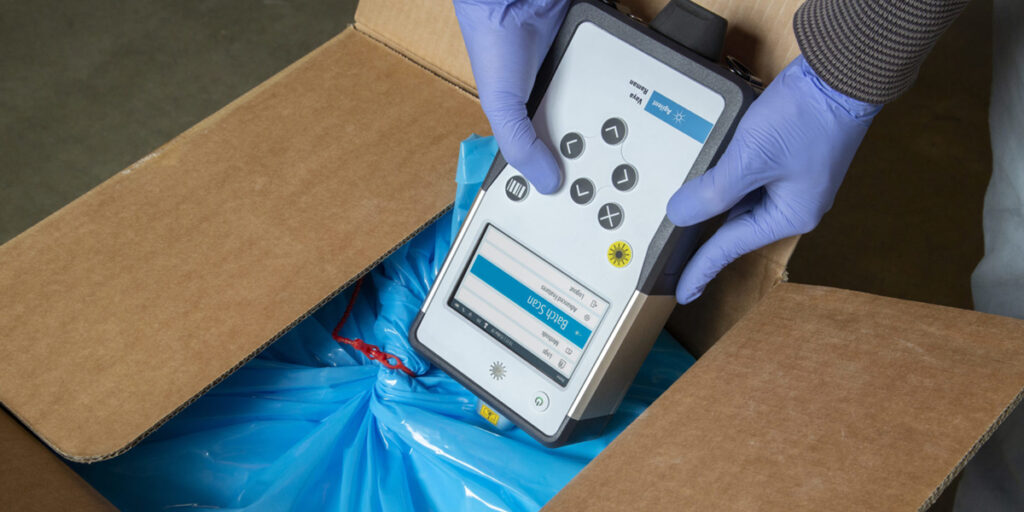
The Vaya replaces the sampling protocol with a through-container identification workflow compatible with every container format in a standard pharmaceutical receiving area. SORS technology enables identification through clear glass, amber and coloured glass, white and coloured plastic tubs, opaque HDPE drums, FIBCs and multilayer paper sacks.
No sampling booth required. No container opened. No degradation risk introduced. The operator scans each container at receipt and receives a PASS/FAIL result against a validated spectral library within seconds.
The Vaya is fully compliant with 21 CFR Part 11 and PIC/S GMP requirements. It has been awarded My Green Lab’s ACT label for sustainability. For facilities currently operating under the square root of n protocol the transition to 100% identification requires no additional capital equipment and no sampling infrastructure.
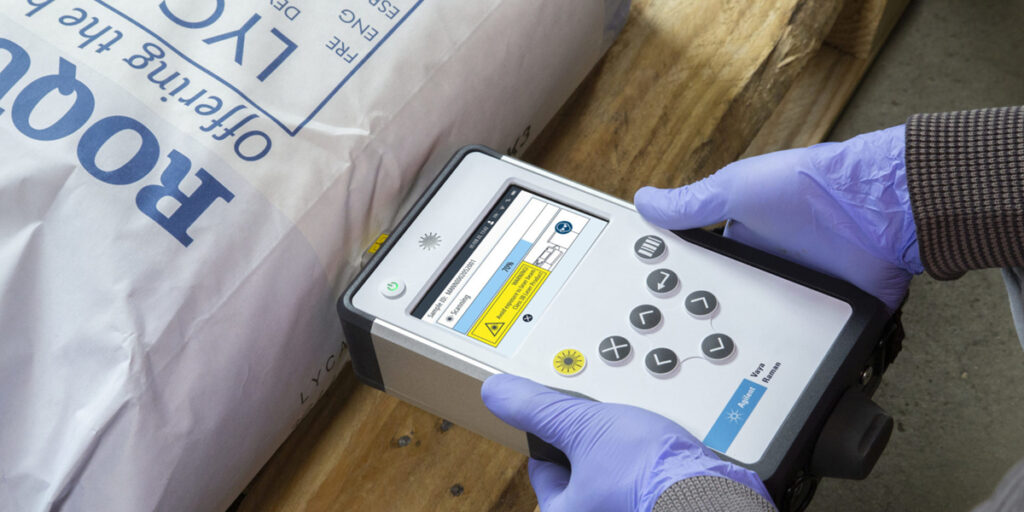
Vaya Handheld Raman Spectrometer
For incoming oil and lipid-based excipients the Agilent Cary 635 UV-Vis spectrophotometer with dialpath technology provides rapid quantitative analysis without sample preparation. The variable pathlength approach eliminates dilution of concentrated samples and delivers accurate absorbance measurements on neat oils directly. For pharmaceutical facilities receiving lipid excipients for injectable or oral formulations the Cary 635 dialpath reduces incoming material hold time without compromising accuracy.
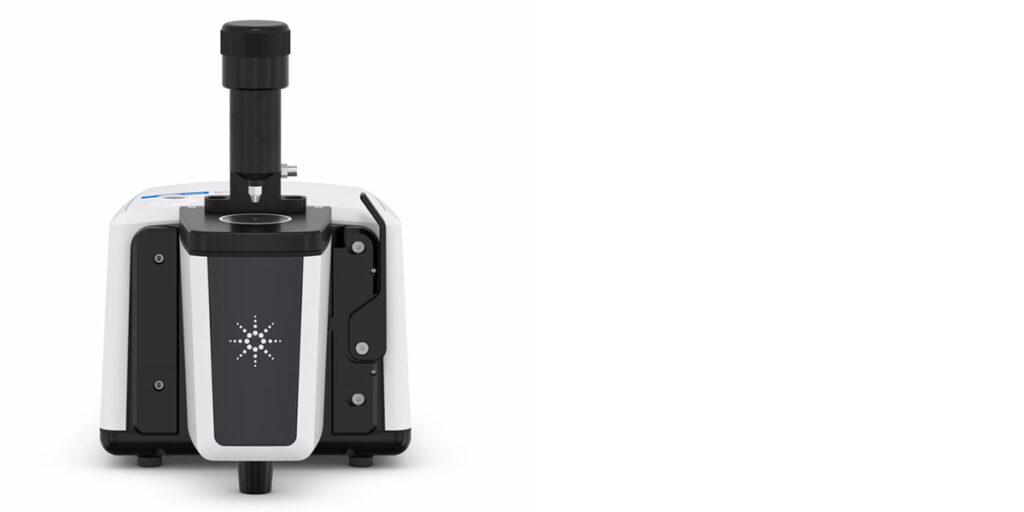
For water quality monitoring in pharmaceutical manufacturing the Agilent Cary 60 provides a robust and rapid analytical platform for routine compliance testing. Xenon flash lamp technology delivers no warm-up time and a 10-year average lamp lifetime under typical laboratory conditions. For water-for-injection, purified water and process water monitoring the Cary 60 delivers the reliability and audit trail capability required for GMP compliance.
Instruments: Agilent Cary 635 UV-Vis with dialpath and Agilent Cary 60 UV-Vis spectrophotometer.
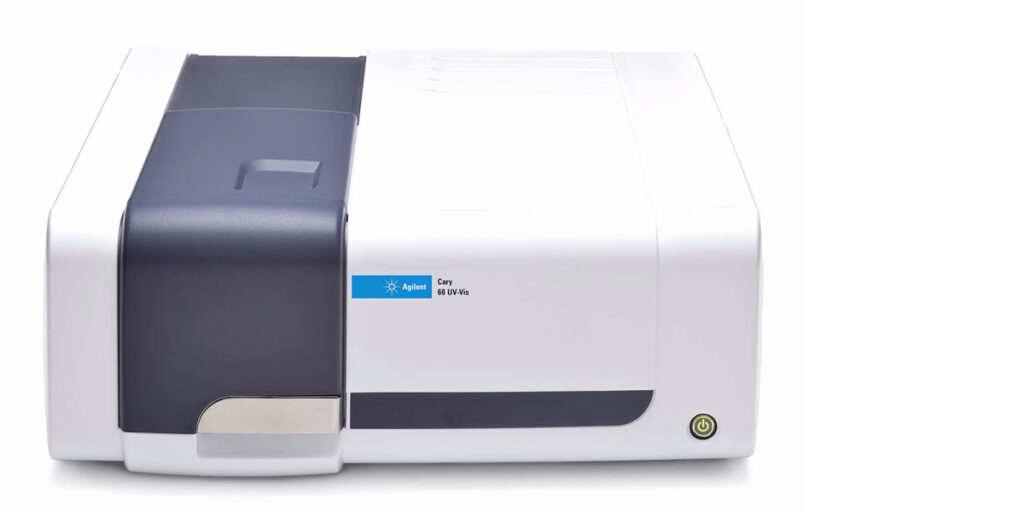
Cary 60 UV-Vis Spectrophotometer
The square root of n protocol exists because 100% testing was operationally impractical with available technology. That constraint no longer exists. The Agilent Vaya makes 100% RMID faster than the sampling protocol it replaces, at the dock, on every container, without a sampling booth and without the regulatory exposure of an unverified shipment sitting in a warehouse.
Chemetrix works with pharmaceutical QA managers and procurement leads across Southern and East Africa to design RMID workflows built around current regulatory expectations rather than legacy sampling concessions. From Vaya spectral library development and method validation through to Cary 635 and Cary 60 integration for complete incoming material QC the goal is an RMID programme that reflects what the regulation actually requires.
Pharmaceutical RMID regulations require identity verification of incoming raw materials before release to production. Most labs test 11 in every 100 containers under the square root of n plus one sampling protocol, leaving 89% unverified. The Agilent Vaya handheld Raman spectrometer uses patented Spatially Offset Raman Spectroscopy to identify raw materials through sealed paper sacks, opaque plastic tubs, HDPE drums and amber glass bottles, the only handheld instrument capable of analysing through opaque and non-transparent containers. Validated application data demonstrates successful differentiation of Polysorbate 20 and Polysorbate 80 through sealed amber bottles, chemically similar degradation-sensitive excipients present in approximately 80% of monoclonal antibody drug formulations.

Chemetrix Export (Pty) Limited
400 - 16th Road
Block H Central Park
Midrand 1685


