

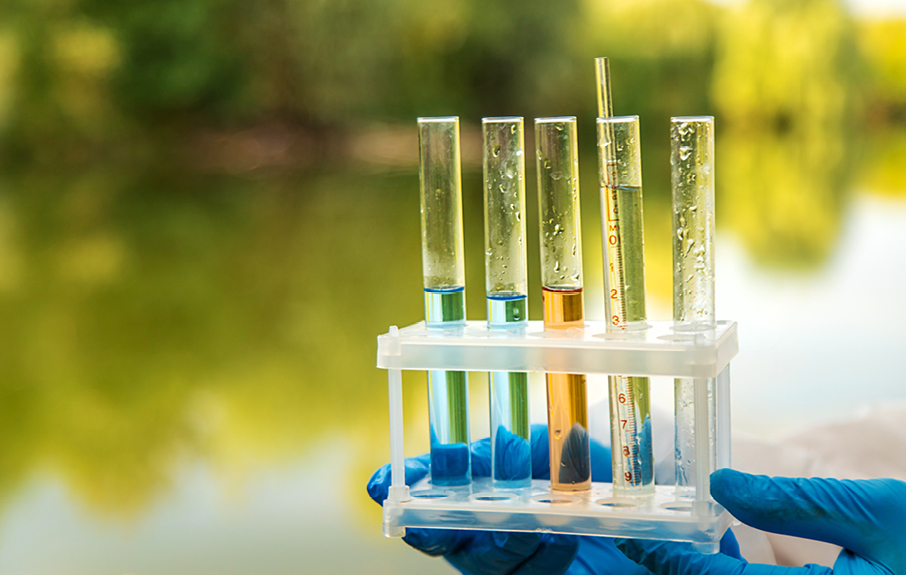
A municipal district in Gauteng plunges into a public health emergency. Dozens of lives lost, hundreds hospitalised, local food producers forced to halt production over unpotable water, and a municipality facing serious legal and compliance liability over a failing utility grid.
This isn’t a hypothetical. It’s the pattern behind real waterborne disease outbreaks linked to wastewater infrastructure failure and at the centre of it is a testing gap that’s entirely preventable.
By the time legacy laboratory methods confirm contamination, the public has often already consumed the water. This matters for every lab and utility responsible for drinking water safety, because the difference between catching contamination in hours versus days is the difference between an isolated incident and a catastrophe.
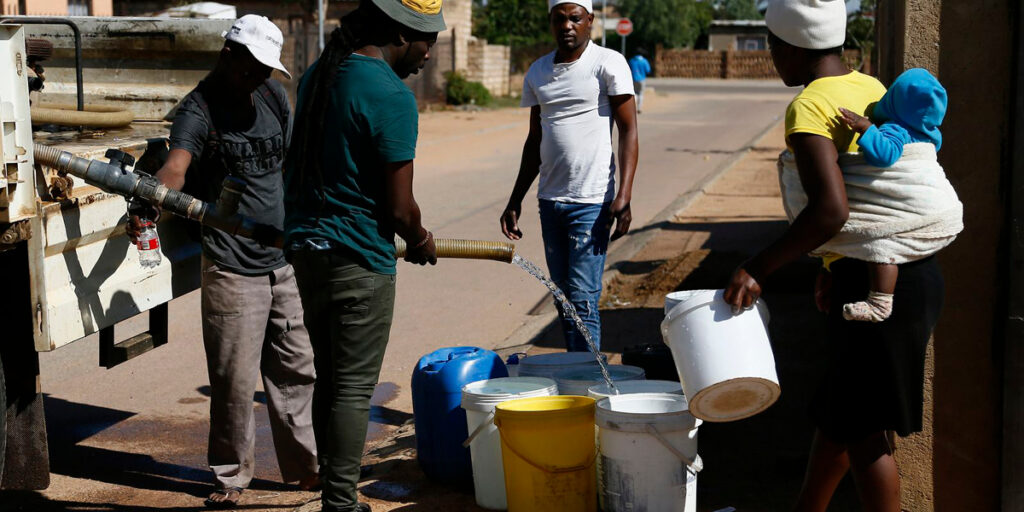
What happens when a wastewater treatment plant fails?
An over-capacitated, poorly maintained wastewater treatment plant operating far above its design limits doesn’t just underperform, it actively becomes the source of the crisis. Instead of discharging treated, compliant effluent, the dysfunctional plant releases millions of litres of partially treated sewage directly into the river system feeding a downstream drinking water purification plant.
This is rarely a sudden failure. It’s the result of ageing infrastructure, deferred maintenance, and a system running past its intended capacity for years before the consequences become visible at the tap.
How does E. coli contamination escalate from “manageable” to “catastrophic”?
The daily reality of this kind of failure isn’t measured in headlines, it’s measured in microbiological density. Upstream of a failing wastewater plant, a river might carry a manageable 5,000 CFU of E. coli per 100ml. Downstream of the same plant, that number can rocket to 1,000,000 CFU per 100ml.
This overwhelming biological load depletes dissolved oxygen in the river ecosystem and introduces highly pathogenic strains that overwhelm standard sand filtration and multi-barrier chlorination at the downstream drinking water plant, allowing coliforms to enter the reticulation network and reach the public.

Why is legacy water testing too slow to prevent an outbreak?
Traditional water testing relies on retrospective culture methods, incubating samples and waiting for bacterial growth to confirm contamination. The problem isn’t the accuracy of this method. It’s the timeline. Culture-based testing can take days to deliver results, and during a wastewater infrastructure failure, days is exactly the window in which the public is already drinking contaminated water.
By the time a lab confirms the failure, the exposure has already happened.
The diagnostic gap, not a lack of awareness, is what turns a fixable infrastructure problem into a public health emergency.
How does rapid water quality testing close that gap?
The fix isn’t more frequent legacy testing, it’s a fundamentally faster method. High-throughput enzymatic assays and rapid Quantitative PCR (qPCR) screens detect shifting microbial index markers and indicator spikes within hours rather than days, aligned strictly to SANS 241 drinking water standards.
That speed changes what’s possible operationally. Lab managers can use same-day data to alter chemical dosing, isolate affected reservoirs, and flag a wastewater failure before it cascades into a full-scale contamination event, turning a containable infrastructure problem back into exactly that, instead of a human catastrophe.
Should municipal and industrial labs rethink their testing protocols?
For utilities, municipal labs, and the commercial industries that depend on potable water supply, food and beverage producers especially, relying solely on legacy culture testing is a defensible-sounding but operationally risky position. “We tested it” isn’t the same as “we tested it fast enough to act.” Rapid, automated profiling aligned to SANS 241 gives labs the diagnostic speed that legacy methods were never built to provide.

FAQ
How fast can rapid water testing detect contamination compared to traditional methods?
What is SANS 241?
Why does E. coli concentration matter for water safety?
What should your lab do before the next wastewater failure?
When wastewater infrastructure fails, the difference between a contained incident and a public health catastrophe often comes down to testing speed. Legacy culture methods confirm contamination days too late. Rapid, SANS 241-aligned qPCR and enzymatic screening close that gap to hours — giving lab managers and utilities the window they need to act.
TL;DR
A failing municipal wastewater plant can push E. coli levels from 5,000 to 1,000,000 CFU/100ml downstream, overwhelming drinking water filtration and triggering public health crises. Legacy culture-based testing detects this days after exposure. Rapid qPCR and enzymatic assays, aligned to SANS 241, flag contamination within hours, giving labs the window to act before a wastewater failure becomes a human catastrophe.

