

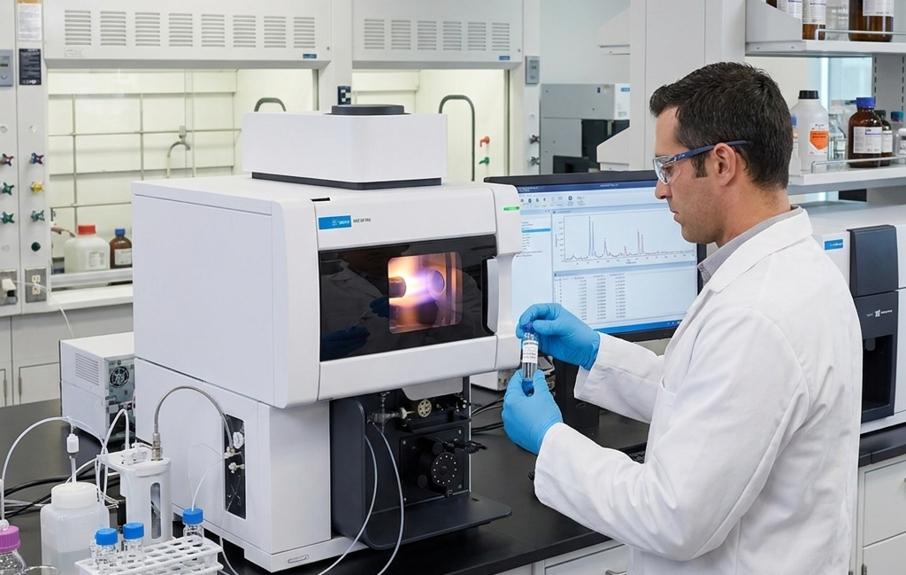
It’s 4:30pm on a Friday, and your calibration standards have started drifting. Not failing outright, just enough to make you squint at the screen and wonder if it’s the method, the standards, or something else entirely. You’ve run high-TDS samples all week. You already know what you’ll find when you pull the torch: a faint haze of devitrification creeping up the quartz, the first sign that your “reliable” consumable has quietly started lying to you.
This is one of the most common, and most under-discussed, failure points in ICP-OES analysis. Standard quartz torches are excellent components, but they were never built to survive sustained exposure to high total dissolved solids (TDS), complex organic matrices, or heavy alkaline-earth and alkali metal loads (Li, Na, K, Ca, Mg, Rb, Cs). When labs run these matrices routinely, the torch becomes the silent variable behind drifting baselines, unexplained reruns and consumable budgets that never seem to add up.
This matters because most labs are still buying consumables on sticker price, not on cost per sample and that one decision is quietly driving the downtime, rework and accuracy issues everyone blames on “the instrument.”
Why does my ICP-OES torch keep failing on high-matrix samples?
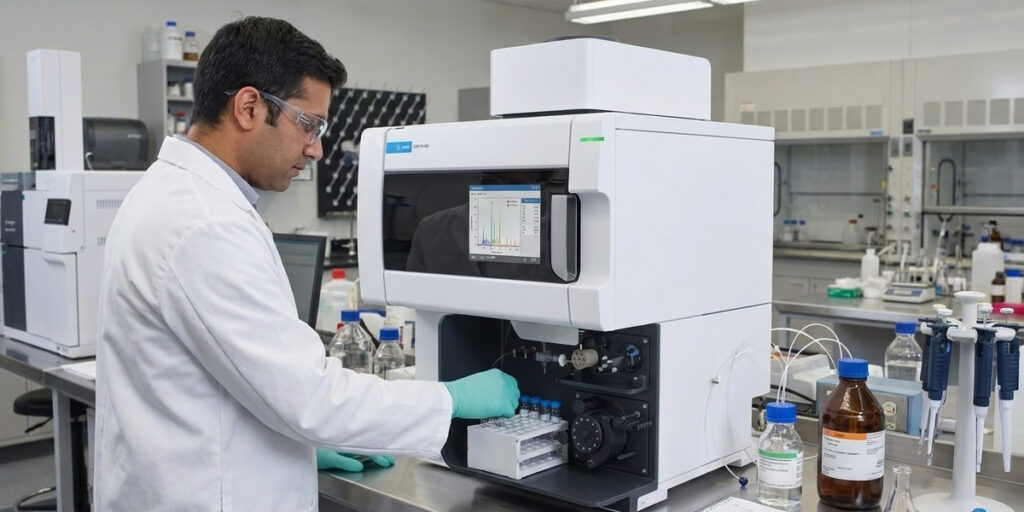
Every analyst who’s run high-matrix samples for any length of time has lived this story. You start the week with a torch that performs beautifully. By Wednesday, you’re seeing slightly elevated background noise. By Friday, the quartz has started to devitrify, that cloudy, crystalline degradation that happens when alkaline-earth salts attack the silica structure under plasma heat. The glass becomes structurally weaker, more porous, and less optically clean, and your results start drifting in ways that don’t show up until you’ve already reported a few batches.
The instinctive response in most labs is to try to revive it: scrub it, soak it, polish it, swap in a “spare” that’s already half-degraded. Chemetrix consultants see this pattern across hundreds of labs in the region, teams spending real hours trying to nurse a structurally compromised torch back to usable condition, when the real fix has nothing to do with cleaning technique and everything to do with material selection. It’s not a bad habit. It’s a consumable mismatched to the matrix.
Why does quartz fail but ceramic doesn’t?
It’s easy to think of a torch as just a piece of glassware sitting inside an instrument. But every high-TDS or alkaline-earth-rich sample that runs through a degraded torch is, somewhere downstream, a decision that affects someone outside the lab. A mining company relies on accurate trace metal data to prove environmental compliance. A food producer relies on it to confirm a batch is safe to ship. A water utility relies on it to confirm a community’s tap water meets safety limits. None of those decisions are better than the data behind them, and that data is only as good as the consumable it passed through.
This is the part of analytical chemistry that rarely gets discussed outside the lab: the instrument doesn’t make the result trustworthy, the entire chain does, right down to whether the torch was chemically stable enough to deliver a clean, repeatable plasma. When a torch is quietly devitrifying, the risk isn’t just rework for the analyst, it’s a small crack in the chain of trust between a lab result and the public decision built on top of it.
That’s exactly why Chemetrix exists in this conversation, not to sell glassware, but to make sure the science underneath these decisions is as solid as the stakes riding on it.
Is a cheaper ICP-OES torch actually cheaper?
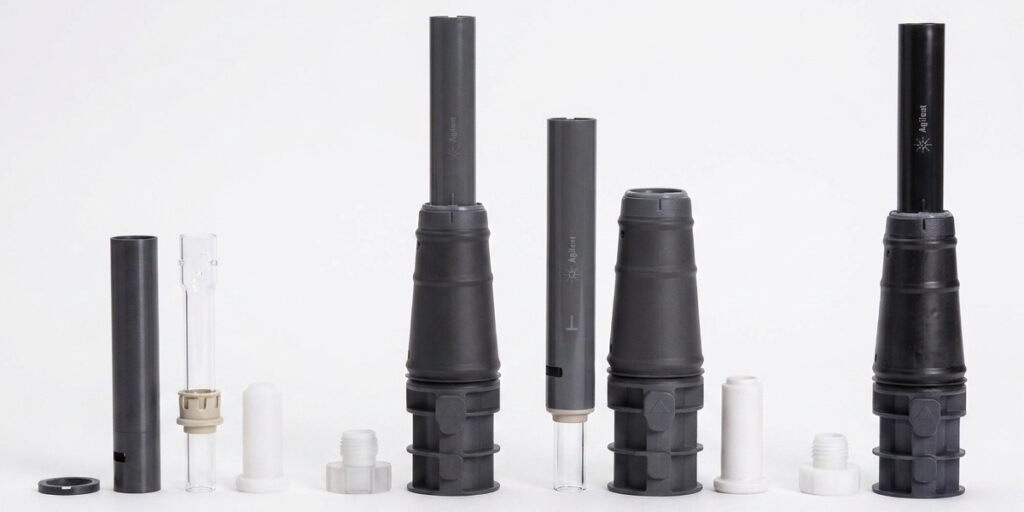
Quartz wins on the quote. But the real cost shows up later, in reruns, manual cleaning hours, replacement downtime, and accuracy risk from consumables run past their usable life. Compare cost per sample instead of cost per torch, and silicon nitride ceramic outer tubes, lasting up to 10x longer than quartz, win decisively.
How do you streamline a high-matrix ICP-OES workflow?
Most labs set their torch configuration once at installation and never revisit it as sample types change. Chemetrix’s solution design experience points to a simple fix: match outer tube and injector material to the matrix before degradation starts, and use demountable platforms so only the stressed component needs replacing.
Best torch setup for mining and environmental labs
Mining and environmental labs run heavy alkaline-earth, high-TDS matrices that strip standard quartz fastest. The Agilent 5800/5900 Series ICP-OES with demountable torches and silicon nitride ceramic outer tubes lets labs replace only the stressed component. See the 5000 Series Quick Reference Guide or watch the demountable torch video.

Preventing injector damage in food, beverage, and petrochemical testing
Complex organic matrices attack injector material rather than the outer tube, causing drift and blockages. Agilent’s full-range alumina injectors let labs configure a torch matched to organic-heavy samples without sacrificing durability. See the vertical torch technical overview, or talk to a Chemetrix specialist.
Should labs just “cope” with outdated systems?
Frequent torch failure isn’t just part of the job, it’s a symptom of consumable choices built around short-term cost. Chemetrix exists to challenge that: helping labs build a culture of integrity, accuracy, and respect for the people doing the work, starting with the right consumable, chosen properly.
What should you do next to protect your ICP-OES accuracy and uptime?
Recurring drift, frequent torch replacement, and hours lost to manual cleaning point to one culprit: the consumable, not the method. Silicon nitride ceramic and full-range alumina injectors offer up to 10x the lifespan of quartz, with less downtime and better accuracy.
TL;DR:
Standard quartz ICP-OES torches degrade quickly under high-TDS, alkaline-earth, or complex organic matrices, driving baseline drift, reruns, and downtime. Agilent’s silicon nitride ceramic outer tubes last up to 10x longer than quartz and full-range alumina injectors resist chemical attack; together lowering true cost per sample and protecting accuracy.

