

Your instrument tuned cleanly. Your calibration looked fine. And yet your arsenic CRM is sitting at 148% recovery. Your zinc is at 130%. You have replaced the tubing, pulled the cones and run the diagnostics. Nothing has changed.
Before you take the instrument offline, check your matrix. In most cases the instrument is doing exactly what it is designed to do, measuring every ion that arrives at the detector. The problem is that some of those ions are not the analytes you are looking for.
Consistent deviation from a CRM expected value is not random error. It is systematic bias. And in ICP-MS, systematic bias has a name: spectral interference.
There are three distinct types of spectral interference in ICP-MS: isobaric, polyatomic and doubly charged. They behave so differently from each other that applying the same correction to all three is one of the most common sources of persistent data errors in trace metal workflows.
Most labs treat interference as a single problem. It is not. Identifying which type you are dealing with is the first decision, and it determines everything that follows.
Critical distinction: KED helium collision mode eliminates polyatomic interferences but passes doubly charged ions straight through. If you are running helium mode and still seeing bias on Zn, As or Se in a barium or REE-containing matrix, M²⁺ ions are the likely cause.
Different matrices produce different interferences. A drinking water sample and a rare earth-rich geological digest require completely different correction strategies, even when measuring the same analyte panel.
A soil digest high in iron and sulphur generates SO and FeO polyatomic species that simply do not exist in a clean water matrix. A barium-rich industrial sample creates M²⁺ doubly charged ions that overlay zinc and arsenic signals at concentrations producing significant bias. Running both on the same uncorrected method will give you wrong results for at least one of them.
The pattern Chemetrix consultants see most often: a lab sees consistent CRM bias, assumes the instrument is drifting and spends time on maintenance that changes nothing. The root cause is almost always a matrix-interference mismatch that was never addressed at method design stage. Across hundreds of labs and 45 years of consultancy, that pattern has not changed.

Every result that leaves a lab feeds a decision someone else will make. Whether water is safe to drink. Whether a pharmaceutical batch is fit for release. Whether a food product clears the export standard it was tested against.
ICP-MS trace metal analysis sits at the centre of some of the most consequential testing work in any industry. Water quality laboratories measure arsenic, lead and cadmium against regulatory limits that protect public health. Food safety labs detect contaminants at parts-per-billion levels that determine whether a product is recalled or released. Mining and environmental labs produce the data that shapes compliance decisions and community safety outcomes.
When spectral interference goes unmanaged, those results carry a hidden bias that nobody has accounted for. The number looks credible. It passes review. And the decision downstream is made on a result that was never accurate.
This is why Chemetrix treats interference management as a method design requirement, not an afterthought. Labs do critical work. That work deserves the analytical foundation to stand behind it.
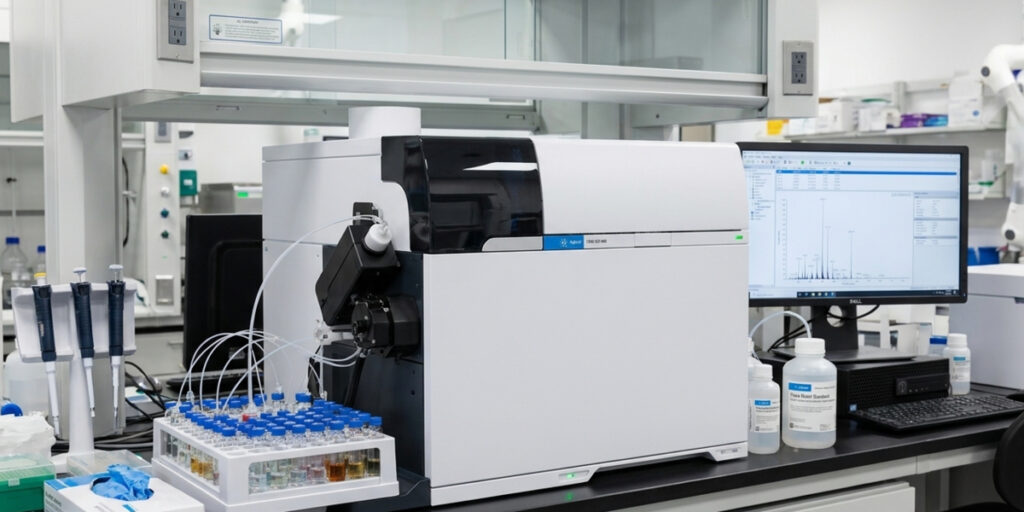
Manually identifying and correcting three different interference types across every batch in a production environment is not a sustainable workflow. This is where Chemetrix solution design and Agilent MassHunter work together to build interference management into the method itself, not into the troubleshooting process after the fact.
The labs that see the biggest efficiency gains are the ones that stop treating interference correction as a reactive response to a failed CRM and start treating it as a structured part of method development. That shift, from reactive to designed, is where first-pass accuracy improves, rerun rates fall and analyst time stops being absorbed by troubleshooting that should not be necessary.
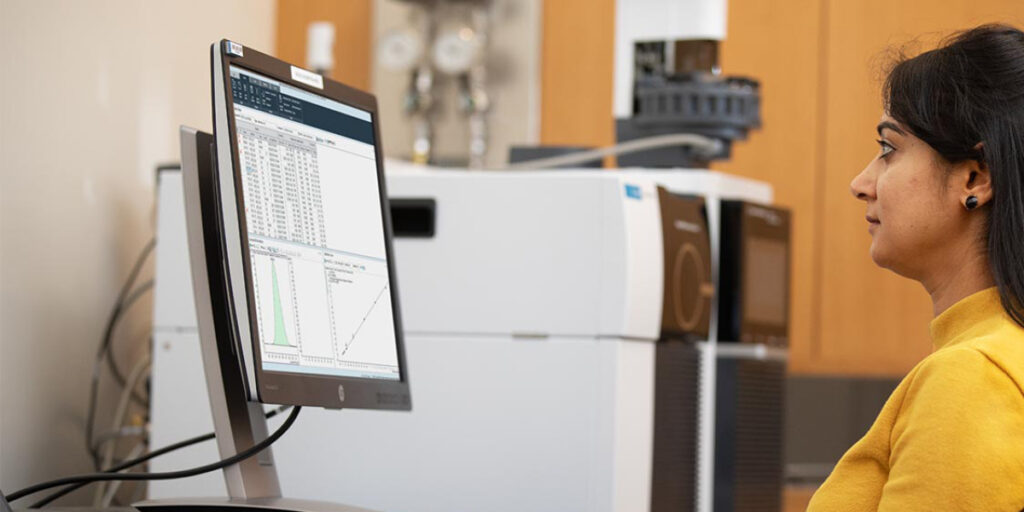
Environmental and food safety labs routinely analyse complex variable matrices where polyatomic interferences are unpredictable and differ significantly from sample to sample. Chloride-driven ArCl species are the most common source of arsenic bias in food matrices. SO and FeO species are the primary drivers of bias in soil digests and wastewater. Mathematical correction is not reliable across matrices this variable.
The correct approach is helium collision mode with Kinetic Energy Discrimination, available as a standard cell gas mode on the Agilent 7850, 7900 and 8900 ICP-MS. MassHunter manages cell gas flow, voltage discrimination and acquisition automatically. The analyst does not need to identify which polyatomic species are present in each sample type. Helium KED suppresses them collectively, making the method robust across rotating matrices without reconfiguration.
Mining, geological and industrial labs analysing samples with high barium or rare earth element concentrations face a different problem entirely. Doubly charged ions are not affected by helium collision mode. They pass through the cell unaffected and land directly on analyte masses at half their true m/z. At 5,000 ppb barium, zinc recovery reaches 130% without correction. At 5 ppb gadolinium and dysprosium, selenium recovery reaches 215%.
Agilent MassHunter’s REE²⁺ Correction tool resolves this automatically. Because all isotopes of an element form doubly charged ions at the same natural abundance ratio, MassHunter monitors specific half-mass m/z positions and subtracts the M²⁺ contribution from affected analyte signals in real time. Configured once in the Method Wizard. Validated recovery data: zinc from 130% to 96%, selenium from 215% to 107%.
📥 Download the Agilent Technical Overview: full correction equations for Zn, As and Se, validated recovery data across Ba and REE matrices and instrumentation requirements.
There is an expectation in some labs that interference management is something you deal with when things go wrong. You run the batch, a CRM fails and then you troubleshoot. It is reactive, time-consuming and it puts the burden of a method design problem onto the analyst running the sample.
The people doing this work deserve better than that. Analysts should not be spending their time compensating for a method that was never built to handle the matrix it is routinely running. Lab managers should not be explaining to clients why results from last week need to be reissued. Quality teams should not be discovering interference bias during an audit.
Chemetrix has spent 45 years working inside laboratories across Southern and East Africa. The labs that consistently produce accurate, defensible trace metal data share one thing: they treat interference management as part of the method, not the troubleshooting queue. They build the correction in from the start, they validate it against their actual matrices and they do not rely on analysts to catch what the method should be preventing.
That is the standard Chemetrix designs to. And it is the standard every lab running ICP-MS trace metal analysis should be able to work from.
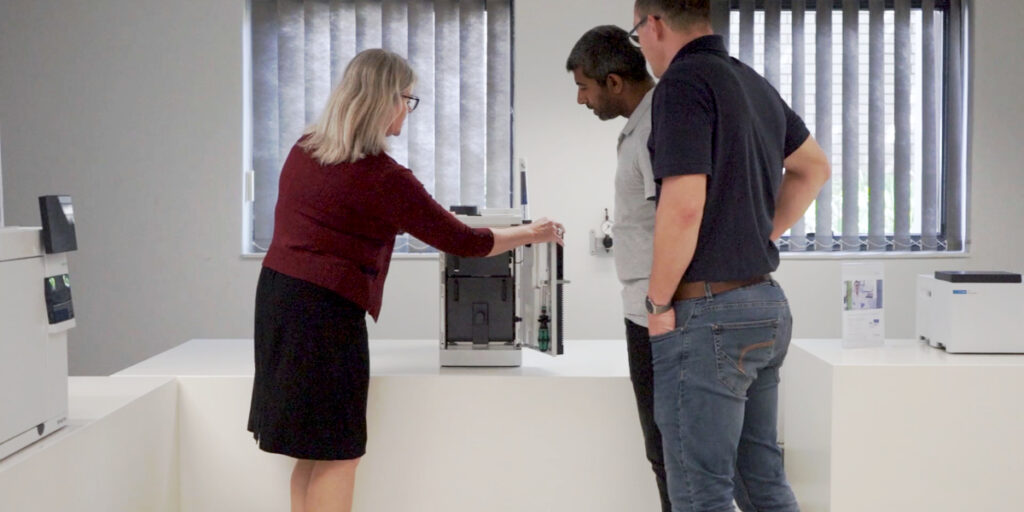
When your ICP-MS CRM results show consistent positive bias, spectral interference is almost always the cause, not instrument failure. There are three distinct types (isobaric, polyatomic and doubly charged) and each requires a completely different correction approach. Agilent MassHunter automates the fix, but only if you know which type you are dealing with.

Chemetrix Export (Pty) Limited
400 - 16th Road
Block H Central Park
Midrand 1685


